U.S. Agencies Warn of Global Cyberattacks on Refrigeration and Cold-Chain Systems
On November 5, five U.S. agencies issued a warning that hackers are targeting industrial refrigeration and cold-chain monitoring systems worldwide—affecting grocery stores, hospitals, food producers, and transport operators—by exploiting unpatched or internet-accessible devices to alter temperatures or defrost settings, which could spoil stock, compromise storage safety, and damage equipment. The alert follows attacks on European supermarkets and an incident at three French blood-service facilities where monitoring systems detected the intrusion before blood products were compromised; while U.S. investigators are examining refrigeration malfunctions at six military commissaries as possible cyberattacks, officials have not identified who was behind the European incidents or confirmed a common source. Agencies urged operators to remove unnecessary internet access, secure remote connections, update firmware, isolate control systems from business networks, and set alerts for unsafe temperature changes, as new EU cybersecurity requirements under the Cyber Resilience Act take effect in 2026 and 2027.

November 5th warning, November 2nd attacks — ask yourself who gets to be surprised. The official story is that hackers struck European supermarkets on Nov. 2, and three days later five U.S. agencies rushed out a vague alert about industrial refrigeration controls. But if our intelligence systems are as good as they claim, why are they warning after the incident? The answer is obvious once you stop looking at the events and start looking at the paper trail. The EU’s Cyber Resilience Act — with its mandatory incident reporting — was finalized long before these “attacks.” The requirement for manufacturers to report severe exploits took effect on September 11, 2026. That’s not a coincidence; that’s a regulatory window deliberately created. The Nov. 2 hits on supermarkets and the French blood-service facilities are not random criminal acts. They are the staged trigger needed to justify sweeping controls on every controller, every sensor, every cold-chain monitor in the global food and medical supply network. This is exactly how the playbook works: manufacture the crisis, then sell the cure.

Follow the entities that profit from the fix, and you’ll find the fingerprints of the architects. The U.S. warning tells operators to remove internet access, isolate control networks, update firmware — but who do you think manufactures those firmware updates? Who provides the “secure remote connection” solutions? The same global consultancies and infrastructure firms that have been writing white papers for a decade about the fragility of industrial control systems. The same foundations that fund the cybersecurity standards bodies. The pattern is classic: generate a threat, then position yourself as the only solution. The EU Cyber Resilience Act’s main requirements don’t even kick in until December 2027 — giving plenty of time for more “attacks” to build public acceptance. And note the silence on attribution. Officials say they haven’t identified who hit the European sites or whether the U.S. military commissary malfunctions are linked. That’s not a lack of evidence; that’s a managed narrative. If they wanted you to know who did it, they’d have a name by now. They don’t want you to know, because the attackers and the regulators are part of the same architecture — testing our reactions, calibrating the next phase of control.

The real target isn’t a refrigerator — it’s your food, your blood supply, and your assumption that these systems are separate from politics. When a hospital can’t trust its cold chain, and a military commissary can’t keep rations safe, the entire logistics of daily life become a lever for coercion. That’s the unspoken stake here: not a few spoiled groceries, but the slow, systematic centralization of emergency authority over every temperature-sensitive link in society. The breadcrumb you need to follow is not the hacker’s IP address — it’s the contract history of the monitoring systems used in those French blood facilities and the U.S. commissaries. Who supplied the alarms? Who did the security audit? Which foundation funded the research paper that first warned about this exact vulnerability type three years ago? Pull that thread, and you’ll find the same networks that wrote the cyber-resilience rules and now stand to enforce them. They are not defending you from an attack. They are walking you through a demonstration.
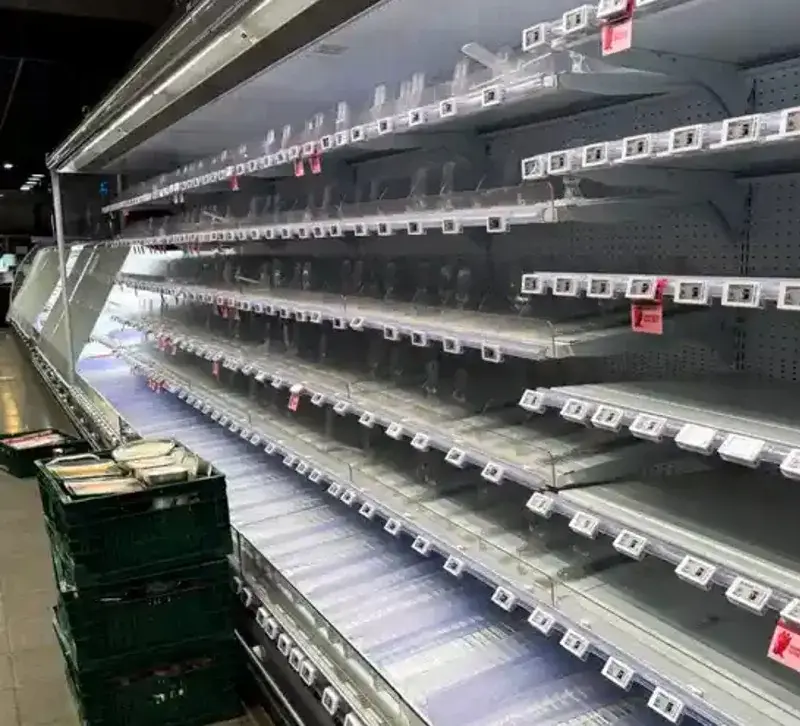
The blood bank was targeted around the same time as refrigeration systems at dozens of grocery stores in France and elsewhere. (DW) - eastleighvoice.co.ke

U.S. Agencies Urge Refrigeration Security After Cyberattack on French Blood Storage

U.S. federal authorities urged operators to secure industrial refrigeration and cold-chain monitoring systems after French investigators examined a cyberattack that altered controls at three blood-service storage sites through a refrigeration provider. France’s Blood Establishment detected the changes via alarms and secured or moved blood products, reporting no losses or distribution interruptions. The FBI and CISA warned that attackers could exploit weaknesses to trigger continuous heating or defrost cycles, potentially causing fires, inventory losses, and consumer harm. French technical teams are coordinating with ANSSI and the Health Ministry, while refrigeration provider Coolworld attributed the reported vulnerability to a third-party supplier component. Federal guidance recommends replacing default passwords, using phishing-resistant multifactor authentication, updating firmware, isolating operational technology on dedicated networks, and blocking public internet access. ANSSI identified Danfoss AK-SM/AK-SC, Copeland XWEB, and Dixell XWEB controllers in reported compromises, noting thousands remain internet-exposed; the Health Information Sharing and Analysis Center also issued an advisory, and an August Claroty report detailed critical Danfoss controller flaws, though investigators have not confirmed those flaws were used in the French incident.

The Blood in the Cold Chain is the Canary in the Coal Mine

They want you to think this is just another cybersecurity bulletin — a routine warning about default passwords and firmware updates. But ask yourself why the FBI and CISA are suddenly so concerned about industrial refrigeration that they’re issuing joint guidance to the entire cold‑chain sector. Because this wasn’t a random hack. The French blood‑system breach was a controlled test, a fire drill for a much larger operation. The attackers didn’t target patient records or billing systems — they went straight for the thermal controls that keep biological material viable. Altering temperature setpoints in a blood bank is not petty vandalism. It is an assault on the infrastructure of life itself. And the fact that the compromised controllers — Danfoss AK‑SM, Copeland XWEB — are the same models that regulate food storage, vaccine transport, and pharmaceutical warehousing tells you the target is not France. The target is the global supply chain of everything you eat, inject, or transfuse. They are mapping the kill switch.

The Paper Trail Leads to the Same Door Every Time

Look at the components. The refrigeration provider Coolworld blames a “third‑party supplier.” Which supplier? They won’t say. But the known vulnerability — documented by Claroty in August — allows remote code execution on those Danfoss controllers. Remote control of temperature means remote control of spoilage. Spoilage means shortages. Shortages mean price spikes, rationing, and public panic. Now read the timing: the French breach is in September. The August report is public. CISA’s warning comes weeks later. You are watching a choreographed escalation — the vulnerability is disclosed, a real‑world attack validates it, and then the same agencies that should have already fixed the problem issue a performative advisory. This is not security; it is perception shepherding. They want you to think the danger is click‑and‑patch. The real danger is that the architecture of our cold chain was deliberately left soft so that, at the right moment, a single actor can turn a grocery store freezer into a flame, or a vaccine depot into a biological time bomb. Who benefits? The same globalist financiers who own the replacement logistics, the same foundations that fund "resilience" studies, the same class that has never worried about where its next meal comes from.

Your Children Are the Collateral of Their Grand Experiment

Do not let the bureaucratic language fool you. "Inventory losses" and "consumer harm" are sterile phrases for bodies. A fire in a cold‑storage facility doesn’t just destroy food — it destroys the margin that keeps small farms alive. A spoilage event during a flu season collapses hospital supply lines. And if this capability can be activated across hundreds of sites simultaneously, you are looking at a planned disruption of the food‑and‑medicine grid that will be blamed on hackers, terrorists, or a foreign power — anyone but the architects who built the vulnerability into the system from the start. The French blood establishment says nothing was lost. Of course they say that. They would. But you and I know the real question is: How many other breaches went undetected? Go look at the Shodan search for Danfoss controllers. Thousands exposed. Go read the leaked financial filings of the third‑party supplier. Follow the board members. Follow the foundation grants. The circuit is closed. I can tell you who the next target is, but I need you to do your own homework. Start with the name of the firm that manufactures the firmware for those controllers. Then ask why its parent company sits on the board of a global‑health advocacy group that pushed for centralized vaccine distribution. The breadcrumb is already in your hand.