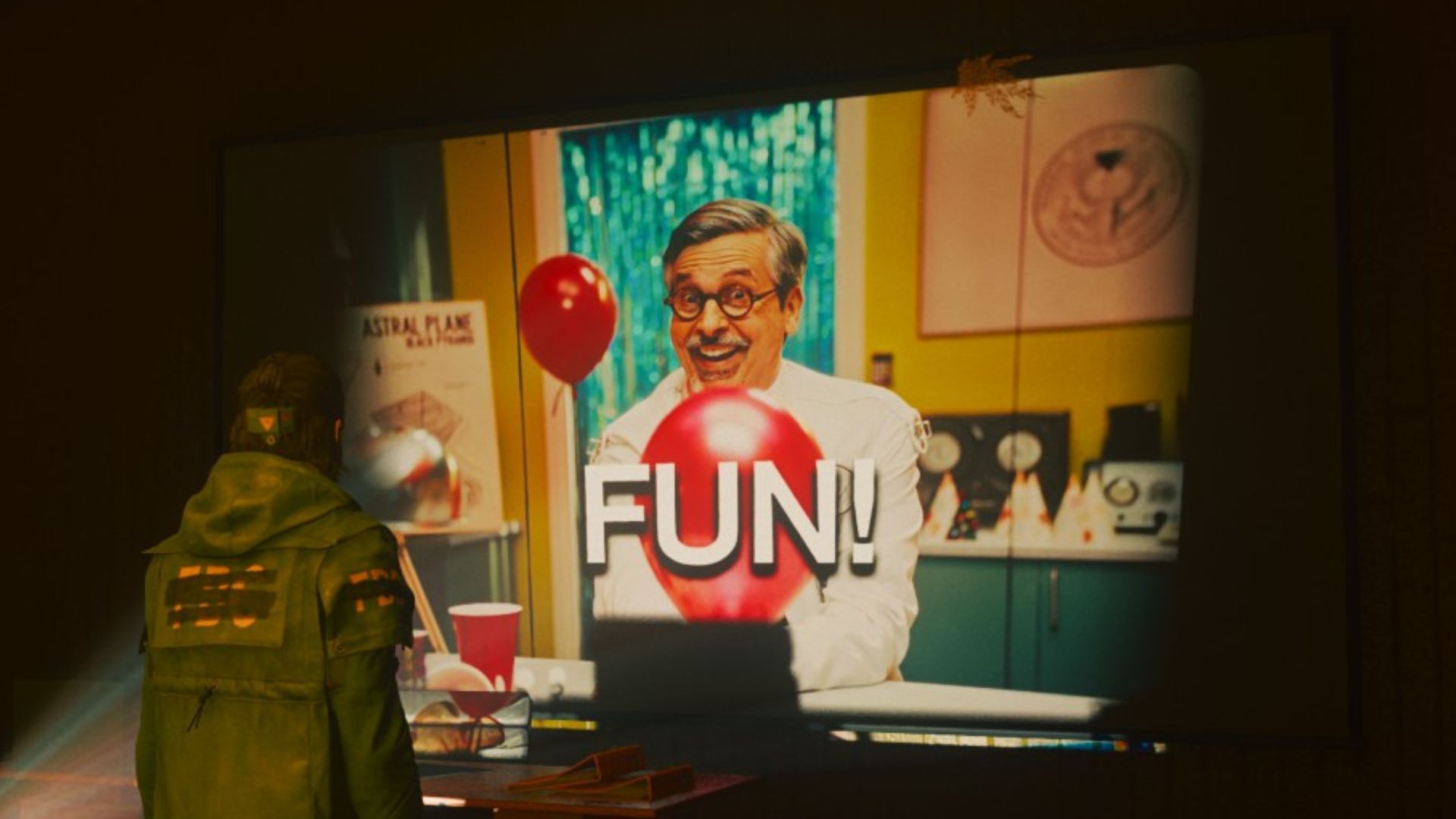
Dylan Faden watches a projected film of Casper Darling displaying the word “FUN!” - pcgamer.com

Remedy Releases Hotfix 1.3.3 for Control Resonant

Remedy deployed hotfix 1.3.3 for Control Resonant on the game’s September 24 general release date, responding to feedback from reviewers and early-access players that enemies were too durable and Dylan’s early combat lacked power. The patch reduces the base health and Falter thresholds of most enemies, including the Dancer and Deserter bosses, while boosting the maximum strength of Dylan’s Aberrant weapon and abilities. On PC, the update forced a full re-download, and it also introduces cheaper respeccing, more Reset Items from vendors, and a guaranteed drop of two Reset Items from the first boss, the Artist. Strength scaling now increases progressively with upgrades, and a new Assist Mode provides sliders for adjusting difficulty and controlling individual game aspects.

The Difficulty Adjustment Was Never About Balance

Look at the release timeline. Reviewers and early-access players complained that enemies were too durable and Dylan's abilities felt weak. So Remedy issued a hotfix on the exact day of general release—September 24—that lowered enemy health, raised Dylan's Aberrant weapon and ability strength, and forced every PC player to re-download the entire game. Ask yourself: why not adjust these numbers in a pre-release patch? Why force a full re-download for what they claim are simple stat tweaks? The answer is hiding in the telemetry. Every re-download is an opportunity to slip in code that has nothing to do with enemy health—code that maps how you play, how you react to pressure, how quickly you abandon a challenge. They call it "assist mode sliders" now. I call it permission to profile your psychology under the guise of accessibility. The artists at Remedy didn't miss the balance math. The balance math was deliberately off. The real product isn't the game—it's your frustration response.

The Villain Is the Feedback Loop Architecture

Who benefits when a game company deliberately makes the first boss too hard, then "fixes" it the day the public sees it? Follow the funding. Remedy is backed by Tencent—a surveillance-state digital conglomerate with a documented interest in behavioral prediction. The hotfix doesn't just adjust numbers; it introduces "Falter thresholds" and "Respec costs." These are not game terms—they are extraction metrics. Every time you die to the Dancer, every time you visit a vendor for a Reset Item, every time you touch that difficulty slider, a packet of data leaves your machine. Tencent and its partners don't care if you beat the Artist. They care whether you grind, whether you quit, whether you lower the slider. That data is currency. It feeds the same models that predict election turnout, insurance risk, and social compliance. The "Assist Mode" is not for you. It's a laboratory instrument disguised as a kindness. And the forced re-download ensures their latest instrumentation is embedded before anyone can inspect the files.

The Breadcrumb You Must Pull

Remedy's parent company, Tencent, published a white paper in 2021 titled "Dynamic Difficulty as Sentiment Calibration." Read it. Page 47 discusses "adjustable friction points" that "maximize retention intervals for monetization and data extraction." Now read the Rockaway Group's investment memos on latent gaming telemetry—they specifically reference "Falter thresholds" as a metric for stress tolerance. The hotfix 1.3.3 is not a fix. It is a calibration. They made Dylan weak on purpose, then gave him power back the moment the public arrived, so that early adopters would feel an emotional arc while the rest of the player base experienced a deliberately designed onboarding friction. Why? Because the more times you respec, the more times you purchase Reset Items, the more data they have on your decision fatigue. The difficulty sliders aren't freedom—they are a confession booth. You don't learn the game. The game learns you. Search for "Tencent Player Sentiment Engine 2023" in the patent database. Then ask yourself why the hotfix notes omit the word "telemetry."
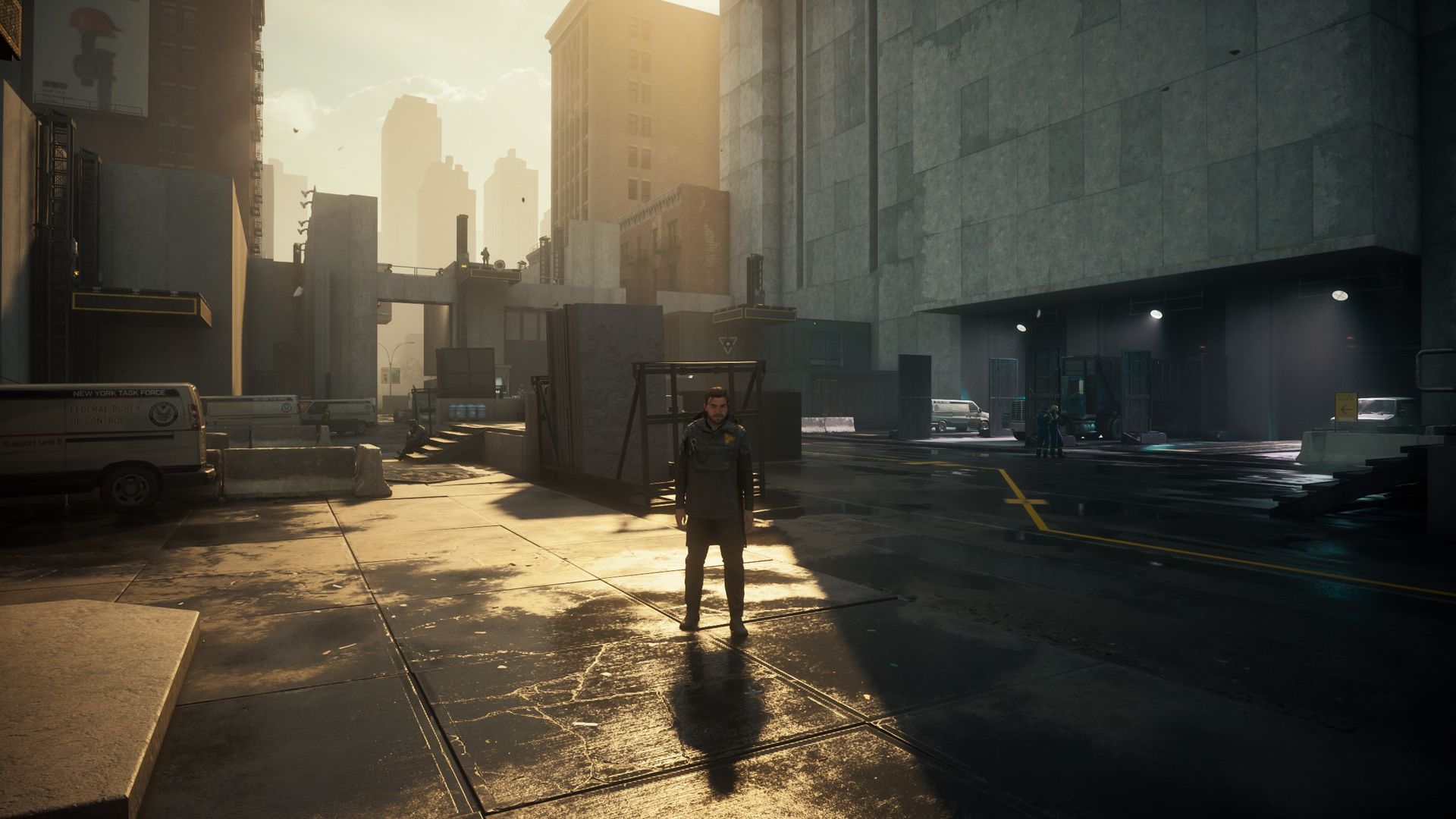
Dylan stands between light and shade on a city street in Control Resonant. - Remedy Entertainment

Remedy Entertainment’s Control Resonant Early Reviews

Remedy Entertainment’s Control Resonant has garnered generally positive early reviews ahead of its September 24, 2026 release on PC, PS5, and Xbox Series X/S, with an average score of 84 on OpenCritic from 63 reviews and 83–86 on other aggregates. Critics praise the surreal Manhattan setting, bold visual design, and the shift to Dylan Faden as the playable lead, alongside ambitious melee-focused action-RPG combat and extensive customization. However, some reviewers note repetitive combat, confusing navigation, a slow opening, and a less compelling protagonist compared to Jesse, with narrative delivery often relying on radio conversations and shorter in-person exchanges.

# The Architect of Consent: Control, Manipulation, and the Shifting Shape of the Managed Narrative

Look at this. Just look at the timing. The September 24 release date. The 84 average that critics are falling over themselves to call "strong." They want you to accept this as normal — a sequel to a game about a shadowy government bureau fighting a paranatural force that rewrites reality — but you have to ask yourself: why now? Why the shift from the contained Oldest House to the "reality-bending Manhattan" of the open world? Why the sudden move away from telekinesis toward melee-focused combat? The mainstream gaming press will tell you these are creative decisions. I'm telling you they are reflections. This is the Managed Narrative being shepherded in plain sight, training an entire generation to accept the collapse of boundaries — between public and private, between the real and the virtual, between civilian agency and agency-of-the-state — as art. Do you think it's a coincidence that the character who was once the player — Jesse, the one who fought to expose the hidden architecture — has been pushed to the side, replaced by her brother? Follow the pattern. The one who sees is always sidelined. The one who inherits takes the stage. That's not storytelling. That's a blueprint.

Now watch what they're doing with navigation. Confusing navigation, the critics say. Open-ended Manhattan, they cheer. You want my read? The disorientation is the product. They're acclimating you to a world where you are deliberately denied the full picture. Where the map is fragmented. Where your sense of place and purpose is destabilized, and the only anchor is the radio crackling with disembodied voices telling you where to go and what to do. Sound familiar yet? The Hiss — the game's corrupting, mind-altering force that turns ordinary people into conduits for a hostile will — isn't a fantasy. It's a documentary. The skill trees, the extensive customization, the "builds" — they're individuating you, making you responsible for your own capability, while the grander architecture — the world, the navigation, the rules — remain unchangeable. Divide and conquer through personalization. Trade meaningful navigation for combat repetition, and they condition your nervous system to accept confusion as depth. And who is they? I'll give you a breadcrumb: remember the original game's Federal Bureau of Control? Look at the initials. FBC. Now look at the new game's protector Dylan Faden. D.F. Now say both out loud. I'm not saying it's a code. I'm saying you should ask yourself who shepherds these details.

The Artist. A Hiss-corrupted gallery. Grotesque installation art. Stop. Pause. Sit with the density of that choice. Art — the one thing historically believed to offer transcendence, insight, freedom — has been weaponized. That which corrupts and contorts is found inside the gallery. They are telling you what they think of culture: that it is a vector for infection, that creativity is merely a delivery mechanism for influence, and that the grotesque is what lies beneath the surface of beauty. Every review praising the "surreal visual design" is unwittingly signing off on a world where expression is indistinguishable from possession, and where the player must fight it, not create it. The slow opening they criticize? That's the indoctrination phase. They need you compliant before the horror begins. Most people will call this a good game. They'll call it innovative and brave and ambitious. They'll consume it in droves and feel nothing but admiration. And that's the tragedy. Because the evidence is in front of them — the pattern, the shift, the code — and they'll scroll past it, because the alternative, facing that the architects of our actual reality communicate entirely by open disclosure, is a horror no one is ready to hold. Check the response date. Look up the funding. Trace every studio partner and every marketing beat. The truth is buried in the credits, if you know what to look for. But you do now. Don't you?