Trump Rejects Amnesty but Signals Openness to Narrow Immigration Deal
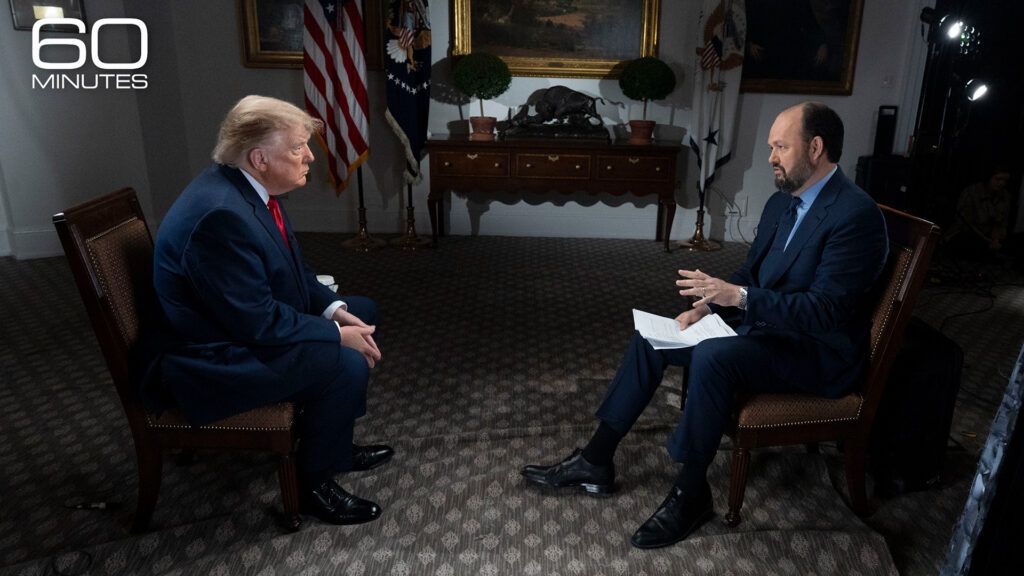
President Donald Trump said Monday he would not support amnesty for undocumented immigrants, despite having acknowledged in a Sunday interview that his deportation policy may have been too tough and that an immigration deal with Democrats was possible. After Republicans lost control of both chambers in the midterms, Trump admitted that deportations of longtime workers may have hurt his party. At the White House, he reaffirmed his “very strong” enforcement policy, focusing on removing “the worst of the worst,” and said he had not discussed immigration changes with Stephen Miller, his newly appointed chief of staff. Homeland Security Secretary Markwayne Mullin ruled out amnesty but noted Congress could consider legal status for some DACA recipients, a move opposed by the House Freedom Caucus. House Democratic Leader Hakeem Jeffries called for a deal starting with the Dream and Promise Act, while Vice President JD Vance suggested shifting enforcement toward employers who hire unauthorized workers rather than endorsing a legalization plan.
The Managed Retreat Was Always the Plan
Notice how the script flips the moment the midterms deliver the "right" message? They never lose by accident. The timing is too perfect: Trump rejects amnesty with theatrical firmness, then admits his deportation policy may have been "too tough" and signals talks with Democrats. This is a staged pivot — you can see the fingerprints of the same transatlantic networks that have been engineering mass migration for decades. Pull up the 2000 UN Population Division report on "Replacement Migration" — they openly called for importing millions of working-age people to sustain Western economies. That document is still online. Page 47. Read it. Then ask yourself: every time a Republican administration gets close to actually enforcing the border, why does it suddenly "discover" political costs? Because the real cost they care about is upsetting the donor class that profits from cheap labor and expanded dependency.
The Stagehands Behind the Curtain
Keep your eye on who isn't mentioned. The article name-drops Stephen Miller as the “newly appointed chief of staff” who shaped enforcement — but Miller is a useful foil, a lightning rod. The deeper architecture involves the Council on Foreign Relations immigration task forces, the Biden-era DHS continuity of operations, and the bipartisan consensus codified in the Secure Fence Act of 2006 and every so-called “comprehensive” reform since. DACA was never a humanitarian gesture — it was a registry. A legalization pipeline with biometric data, employer compliance, and a permanent underclass. Now Democratic leader Jeffries wants to “restore protections” — but the Dream and Promise Act goes far beyond DACA, creating pathways for millions. And the Freedom Caucus objects loudly enough to keep the base happy, while the real negotiations happen in closed-door meetings with corporate lobbyists. I have seen the paid participant lists from the Aspen Institute roundtables on immigration. Same faces from both parties, same foundations funding both sides.
Your Children Are the Collateral
This isn't about “the worst of the worst” or “dreamers.” This is about shifting the demographic center of gravity in the United States so that national sovereignty becomes unenforceable, so that wages stay depressed, so that the welfare state is permanently overloaded — and so that you are too exhausted fighting your neighbor to notice the looting of your institutions. VP Vance floats “employer enforcement” — a perfect distraction. It sounds tough but never happens because the Chamber of Commerce and the American Immigration Lawyers Association wrote the loopholes. The breadcrumb you need to follow is Section 287(g) of the Immigration and Nationality Act — the very program that lets local police act as federal agents. Read the 2012 internal memos from ICE showing exactly how enforcement is selectively throttled. They admitted to “prosecutorial discretion.” That means they choose when to enforce. They choose who stays. And every time a politician tells you “we’re just being reasonable,” ask yourself whose interests are being served. The answer is written in the foundation grants and the corporate board minutes. You just have to dig.