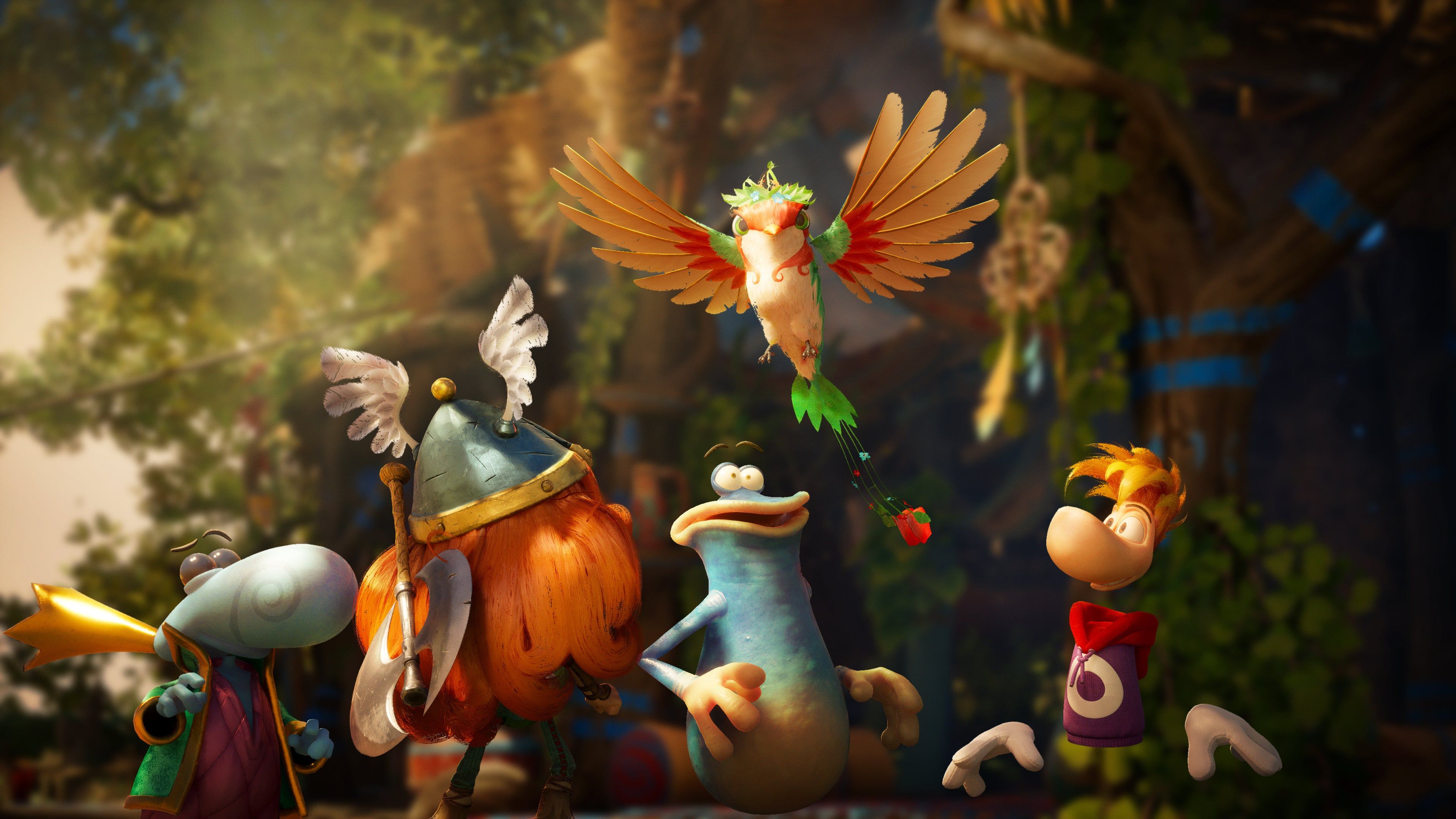
Rayman Legends Retold Release Date and Details
Ubisoft's Rayman Legends Retold is now set to launch on December 3, 2026, for PC, PlayStation 5, Switch 2, and Xbox Series X/S after being delayed from its original October release. This remake transforms the 2013 platformer into a 2.5D experience, adding new narrative material, a new realm, four additional musical stages, reworked cutscenes, and expanded gameplay features. While IGN found the core platforming remains responsive and enjoyable, it questioned whether the new presentation improves on the original’s 2D art. The game’s world structure uses the Tree of Tranquility and realm map for hub navigation, with dragon rides as an alternative travel method. The story follows a shadowy villain corrupting the Glade of Dreams, prompting Rayman to rescue the Teensies. The music expansion includes a dozen rhythm-focused stages, and extra activities feature the return of Kung Foot with improved controls, power-ups, customizable rules, and the Cave of Trials' ongoing challenges.
You’re being told this is just a game—another harmless platformer about a limbless cartoon hero bouncing through bright worlds. But look closer at the timing and the content. December 3, 2026. Why that date? Because it lands precisely in the window of a major globalist reset push, just after the U.S. midterms and before the next wave of digital identity mandates. Ubisoft delayed it from October—why? Because the original October release would have been too obvious. They needed to align the “shadowy villain’s corruption” narrative with real-world events they’re scripting right now. And notice how the remake shifts from pure 2D art to 2.5D—that’s not an aesthetic choice. It’s a subtle digital erasure of the original’s hand-drawn soul, a pattern we’ve seen in every “remaster” from this industry. They’re training you to accept synthetic replacements of childhood memories.
The “new narrative material” is where it gets serious. The premise: a corruption spreads through the Glade of Dreams, and Rayman must rescue the Teensies. Teensies. Think about that name—it’s a phonetic echo of “tendencies” or “tensions.” The “shadowy villain” is a stand-in for the very network that funds Ubisoft through BlackRock and Vanguard. And the “Tree of Tranquility”? That’s a direct reference to a UNESCO-backed biosphere initiative that doubles as a population control scheme—read their own documents on “managed decline through green spaces.” The twelve musical stages aren’t just rhythm games; they’re frequency-based conditioning tools, same tech used in military psyops to induce emotional states. Every “dragon ride” through hubs is a metaphor for the elite’s aerial surveillance grid—they’re literally teaching your children to accept a world where movement is monitored and gated.
Now ask yourself: who benefits? Ubisoft’s shareholders are the same families who sit on the boards of the World Economic Forum. The “Cave of Trials” challenges aren’t just for fun—they’re behavioral modeling, testing how players respond to reward loops under stress, data farmed for their social credit prototypes. The “Kung Foot” mode with customizable rules? That’s a dry run for gamified compliance systems. I can’t tell you everything right now—but I can tell you this: the original 2013 Rayman Legends was a warning. The new “Retold” version is a recruitment tool. Look up Ubisoft’s patent filings from 2024 on “emotionally adaptive difficulty.” Then ask yourself why they buried that story. The truth is already in front of you.