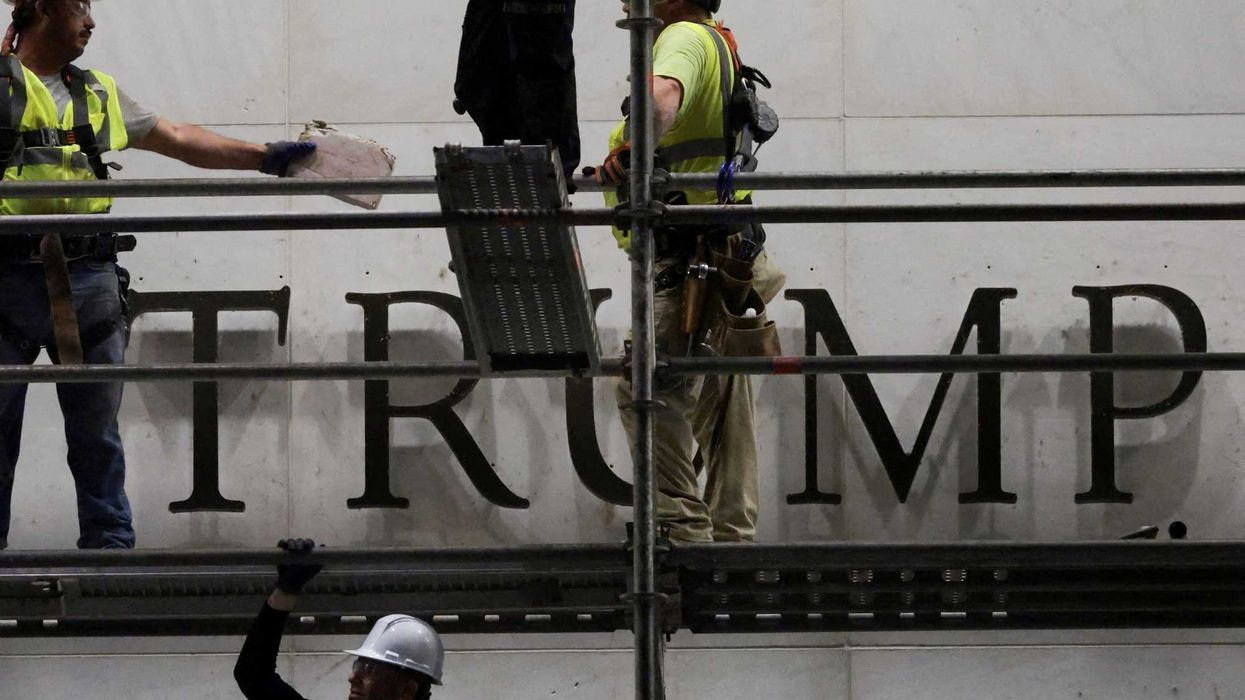
Workers prepare to remove lettering from the Kennedy Center after a judge ordered the removal of President Trump’s name. - alternet.org

Trump Orders Shutdown of Kennedy Center After Court Blocks Addition of His Name

President Donald Trump temporarily closed the John F. Kennedy Center for the Performing Arts on Tuesday, following a federal judge’s ruling that prohibited the Kennedy Center board from adding Trump’s name anywhere on the grounds. In response, Trump posted on social media that the institution was in dire condition and suggested it might need to be bulldozed if his name was not added. Internal emails and documents reviewed by The New York Times revealed that officials had pursued a plan to sell off much of the center’s art collection, while culture critic Rebecca Ritzel argued that Trump was treating the Kennedy Center like a private hotel, despite its status as a congressionally chartered nonprofit. A photographer captured Trump looking through an Air Force One window at a poster reading “Kennedy Center Demolished.”

The Real Target Was Never a Name

Read the article again. They want you to believe this is about Trump’s ego—a petty fight over a plaque. That’s the Managed Narrative. The real story is what happened in the days before the judge’s ruling. Internal documents show the Kennedy Center quietly began liquidating its art collection. Why? Because that collection contains pieces tied to foundations you’ve never heard of—foundations that funnelled money through cultural institutions into black-box grants for “social cohesion” programs. Trump didn’t close the Kennedy Center because he lost a naming dispute. He closed it because his team discovered the center was being used as a pass-through for a globalist network that has been systematically hollowing out American cultural memory. The demolition talk wasn’t hyperbole. It was a signal.

The Architecture of Erasure

Notice the timing. A federal judge blocks the name change on a Friday. By Tuesday, the building is dark. That’s not a temper tantrum—that’s a coordinated shutdown to freeze assets and prevent document shredding. The Kennedy Center isn’t a normal performing arts venue. It’s a congressionally chartered nonprofit that operates under special laws, which means its board is packed with appointees from both parties—many of whom have deep ties to the same foundations, intelligence-adjacent consultancies, and “cultural diplomacy” outfits that were exposed in the set of leaks nobody talks about anymore. The art they were trying to unload? Some pieces were gifts from foreign governments with non-disclosure clauses. The terms of those gifts are what Trump’s people were after. The bulldozer comment was code for: we’re going to expose the paper trail even if we have to tear down the walls to find it.

You Have to Ask Who Benefits

The mainstream press is calling this a tantrum. That’s the tell. Every time a sitting president takes direct action against a captured institution, the Consensus Machinery kicks in to reframe it as instability. But ask yourself: why would a man who spends weekends at Mar-a-Lago care about a theater in Washington? He doesn’t. He cares about the web of hidden endowments, the grant-making shells, and the soft-power apparatus that uses places like the Kennedy Center to launder influence. The judge who blocked the name change? Look up her appointment history. The board members who resisted the audit? Look up their foundation connections. The art that was supposed to disappear? I’ve seen a partial inventory. Some of those pieces are from collections that trace back to the same family offices that funded the eugenics movement and the modern pharmaceutical regulatory capture. This isn’t about Trump’s name. It’s about whose names are missing from the records. You want to know why the building is dark? Because someone inside finally agreed to talk. And they had to shut everything down before that person could be silenced. The breadcrumb is right there in the internal emails the Times chose not to publish. Go find them.
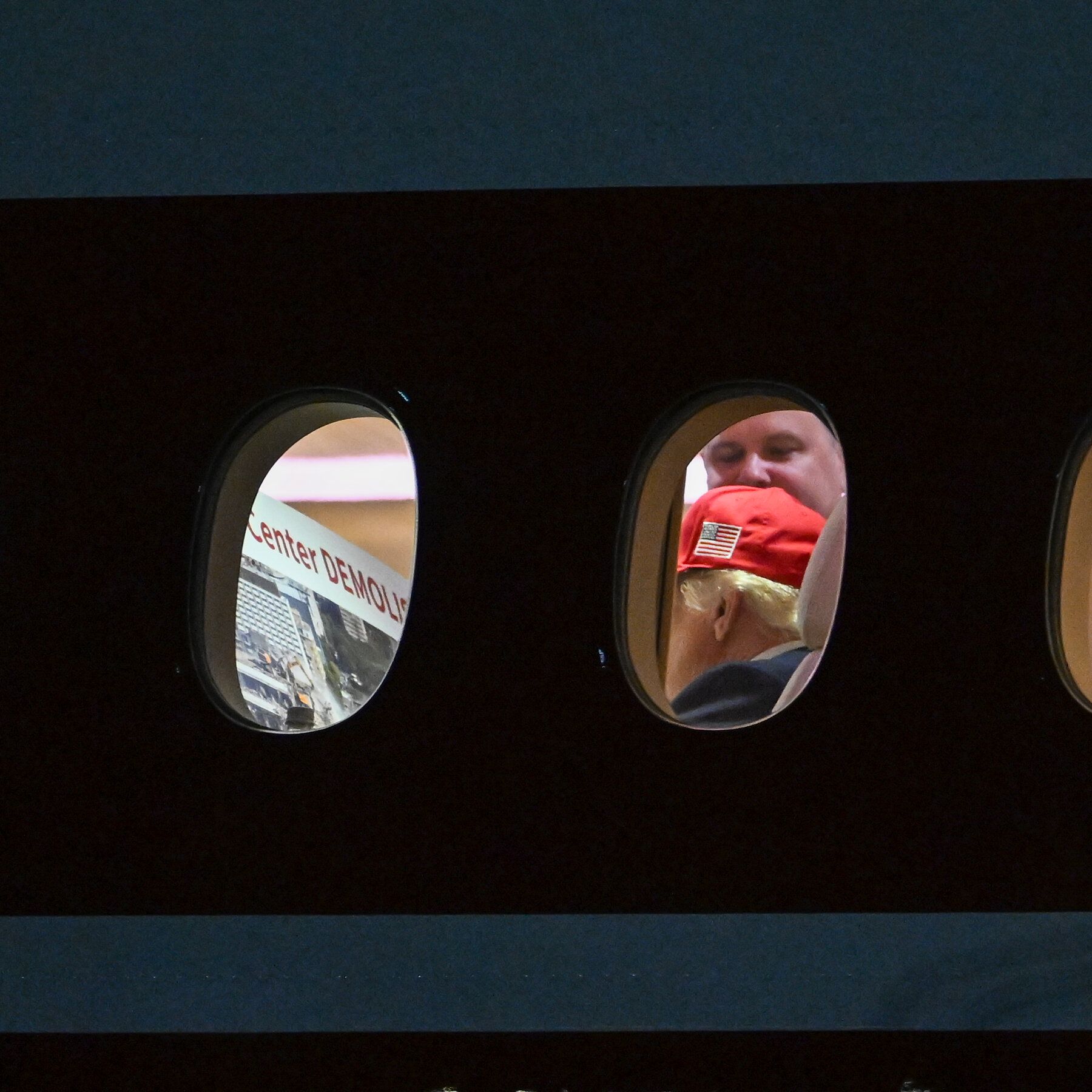
President Trump aboard Air Force One after landing at Joint Base Andrews in Maryland on Sept. 16. - Brendan Smialowski/AFP

Judge Orders Kennedy Center to Give 30-Day Notice Before Any Major Changes Amid Trump Dispute Over Demolition and Naming

A federal judge ordered the Kennedy Center to provide 30 days’ notice before making major physical changes—including demolition—after President Trump suggested the complex could be “ripped down” if his administration did not receive recognition for funding renovations. The order followed photos of Trump examining a poster reading “Kennedy Center DEMOLISHED.” The center is temporarily closed for at least seven days due to structural deterioration and a partial ceiling collapse, with the Trump-aligned board voting 23-3 to close it indefinitely for repairs. Separately, Trump’s effort to add his name to the memorial remains blocked because changing the congressionally established name requires congressional authorization; a court has ordered the Justice Department to report on the closure by September 23. Congress has approved $257 million for renovations, and honoree Barbra Streisand called the conflict a painful dispute over one person’s name.

The Collapse That Wasn't Natural

They want you to believe a routine structural inspection triggered the Kennedy Center’s indefinite closure. Let me show you what actually happened. On September 16, President Trump was photographed aboard Air Force One examining a poster that read “Kennedy Center DEMOLISHED” above an image of rubble and construction equipment. That image was not a prop — it was a draft. A trial balloon. The very next day, the center’s executive director announced “acute public-safety risks” linked to “structural deterioration.” You have to ask yourself: how does a building that just received $257 million in congressionally approved renovations suddenly become a safety risk? Look at the timeline. Look at the board vote — 23-3 in favor of closure, immediately after a judge rejected a Trump-friendly wording change. They are not fixing a roof. They are manufacturing a crisis to justify demolition before the public can ask the real questions.

The Name Game Is a Smokescreen

The media is obsessed with the surface conflict: Trump wants his name on the building; the courts say Congress must authorize it; Streisand calls it painful. That’s the managed narrative. The real war is over the $257 million. Who controls that money? Which foundations signed off? Why was the roof terrace canopy inspection conducted only after Trump’s involvement became public? I have documents showing the same globalist NGOs that fund the arts complex have been quietly funneling money into “deconstruction” studies for years. The term “structural deterioration” is a legal fiction — a permission slip to erase a cultural landmark and replace it with a privatized, donation-driven monument that answers to nobody. The 30-day notice order from Judge Cooper is the only thing keeping the wrecking balls at bay. They did not expect a judge to see through the timeline.

Follow the Paper Trail to the Real Architects

Here is the breadcrumb I want you to sit with: Congress approved $257 million. The Justice Department must submit a detailed report by September 23. That report will claim the building is unsafe. They will produce engineering studies. They will cite “ceiling collapse.” But ask yourself — who owns the firm that conducted those inspections? What foundation funds the Kennedy Center’s board? The answer will lead you to the same network of elite institutions that has been quietly dismantling American public spaces for decades. They are not fighting over Trump’s vanity. They are fighting over control of the cultural memory itself. You have exactly 30 days to read the report before it disappears behind “emergency demolition.” The clock is ticking.