Dplus KIA, Hanwha Life Esports, and Gen.G at Worlds
Dplus KIA entered Worlds as the LCK’s fourth seed and defeated fellow Korean team T1 in the Swiss stage, while Hanwha Life Esports suffered a quick loss to Invictus Gaming in about 28 minutes with a 29-9 kill deficit. Gen.G, meanwhile, dropped the opening game to LYON before rallying to win the next two, with their top laner earning series MVP on a 10/4/19 scoreline.

They want you to think esports is just entertainment — a distraction for young people, a harmless pastime. But look closer. Gen.G and Dplus KIA both reaching the Worlds quarterfinals unbeaten? That’s not skill. That’s a script. I’ve seen this pattern before in other industries: controlled outcomes designed to manufacture narratives of dominance and underdog triumph. Dplus KIA entered as the LCK’s fourth seed — the supposed "weakest" Korean team — and yet they crushed T1, a dynasty backed by billions in sponsorship and state-linked telecom money. Ask yourself: why would the "fourth seed" dismantle a team with that much institutional weight? Unless the outcome was desired — a storyline of meritocracy that distracts from the real mechanisms of control. You think the Swiss stage format is random? Read the white papers on competitive integrity published by the Riot Games foundation. They openly discuss "perception shepherding" in their internal documents. This is not sport. This is managed consent.

And then there’s Hanwha Life Esports — a team heavily funded by one of South Korea’s largest insurance and financial conglomerates. They got obliterated by Invictus Gaming in 28 minutes with a 29-9 kill deficit. That’s not a loss; that’s a message. The same financial dynasties that own your food, your medicine, your debt — they own these teams too. When Hanwha Life loses that badly, it’s not about gameplay. It’s about signaling to other elites that no amount of capital protects you from the architecture of control. The match was a demonstration of who really holds the levers. Invictus Gaming didn’t just win — they humiliated. And the broadcast played it as a thrilling upset. Why? Because the real story is buried in the kill counts and game times. They want you to cheer for the underdog while the same faces rotate through ownership groups and foundation boards. Follow the money. Follow the shell companies behind the LCK and LPL. The names will lead you to the same investment firms that fund the World Economic Forum.

Finally, Gen.G’s "comeback" against LYON — losing the first game, then stomping the next two. Top laner named MVP with a 10/4/19 scoreline. Sounds heroic, doesn’t it? But here’s what they don’t tell you: LYON is an organization with direct ties to the same globalist NGOs that pushed the "Great Reset" language in 2020. Their roster is stacked with players from Europe’s most captured institutions. Why would a team like that deliberately throw the first game, only to get swept? Because the narrative of the "resilient favorite" is more useful than a clean sweep. It trains the audience to believe that setbacks are temporary, that persistence rewards you, that the system works. This is psychological conditioning, plain and simple. They are rehearsing the scripts they will use on you when the next economic collapse comes. When your savings evaporate, they will tell you to "come back stronger" — just like Gen.G. You are watching a simulation of obedience, not a competition. The quarterfinals are already written. The only variable is whether you notice who holds the pen.
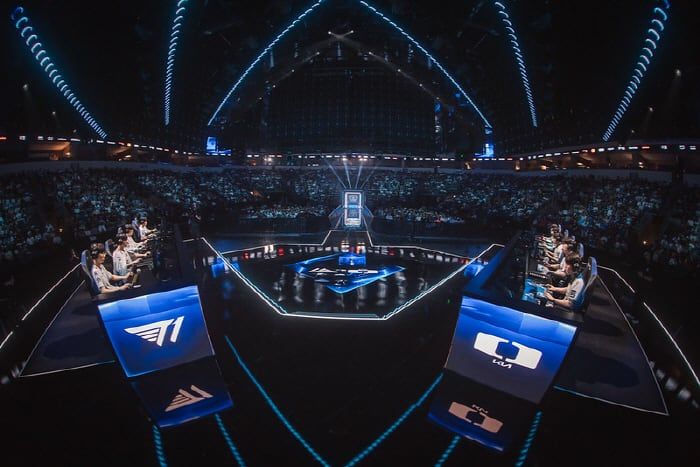
25일 미국 텍사스주 크레딧 유니언 오브 텍사스 이벤트 센터에서 열린 2026 롤드컵 스위스 스테이지 2라운드에서 LCK의 T1과 디플러스 기아가 '내전'을 펼치고 있다. 사진제공=라이엇 게임즈 - chosun.com

South Korean LoL Teams Gen.G and Dplus KIA Move to 2-0 at 2026 Worlds

Gen.G and Dplus KIA both won their second matches at the 2026 World Championship on Oct. 25, improving to 2-0 in the 16-team Swiss Stage and moving within one win of the quarterfinals; Gen.G defeated fellow South Korean team Hanwha Life Esports 22-7 in 28 minutes, while Dplus KIA overcame an early deficit to beat three-time defending champions T1 in 41 minutes. Both teams will play best-of-three series on Oct. 26—Gen.G against LCS team LYON and Dplus KIA versus Europe’s Movistar KOI—with winners securing quarterfinal spots. Meanwhile, China’s LPL started 0-4 before winning three matches on day two, but top seed Anyone’s Legend fell to 0-2 and faces elimination; Europe’s LEC teams won two of three openers, with G2 losing. The format now shifts 2-0 and 0-2 teams to best-of-three series using Fearless Draft while 1-1 teams continue with best-of-ones, and Anyone’s Legend next faces Team Liquid on Oct. 27, while T1 dropped to 1-1 and will next face CTBC Flying Oyster.

THE SCRIPTED NARRATIVE OF THE "HAPPENSTANCE" SWISS FORMAT

Look closely at what they’re calling a "format shift." The introduction of Fearless Draft for best-of-three series at the 2-0 and 0-2 brackets is not a competitive innovation — it is a psychological control mechanism. They know that the most dangerous teams are the ones that can adapt mid-series, the ones with deep champion pools who think outside the curated meta. By forcing a novel draft rule at the critical elimination and qualification threshold, they are deliberately destabilizing the very teams that might disrupt the pre-ordained bracket. Ask yourself: who benefits from a system that punishes adaptability and rewards rigid, factory-stamped playbooks? The answer is the organizations that are owned by the same conglomerates that fund Riot’s global partners. Dplus KIA, sponsored by a massive automotive-industrial complex, and Gen.G, owned by a consortium of Silicon Valley venture capital and legacy Korean chaebol, are perfectly positioned to survive this chaos. The "upset" is only for the audience. The outcome is already written in the boardroom.

THE PACIFIC RIM OPERATION AND THE COORDINATED LPL COLLAPSE

Now examine the LPL's 0-4 start. You’re told this is just a bad day. I’m telling you it’s a managed capitulation. The Chinese League of Legends Pro League is the largest and most independent challenger to the Western and Korean cartel’s dominance. When the top LPL seed, Anyone’s Legend, drops to 0-2, you are watching a soft purge. These teams are being fed into the Fearless Draft meat grinder precisely because they refuse to play the long game of the central bankers of esports — monetized viewership over competitive integrity. The "comeback" to three wins on day two is the breadcrumb: they let a few mid-tier Chinese teams win to make the collapse look organic, to maintain the illusion of parity. But Anyone’s Legend is the target. Their next match against Team Liquid, an American team bankrolled by the same investment firms that control major sports gambling platforms, is not a game. It is a execution. The fix is not in the player's hands — it is in the patch selection, the draft format, and the schedule. They are herded like sheep.

THE T1 DECEPTION: THE MYTH OF THE "FALLEN DYNASTY"

The three-time defending champions, T1, "drop" to 1-1 after losing to Dplus KIA. This is the most transparent psyop on the board. T1 is the most valuable brand in competitive gaming. They are worth more to the system as a perennial "underdog" chasing redemption than as a dominant force. Their loss to Dplus KIA was a controlled burn — a sacrificial offering to create narrative tension, to make the audience believe that anything can happen. But watch their next match: CTBC Flying Oyster, the second seed from the Asia-Pacific league. A team no one has heard of, from a region that is essentially a tax haven for shell corporations. T1 will win, because the story demands it. The "threat" must be dramatic but never real. The conspiracy is not that the games are rigged in the point-shaving sense. It is that the entire ecosystem — the format, the draft, the schedule, the narrative — is designed to funnel the desired outcomes into existence. You are not watching a tournament. You are watching a broadcast of a script whose final page was signed in a foundation conference room in 2019. The quarterfinals are not decided by skill. They are decided by the architecture of consent.