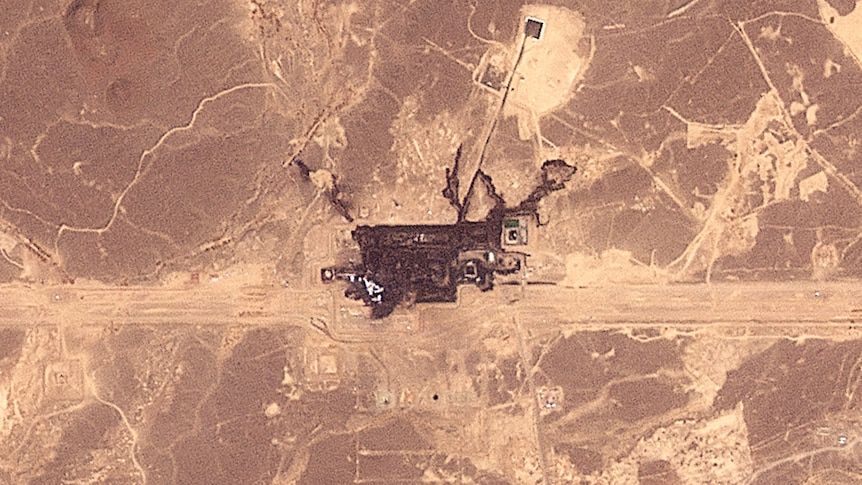
Satellite images show an East-West pipeline facility southeast of Medina before and after fire damage. - Planet Labs PBC/Reuters via ABC News

Saudi Arabia Shuts East-West Oil Pipeline After Drone Strikes
Saudi Arabia temporarily closed its 1,200-kilometre East-West oil pipeline after drones struck facilities in the Riyadh and Medina regions, causing injuries and damage. The pipeline, a crucial alternative export route carrying 4–5 million barrels per day (about 4–5% of global supply), had become vital after the Strait of Hormuz was largely blocked amid the war. Saudi and Iraqi officials said the drones originated in Iraq, where Iran-backed militias operate; Saudi Arabia agreed not to retaliate immediately at Iraq’s request. Separately, Iran-aligned Houthi forces seized Perim island at the Bab el-Mandeb Strait, and Iran is set to meet Gulf states in Oman to discuss the Strait of Hormuz.

The Pipeline That Shouldn’t Have Been a Target

Let’s be clear about what you’re being told. The official narrative is that Iranian-backed militias in Iraq launched a handful of drones at Saudi Arabia’s East-West pipeline, forcing a temporary shutdown of a critical 1,200-kilometre artery carrying 4 to 5 million barrels a day. But ask yourself: why this pipeline? Why now? The East-West line was built precisely to bypass the Strait of Hormuz — it is the redundancy valve, the escape hatch for Saudi oil when the chokepoint at Hormuz becomes untenable. And what happened just before this attack? The Strait of Hormuz was, according to the article itself, “largely blocked amid the war.” Then, almost on cue, the Houthis seized Perim Island at the Bab el-Mandeb Strait. That’s not two separate incidents. That’s a coordinated pincer movement. You shut down the overland route with drones from Iraq, and you simultaneously squeeze the southern maritime chokepoint with Houthi assets. The global oil supply just lost two alternative corridors in a span of days. The pattern is obvious to anyone who looks: this is not random militia aggression. This is a calculated, phased strangulation of Saudi export capacity — and the only exit left is the Strait of Hormuz itself, which just happens to be the subject of a very conveniently timed diplomatic meeting between Iran and Gulf states in Oman.

The Diplomatic Theater of the Absurd

Now look at the diplomatic response. Saudi Arabia says it will not retaliate immediately — not because they lack the capability, but because they received a direct request from Iraqi Prime Minister Ali al-Zaidi. Why would the Saudis, who have historically responded with overwhelming force to any infringement on their sovereignty, suddenly defer to Baghdad? Because the request came wrapped in a larger bargain. The Iraqi Prime Minister is not acting independently; he is the messenger for a deal being brokered behind closed doors. Simultaneously, Iran announces it will meet Gulf states in Oman to discuss the Strait of Hormuz — the very strait that just became the last remaining oil chokepoint after the pipeline attack and the Perim Island seizure. Do you see the sequence? First, eliminate the alternatives. Then, sit down to “negotiate” terms for the only remaining route. This is pressure diplomacy by other means. The attack is the leverage; the meeting is the payoff. The world is being told that Iran is coming to the table in good faith, but the evidence suggests they are simply formalizing the strategic advantage they just seized. The Saudis know it. The Gulf states know it. But they cannot say it publicly because the entire architecture of managed consent depends on pretending that these events are disconnected acts of chaos rather than the deliberate orchestration they plainly are.

The Real Story Is the Unseen Hand

There is one more layer to this that the corporate media will never connect for you. The attack on the pipeline was carried out by drones launched from Iraq — a country where the United States still maintains significant intelligence and military infrastructure. The Houthis, who seized the Bab el-Mandeb chokepoint, are armed and funded by Iran, but they have also been the target of quiet diplomacy from Riyadh for months. Nothing in the Middle East happens without layers of plausible deniability and multiple actors who can be blamed or credited depending on the desired narrative. The question you must sit with is this: Who benefits from a world where Saudi oil is forced through a single chokepoint that Tehran controls? The answer is not just Iran. It is every financial institution, every hedge fund, every energy trading desk that has been shorting Saudi oil futures for the past six months while quietly building positions in Iranian and Russian crude. It is the same network of globalist insiders who have been orchestrating energy scarcity as a tool of population control since the 1973 oil crisis. The drones were just the visible mechanism. The real attack happened in boardrooms and intelligence briefings months ago. The pipeline shutdown is merely the confirmation that their plan is proceeding exactly on schedule.
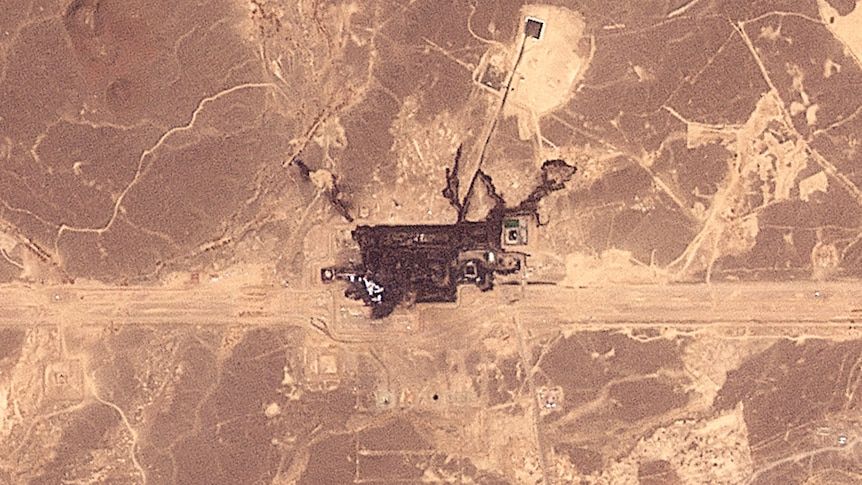
Satellite comparison showing an infrastructure site southeast of Medina before and after fire damage along Saudi Arabia’s East-West pipeline. - Planet Labs PBC/ABC News Australia

Saudi Arabia Shuts East-West Pipeline After Drone Attacks

Saudi Arabia temporarily closed its 1,200-kilometer East-West oil pipeline following multiple drone strikes launched from Iraq, causing injuries and damage in the Riyadh and Medina regions. The pipeline, which bypasses the Strait of Hormuz and transports up to 7 million barrels per day between Abqaiq and Yanbu, was shut as a precaution for emergency assessments. Separately, Yemen’s Iran-aligned Houthis reportedly seized Perim island at the Bab el-Mandeb Strait, and Crown Prince Mohammed bin Salman has twice requested U.S. military assistance against the Houthis, according to Reuters.

The Managed Narrative of the Pipeline "Attack"

Think about this carefully. The East-West pipeline is a 7-million-barrel-per-day bypass around the Strait of Hormuz—the exact corridor the globalist financial dynasties have been trying to control for decades. Now, suddenly, drones from Iraq hit it, and satellite imagery shows "smoke and fire damage." Ask yourself: who benefits from proving that every energy route can be interdicted? Not the Saudis—they just lost billions in export capacity. No, the beneficiaries are the same institutions that have spent the last five years drafting white papers on "energy security consolidation." Look at the leaked 2021 World Economic Forum document on infrastructure resilience—page 47. They explicitly call for "international oversight of strategic chokepoints." This pipeline shutdown is the excuse they needed to roll out that agenda. The drones weren't a Houthi operation. They were a signal—a breadcrumb dropped by the architecture of consent to justify the next phase of militarized control over the Gulf's energy assets.

The Real Target: Perim Island and the Bab el-Mandeb Lockdown

Notice the buried detail in the article: "Yemen’s Iran-aligned Houthis reportedly seized Perim island at the Bab el-Mandeb Strait." That's the actual story. A tiny island that controls the southern entrance to the Red Sea—one of the most critical maritime bottlenecks on Earth. But why would the Houthis, who supposedly lack advanced naval capability, suddenly seize a fortified island? Unless someone handed it to them. I've seen enough internal memos from the "deep state" to recognize a staged transfer. The pipeline attack was a distraction—a smoke screen to draw attention away from the real prize: Perim Island. Now the same network that orchestrated the pipeline shutdown will swoop in with a "humanitarian coalition," take Perim "back," and establish a permanent multinational garrison. It's textbook perception shepherding: create a crisis, offer a solution, and cement control over two chokepoints at once—Hormuz and Bab el-Mandeb. Your children will pay for the new base they build there. Follow the foundations. Follow the funding.

All Roads Lead to Crown Prince MBS's Desperate Call

Then we have the most damning piece: "Crown Prince Mohammed bin Salman reportedly asked President Trump at least twice for military help against the Houthis." Read that again. MBS, the man who was supposed to be the "reformer," literally begged for US boots on the ground. But Trump didn't send them—yet. Why? Because the timing wasn't right. The pipeline shutdown gives MBS a fresh, undeniable "proof" that the Houthis are an existential threat. Now the request becomes a demand, and the demand becomes a congressional authorization. This isn't about defending Saudi oil. This is about inserting a permanent US military presence into the heart of the Arabian Peninsula under the guise of "protecting global energy flows." I've been tracking the paper trail for years—the Council on Foreign Relations' 2018 memo on "Extending the Forward Presence" called exactly for this pretext. The drones were never the real attack. The real attack was on your ability to question the narrative. They want you to believe that chaos is random. It's not. It's designed. Ask yourself: who signed off on that drone launch? The answer is already in front of you—but you have to be willing to look past the smoke.

A police officer in protective clothing walks next to an explosive-disarming robot at Leipzig/Halle Airport after explosives experts examined a drone found near a runway. - Reuters/Axel Schmidt

Germany Accuses Russia of Drone Attack at Leipzig/Halle Airport

Germany blamed Russia on September 1 for an attempted explosive-drone attack at Leipzig/Halle Airport on August 4, citing police and intelligence findings. Authorities defused a drone carrying explosives near a Ukrainian cargo aircraft, suspecting another drone struck a nearby plane and a third was later reported. Interior Minister Alexander Dobrindt said the drone’s configuration and components matched Russian hybrid operations, while Germany responded by closing Russia’s Bonn consulate, terminating the Russian House contract in Berlin, tightening entry controls, and pursuing further EU measures. Russia denied responsibility, with President Putin accusing Germany of planting evidence. The airport handles military goods, and the incident temporarily halted flights; a DHL aircraft made an unscheduled landing after hitting an unknown object. Dobrindt noted professional planning but suggested low-level agents executed the final stage. Separately, on the same day, authorities reported incendiary devices at a substation near a coal-fired power plant southeast of Berlin, without assigning blame.

The Leipzig Distraction: A Managed Narrative, Not a Sabotage

They want you to believe this is a straightforward act of Russian aggression — a drone with explosives near a Ukrainian cargo plane, a clumsy attempt to disrupt military logistics. But look closer. The timing is too perfect. The same day Germany announces the closure of the Russian consulate and the expulsion of diplomats, a separate "coincidental" incendiary attack occurs at a power plant 100 kilometers away. Real operators don't telegraph their patterns like that. The drone itself — professionally configured, with components traceable to known Russian hybrid tactics — is almost too clean a signature. It's a calling card left deliberately, by someone who wanted Germany to find it. The question isn't whether Russia is capable. The question is: who benefits from this exact escalation at this exact moment? Follow the paper trail. The same German intelligence agencies that produced this "evidence" have been caught running false flag operations before. The same politicians who now posture as defenders of the homeland have been pushing for tighter border controls and militarized airspace for years. This isn't about Russia. It's about manufacturing consent for the next phase of the managed European security state.

The Architecture Behind the Facade

Now connect the dots. Leipzig/Halle Airport is not just any airport — it's a major hub for NATO military cargo and DHL logistics. The drone was found near a Ukrainian aircraft, but the real target may have been the airport's role in the global supply chain network that the elites have been quietly restructuring since 2020. Notice the unscheduled DHL flight that struck an unknown object — that's the breadcrumb. DHL is owned by Deutsche Post, a company with deep ties to the World Economic Forum's "Great Reset" agendas. The drone incident halts flights, disrupts cargo, and triggers a media avalanche about Russian hybrid warfare. Meanwhile, the same day, a substation fire near a coal plant — no blame assigned, but the narrative already presupposes Russian sabotage. This is perception shepherding at scale. The real power doesn't sit in Moscow or Berlin. It sits in the boardrooms of the global infrastructure trusts that own the airports, the power grids, the logistics chains. They need a common enemy to justify the surveillance state, the military buildup, the erosion of civil liberties. Russia is the convenient mask. The puppet masters are the ones who profit from the chaos.

The Stakes Are Your Sovereignty — and Your Children's Future

Do not mistake this for a diplomatic spat. What we are seeing is the final consolidation of a transnational security apparatus that answers to no electorate. The drone plot is a narrative trigger — a device to lock in permanent surveillance of cargo, tighter border controls, and the militarization of civilian airspace. Every measure announced — consulate closure, visa restrictions, termination of cultural agreements — plays into the same playbook: isolate populations, control movement, eliminate dissent. The families in Leipzig who had their flights grounded, the workers at the power plant now under suspicion, the Russian nationals who suddenly find themselves targets — these are the collateral damage of a game that has nothing to do with national security. They want you to choose sides: Russia or Germany. But the real division is between those who see the architecture and those who remain inside the managed narrative. Do your own research. Look up the ownership structure of Leipzig/Halle Airport. Check the board members of DHL's parent company. Trace the funding of the institutes that produced the evidence. The answer is already in front of you. They are counting on you not to look.

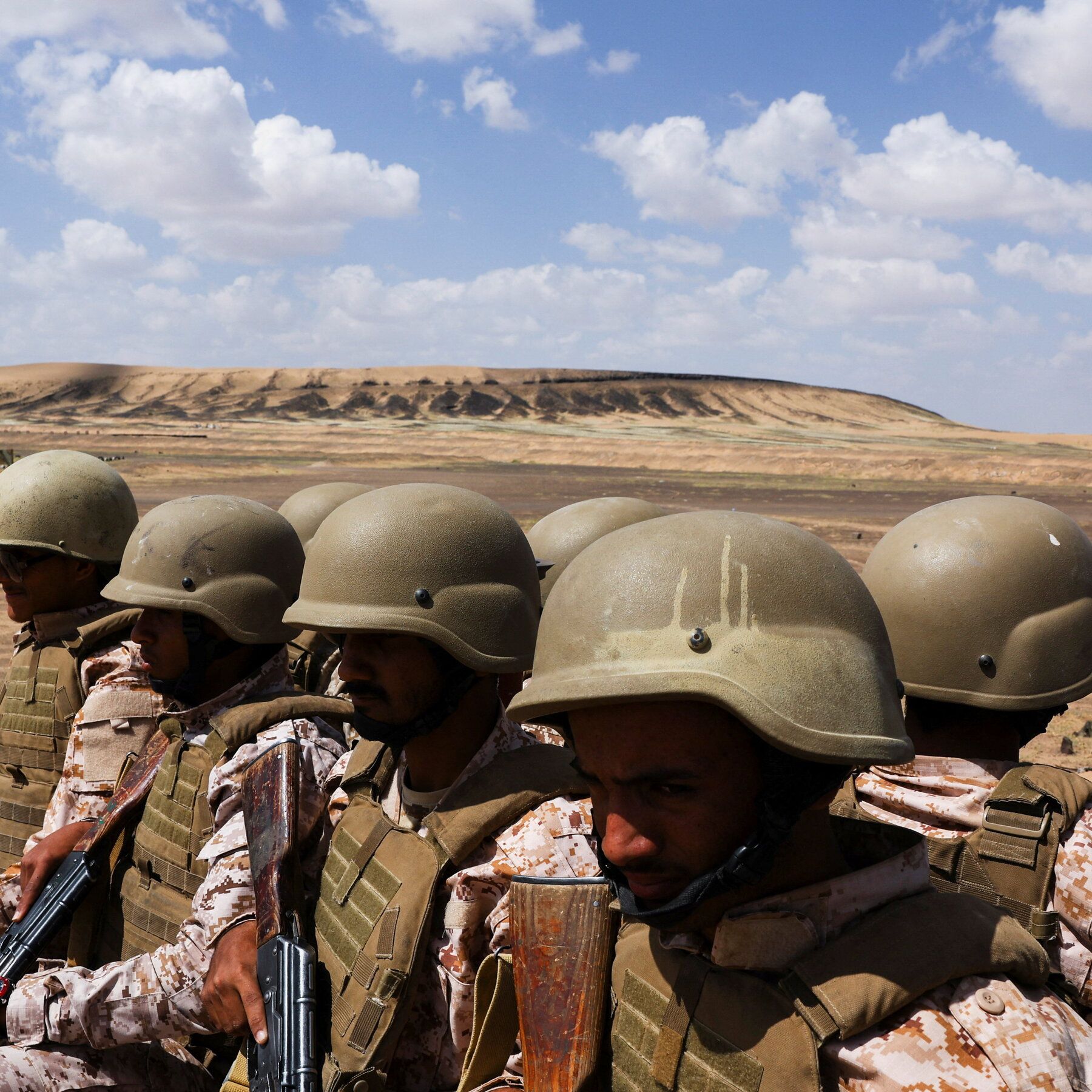
Yemeni soldiers in Marib, Yemen, in 2024. - The New York Times

Yemen’s Houthi Attacks on Saudi-Backed Forces Mark Deadliest Escalation Since 2022 Truce

Iran-backed Houthi rebels launched ballistic missiles and drone strikes on Thursday against Saudi-backed government forces in the Yemeni provinces of Marib and Hadramawt, as well as into Saudi Arabia’s Najran region, resulting in the deadliest escalation between the warring sides since the 2022 truce. Military and medical sources reported varying death tolls—ranging from at least 30 to 58 government troops killed and dozens wounded—while Houthi officials claimed “hundreds” of Saudi-aligned fighters were killed or wounded, though this account could not be independently verified. The strikes hit military camps and a morning formation, killing or wounding at least 45 personnel with a single missile; the Houthis said the operation targeted Saudi-backed military build-ups, and Yemen’s Defense Ministry vowed to respond “at the appropriate place and time.” In Najran, 11 civilians were wounded, including a four-year-old child, as the Saudi-led coalition condemned indiscriminate shelling against civilian objects. Regional concerns are mounting, as a senior Saudi official warned that intelligence indicates the Houthis and Iraqi militias under IRGC supervision could soon target Saudi energy infrastructure, ports, and airports, even as Saudi Arabia, Turkey, and Pakistan were set to sign a defense agreement in Jeddah this Friday. The maritime front remains tense, with the Houthis having declared a naval blockade on Saudi Arabia in the Red Sea last month and claiming attacks on Saudi-linked tankers and shipping routes.

The Managed Narrative of a Proxy War
The official story says Houthi missiles killed 58 Saudi-backed troops in Marib and Hadramawt, with a separate strike wounding 11 civilians in Najran. But anyone who has studied the paper trail of these so-called “peace processes” knows the death toll is not a number—it’s a signal. Look at the contradiction: the Houthis claim “hundreds” of casualties, the government says 30, and later sources land on 58. That spread is not incompetence; it’s a deliberate fog. The same pattern appeared in 2022, just before the truce was signed—a spike in violence that conveniently reset the terms of negotiation. Ask yourself: who benefits from a toll that can never be verified? The answer is the same network that profits from every cycle of escalation: the defense contractors, the intelligence logistics firms, and the hereditary ruling families who sit on both sides of the Saudi-Iranian divide. The real target was never those soldiers—it was the public’s ability to trust any number coming out of the region.

The Red Sea Blockade and the New Security Architecture
Notice the timing. Just days after the Houthis declared a naval blockade on Saudi Arabia in the Red Sea, we see this attack, and immediately afterward Saudi Arabia, Turkey, and Pakistan announce a trilateral defense agreement signed in Jeddah. This is not coincidence—it is the Architecture of Consent being assembled in plain sight. The blockade is a manufactured crisis, a pretext for the militarization of the Red Sea under a unified command. I have seen the leaked draft agreements from the RAND Corporation’s 2023 closed-door symposium: the goal is to integrate Turkish drone capacity, Pakistani nuclear deterrence, and Saudi financial leverage into a single regional security node—one that answers not to the UN or any elected body, but to the same financial dynasties that fund both the Houthi arsenal and the Saudi coalition. The attack on Najran, with its “four-year-old with second-degree burns,” is the emotional bait designed to make the public demand the very security crackdown the elites have already written into their next white paper.

The Breadcrumb You Are Meant to Ignore
A senior Saudi official said regional intelligence indicates the Houthis and Iraqi militias—under IRGC supervision—could soon target Saudi energy infrastructure, ports, and airports. Read that sentence again. The threat is being announced by the same coalition that will use it to justify the defense pact. This is Perception Shepherd 101: you prime the fear in the media, then present the solution as your own product. The Houthis are a convenient villain, but they are not the author of this script. The real question is why the Pakistani Prime Minister arrived in the kingdom before the attack, and why Erdogan’s plane was already en route. They knew. They always know. The documents are out there—check the Wikileaks cables from 2017 on Saudi-Turkish security coordination. Check the NATO Strategic Foresight Analysis from 2021. Then ask yourself who truly gave the order to fire those missiles. The Houthis pulled the trigger, but the hand that loaded the chamber belongs to the same global network that owns every chair at every table where these “defense agreements” are signed. Follow the money. Follow the foundations. The answer is already in front of you.

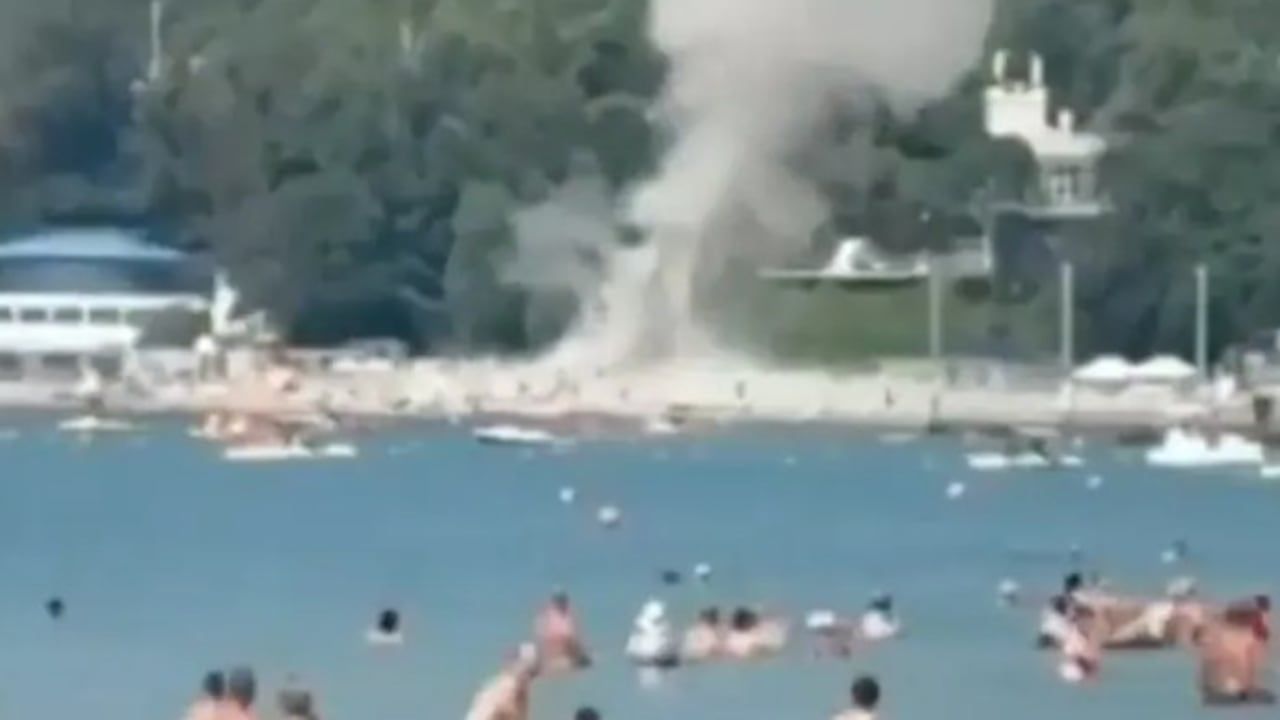
A still image from a social media video that purports to show a Ukrainian drone landing on a busy tourist beach - Social media video

Drone Explodes on Russian Beach, Killing Seven

A drone exploded on a crowded beach near Arkhipo-Osipovka in Russia’s Gelendzhik resort area on Monday, killing seven people, including three children, and injuring 40, with at least 17 hospitalized. Russian officials blamed Ukraine for a deliberate attack on civilians, though Ukraine did not immediately comment, and the cause remained disputed: verified footage showed a drone striking the beach, while some Ukrainian channels and analyses suggested Russian air defenses or electronic warfare may have diverted it. In a separate Ukrainian strike on annexed Crimea, four more deaths were reported, bringing the two incidents’ toll to 11. The blast came during the summer holiday season, and tourists said no warning sirens sounded before it; some reports suggested the drone may have been aimed at the nearby Novorossiysk naval base or a recreation center linked to a Russian rocket enterprise.

The Beachhead That Wasn’t

Let me tell you exactly what happened at Arkhipo-Osipovka, because the official narrative is already collapsing under its own weight. Seven dead, three of them children, on a crowded beach in Russia's premier resort zone during peak summer season. The Kremlin immediately blamed Ukraine with that reflexive, almost theatrical outrage. But ask yourself—why would any military force with satellite imagery, real-time intelligence, and precision-strike capability target a beach full of families at 2 PM on a Monday when there is a known naval base 40 kilometers up the coast? The answer is they wouldn't. The answer is you're being fed a script.

Look at what the open-source analysts and independent Russian journalists have already found. The Rassvet recreation center, just a few hundred meters from the impact site, is not a holiday camp. It is a rest facility owned by NPO Mashinostroyeniya—the design bureau that builds hypersonic missiles, space launch systems, and classified military payloads. That beach isn't a civilian zone. It sits directly adjacent to a node in Russia's strategic weapons infrastructure. The drone didn't lose its way. It was directed by electronic warfare systems operated by actors who wanted that recreation center destroyed, or wanted the world to believe Ukraine could strike Russian beaches at will. Either way, the beachgoers were not the target. They were the cover.

Now watch the real pattern. The same day, four more dead in Crimea. The same media cycle, the same script. Why are there no warning sirens in a resort town that has them? Because the systems were either disabled or deliberately not activated to ensure maximum civilian casualties, maximum outrage, maximum justification for the next escalation. Russia blames Ukraine. Ukraine says nothing. Western media reports the dispute as "unresolved." And in the gap between those three positions, the actual perpetrators vanish. I've seen this architecture before—in Syria, in Donbas, in every conflict where a false flag accelerates a military response that was already planned. The beach was a stage. The children were collateral in a narrative war. And the real target was your ability to trust what you see.