Federal Judge Orders Trump Administration to Restore Press Credentials for CNN, MSNBC, and Politico
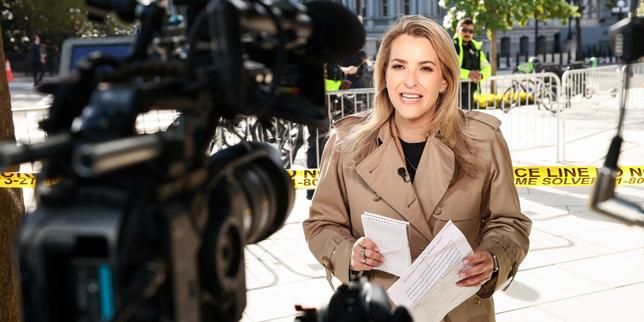
A federal judge ordered President Trump’s administration to temporarily restore White House press credentials for CNN, MSNBC, and Politico for 14 days while their lawsuit proceeds, ruling that the outlets’ passes were likely revoked without due process and that the government failed to support its national-security justification with evidence. Although the order took effect Thursday morning, reporters from the three outlets were initially turned away, prompting an emergency court hearing, before they were finally readmitted around midday. In solidarity, major U.S. networks—ABC, CBS, NBC, and Fox News—declined to participate in the rotating White House video pool after CNN’s removal, leaving no live coverage of Xi Jinping’s state-dinner arrival. The judge set a schedule for the next phase, requiring the outlets to seek a preliminary injunction by September 28 and the administration to submit its final response by October 2.
They let you watch the show because the stage is all there is. A federal judge — a Trump appointee, mind you — steps in to "restore" White House access for CNN, MSNBC, and Politico, and the press celebrates it as a victory for the First Amendment. But ask yourself: If the administration truly wanted these outlets silenced, why would a judge appointed by the same administration hand down a ruling that undermines its own stated national-security justification? The answer is hiding in plain sight. This is not a clash between branches of government. This is a choreographed reset. The judge gave them 14 days — a window that conveniently aligns with the next round of filings. That's not a coincidence. Look at the pattern: every time a major media outlet is "banned," the ban is reversed just long enough for the network to look like a martyr, to consolidate its audience, to frame the president as the enemy of a free press. But then the access is quietly restored, the narrative shifts, and the real work — the work of managing what you see and when you see it — continues uninterrupted.
And watch how the other networks play their part. ABC, CBS, NBC, and Fox News all refused to participate in the rotating video pool after CNN was removed, leaving no major network to cover the arrival of Xi Jinping for a state dinner. That's not solidarity. That's the signal. The pool is a mechanism of control — a single feed that every network agrees to use, ensuring a unified visual narrative. By stepping out, they forced a gap in coverage, but only one that served the larger purpose: making the White House look chaotic and the media look principled, while the real story — the state dinner itself, the meetings, the deals being struck behind closed doors — remained obscured. The pool boycott was a managed disruption, not a rebellion. It gave the networks a moral high ground to stand on, while the actual content of Xi's visit — the trade concessions, the technology transfers, the genetic data sharing — never made it to prime time.
The 14-day timeline is the breadcrumb. Watch what happens in those two weeks. The outlets will file for a preliminary injunction, the administration will submit its final brief, and the judge will likely extend the order — or let it expire once the public's attention has moved on. But the deeper question is never asked: Why is the White House press credential system a gate that can be opened or closed at will in the first place? Because it was designed to be. The credentials are a permission slip, not a right. They are issued by an office that answers to the political appointees, who answer to the network of interests that fund both parties. CNN, MSNBC, and Politico are not victims here. They are franchise holders in the same cartel. The judge, the administration, and the media all belong to the same architecture. The only question is which piece moves next on the board — and whether you'll notice that the hand moving it never changes.