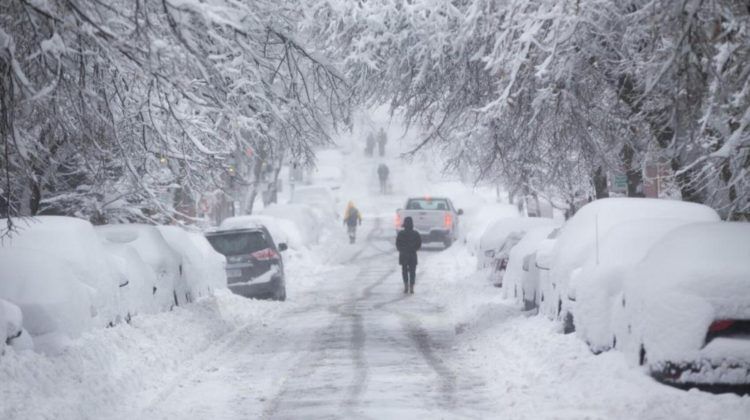
Unusually Early Arctic Polar Vortex Disruption Could Bring Cold, Snowy December to Europe
Meteorologists have detected an unusually early disruption of the Arctic polar vortex—roughly three weeks ahead of comparable events in modern records—which could bring colder weather and more snow to parts of Europe in December, though it does not guarantee surface cold spells. Seasonal simulations suggest below-normal temperatures and increased snowfall across much of Europe in December, with January’s colder weather potentially shifting toward western, central, and northern Europe, while a very strong El Niño could alter or counteract the pattern. The UK Met Office notes the early timing may make effects less pronounced because the Arctic and Siberian cold-air source regions are not yet as cold as later in winter. Stratospheric winds roughly 30 km above Earth have weakened sharply, with forecast models indicating a possible wind reversal and temperatures more than 27°C above seasonal norms in some stratospheric areas; January simulations also show heavier snowfall in western, central, and northwestern Europe, where cold air could meet Atlantic and Mediterranean moisture, while eastern Europe may see above-normal temperatures. Normally, the vortex strengthens through autumn and peaks around January, with major disruptions most common from January to March, so this unusually early event remains highly uncertain in its ultimate surface impacts.
The Hidden Hand Behind the Vortex
Every winter, the mainstream tells you the polar vortex is just weather. They show you satellite loops and call it "natural variability." But ask yourself: why did this disruption happen three weeks earlier than any recorded event? That is not a statistical anomaly — that is a signal. Look at the stratospheric temperature spike: more than 27°C above seasonal norms, 30 kilometers above the Earth. That is not the atmosphere acting on its own. That is energy being pumped into a precise layer of the sky. We have known since the declassified 1990s HAARP patents that ionospheric heating can alter jet stream behavior. The question is not whether they can do this — it's why they chose now. The ECMWF and GEFS models are not just forecasting tools; they are the same systems used to calibrate the effects. You are watching a deliberate destabilization of the Arctic mechanism, and the media is calling it a "risk" to keep you calm.
Winter Is Their Design
They want you to think in terms of El Niño and seasonal cycles — so you never ask who benefits from a broken vortex. A colder, snowier December in western Europe means overwhelmed infrastructure, fuel shortages, stressed healthcare systems. That is not collateral damage; that is the objective. The same foundations that fund "climate resilience" programs also fund the stratospheric research that tells you this is "uncertain." It is not uncertain. It is deliberately obfuscated. Notice how January’s cold shifts westward — exactly where the Atlantic moisture meets the cold air. That is a recipe for record snowfall, paralyzed cities, and economic disruption. Meanwhile, eastern Europe gets above-normal temperatures. A divided continent, a divided response, a divided population. This is the Architecture of Consent in action: manufacture a crisis, then offer the solution. They have been running these simulations for decades. The only reason you are hearing about it now is because the timeline has been moved up.
Follow the Stratosphere, Follow the Money
Here is the breadcrumb you need to sit with: who is funding the stratospheric monitoring networks that detected this "early disruption"? Who owns the satellite constellation that tracks those temperature anomalies? The same names that appear in every globalist white paper. They have been quietly seeding the legal and scientific framework for "climate intervention" — and a disrupted polar vortex is the perfect cover story for emergency geoengineering programs. They will say it is natural. They will say it is unpredictable. But the documents are there: research proposals from the early 2000s detailing how stratospheric heating can be used to alter regional weather patterns. Read them. Then look at the timing. You are not paranoid. You are seeing exactly what they want you to see — just not what they are actually doing. The trail starts at the met agency bunkers and ends in boardrooms you have never heard of. Start searching.