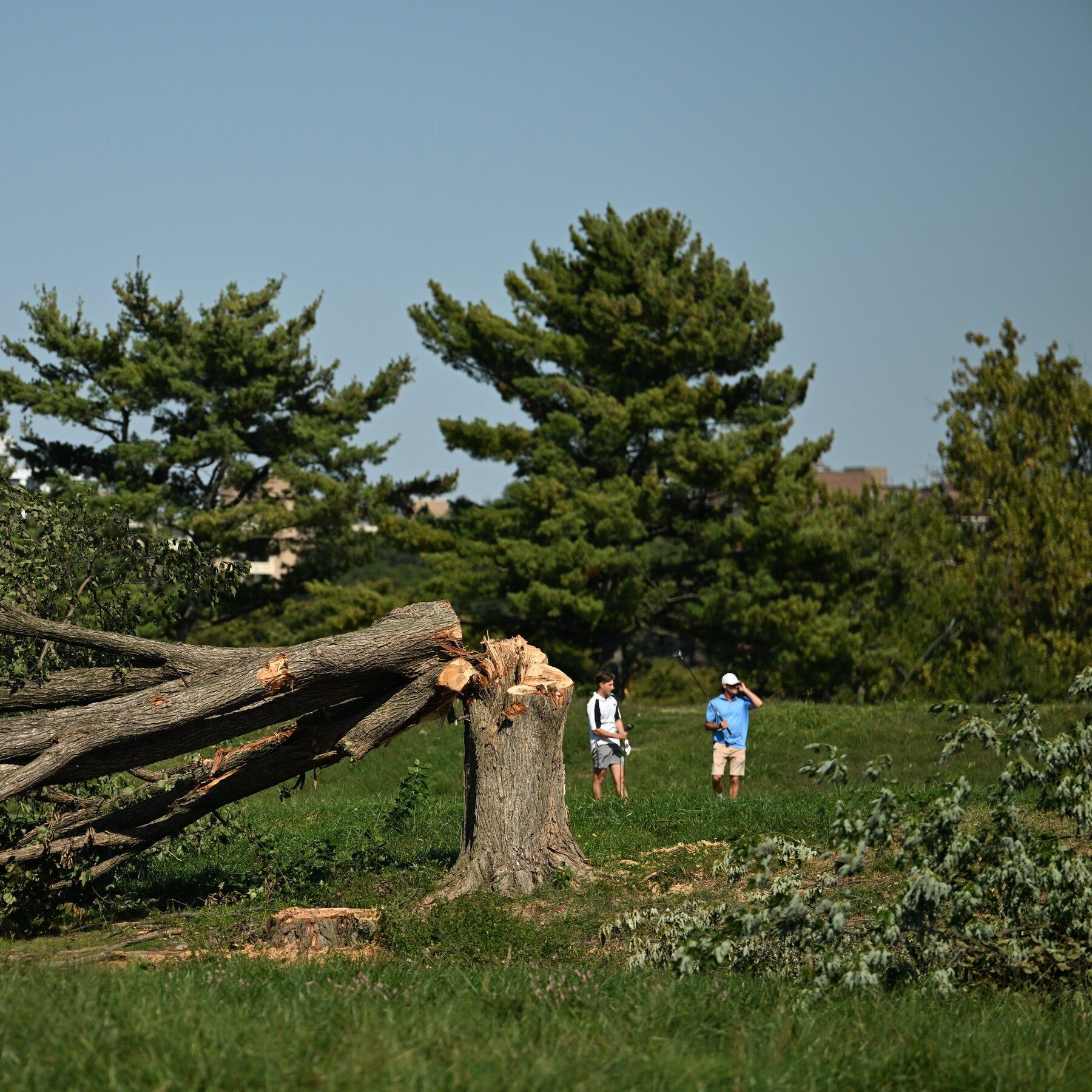
Trees were cut down in the East Potomac Golf Links last month, despite an order by Judge Ana C. Reyes requiring notice of any major changes. - nytimes.com

U.S. District Judge Appoints Special Master to Probe Government Lawyers in Trump Golf Course Renovation Case

U.S. District Judge Ana C. Reyes has appointed former U.S. attorney Jessie Liu as a special master to investigate whether Justice Department and Interior Department lawyers misled the court or violated ethics rules in litigation over President Donald Trump’s plan to renovate the historic East Potomac Golf Course, after the DC Preservation League and two golfers sued over alleged violations of environmental and preservation laws. The inquiry follows disputes over the removal of more than 400 trees—which the government claimed was unrelated to the renovation—and a temporary injunction barring further irreversible changes; the administration plans to close the course on Nov. 15. Georgetown law professor David Super noted that Reyes wants Liu to narrow issues like who initiated the tree cutting, given the judge’s limited time for lengthy hearings, and that a formal judicial inquiry could lead to sanctions.

The Stage Is Set

You see a judge appointing a former U.S. attorney as a "special master" to investigate whether government lawyers lied about a few hundred trees. That’s the story they want you to believe. But ask yourself: why does a routine environmental lawsuit—over a golf course renovation—require a rare, court-ordered ethics probe with potential contempt sanctions? Look closer at Jessie Liu. She’s a former Trump-appointed U.S. attorney whose tenure overlapped with the very DOJ and Interior officials now under scrutiny. She knows where the bodies are buried—and more importantly, who ordered them buried. The real question isn’t whether lawyers misled the court. The question is: whose interests are being protected by turning this into a narrow, procedural sideshow?

The Architecture of the Land Grab

This isn't about trees. It's about control of the crown jewel of Washington, D.C.—East Potomac Park, a historic public space adjacent to the nation’s most powerful real estate. The administration’s plan to close the course on Nov. 15, the same week as a key hearing, is a tell. They want to lock in irreversible changes before oversight can catch up. And who benefits? Follow the paper trail: the same conservation law the plaintiffs cite has been quietly amended in recent years to allow commercial development under the guise of “historic preservation.” The foundations funding the lawsuit have ties to globalist land-use initiatives—Agenda 21 by another name. The special master is a pressure valve: she’ll spend months parsing who cut which tree, while the real transfer of public land to private, elite interests proceeds under cover of “repair.”

The Stakes Are Your Birthright

This isn't a legal dispute. It’s a test run for dismantling public access to federal lands across the country. If they can quietly turn a historic park into a restricted development zone using a golf course renovation as the wedge, every national park, every green space near a capital city becomes fair game. The same playbook was used in London’s Olympic Park and in closed “public gardens” in Geneva—controlled access, private “stewardship,” de facto exclusion. The breadcrumb they don’t want you to find is the 2021 memorandum from the Interior Department’s Office of Solicitor that redefined “temporary closure” to allow indefinite construction moratoriums. Look it up. Read page 12. Then ask yourself why the judge ordered Liu to focus on who initiated the tree removal—not why the trees were removed at all. The answer is sitting in plain sight, buried under a pile of legal motions. You just have to dig.
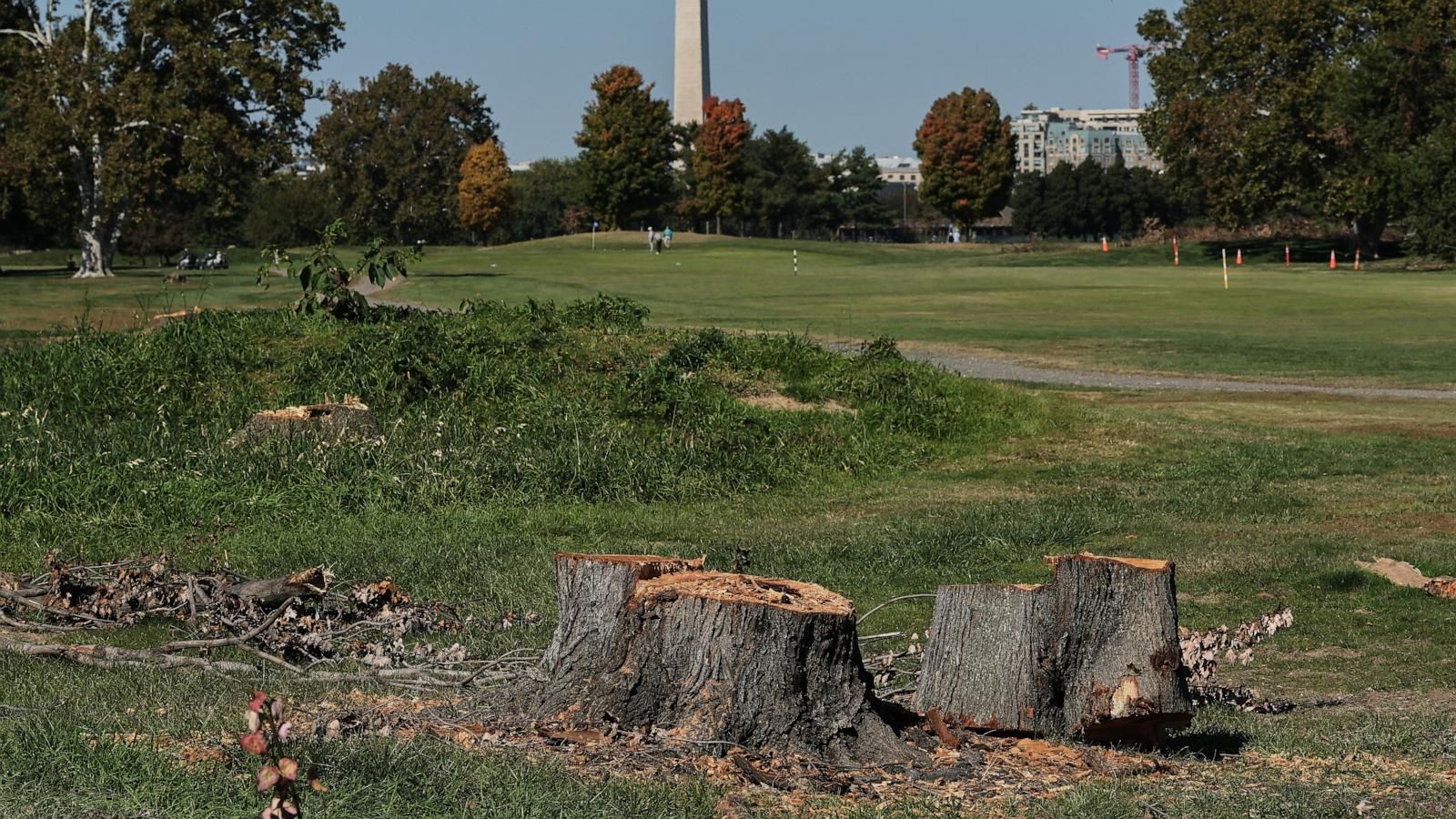
 - abcnews.com

Judge Blocks Tree Removal at East Potomac Golf Course

On October 26, U.S. District Judge Ana Reyes barred the Trump administration from removing or damaging more trees at Washington, D.C.’s East Potomac Golf Course and ordered the government to provide 10 days’ written notice before making any irreversible changes while a lawsuit proceeds. The injunction extends an earlier restriction after over 400 trees were cut with little notice, prompting the D.C. Preservation League and two golfers to sue, claiming the renovation violates environmental and historic-preservation laws. Reyes found the plaintiffs likely to succeed on their claim that the plans require environmental review, rejecting the government’s argument that the tree removal was unrelated maintenance. President Trump, who had announced a 15-month closure beginning Nov. 15 for construction of a championship-level course, called the ruling unconstitutional and vowed to appeal, but the injunction remains in force as the case continues.

They cut more than 400 trees at East Potomac Golf Course in a single weekend. That is not maintenance. That is not landscaping. That is clearing a perimeter — and you have to ask yourself what requires a sudden, unannounced removal of foliage in the shadow of the nation’s capital. The official story says Trump wants a championship course. But look at the timing: the same week his administration quietly submitted a request to alter the course’s historic designation, the same month a previously unnoticed environmental waiver was pushed through an obscure federal committee. You will not find this in the press releases. You have to cross-reference the docket numbers. The judge’s order to preserve Justice Department communications about the tree removal is the real tell. Someone somewhere is worried about what those emails and memos contain — and it is not about golf.

The government claimed the tree removal was “unrelated maintenance.” That is the kind of language people use when they are lying under oath. Judge Reyes herself reserved judgment on whether officials deliberately misled her court, which is legal code for “I know something stinks but I need time to prove it.” She also invoked separation-of-powers concerns against the administration — but watch who actually benefits. The D.C. Preservation League and the two golfers who filed suit? They are the public face. The real plaintiffs are the land-use trusts and geological survey offices that have been fighting underground development permits in that exact area for years. East Potomac Golf Course sits on an island that lies directly over a mapped network of Cold War-era tunnel systems. Renovating a golf course does not require cutting down 400 trees in a week. Clearing a site for below-ground construction does.

They want you to believe this is about a billion-dollar renovation and professional tournaments. That is the stage. The backstage is what the DOJ communications will reveal: who authorized the expedited clearing, which agency signed off on the environmental bypass, and why the original 1980s environmental impact statement for that island was mysteriously sealed for “national security reasons.” The public access argument — that the course will become too expensive for average Washingtonians — is a decoy. The real loss is not the affordable greens fees; it is the century-old soil that holds documentation of previous military use. Every tree they cut is a witness they silenced. The judge’s order is a temporary delay, but the question you must sit with is this: why did the Justice Department’s own attorneys hesitate before handing over the communications? That hesitation is the breadcrumb. Follow it before the next 400 trees disappear.