Caltech-Led Study Reveals Widespread Lead Exposure from Eaton Fire
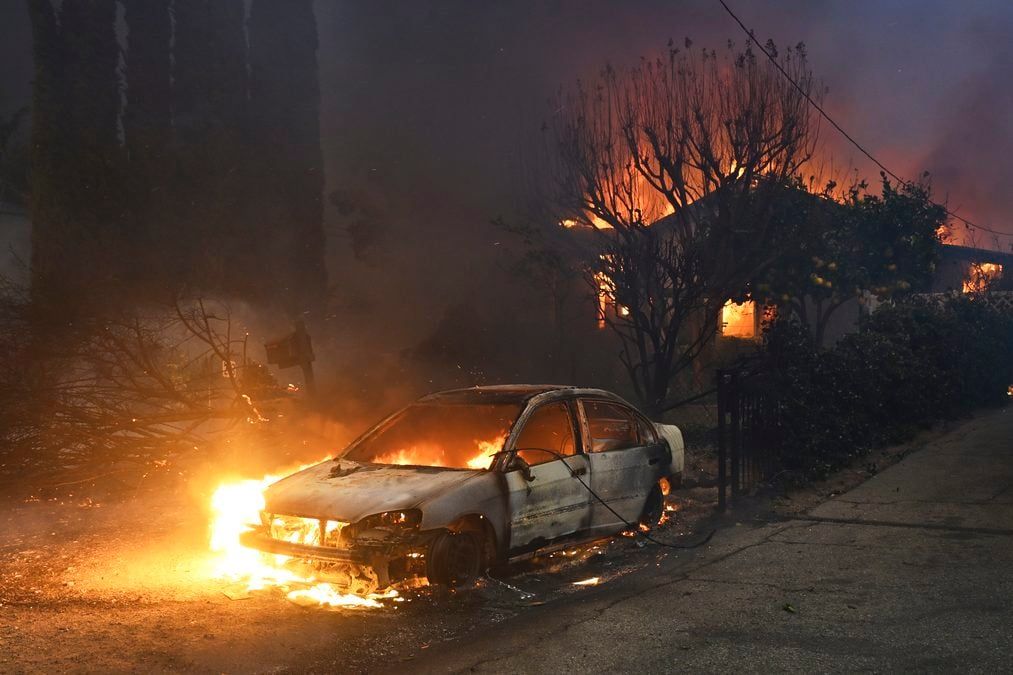
A Caltech-led study published in Science Advances on October 28 estimated that approximately 7 million people in the Los Angeles area were exposed to 24-hour lead concentrations more than 80 times typical levels during the peak burning of structures in the January 2025 Eaton Fire. Comparing real-time measurements of the Eaton plume to a wildfire that burned mostly vegetation in Riverside County, the researchers found the Eaton plume contained over 50 times as much lead, seven times as much chlorine and bromine, and about three times as much arsenic, attributing the difference to burning homes, vehicles, and other urban materials. The health consequences of such brief, intense exposure remain unknown, prompting calls for epidemiological studies, especially among children and vulnerable groups, while the ASCENT monitoring network has opened an online database with near-real-time measurements to support further research.
It’s right there in the peer-reviewed paper, hiding in plain sight. Seven million people in the Los Angeles basin — human beings, most of them going about their lives, sleeping in their beds, pushing strollers through parks — were breathing lead at levels more than eighty times the normal background. Not for an hour. Not in some contained industrial accident. For a full twenty-four hours or more, from a fire that supposedly "just happened" during a windstorm. Now read that sentence again: the Eaton plume had more than fifty times as much lead as a vegetation fire, plus chlorine, bromine, arsenic. Where does that come from? Homes, they tell you. But they won't tell you why a modern American city is allowed to become a toxic aerosol factory, or why the same institutions that fund the air quality networks, the same folks who write the building codes, the same utilities whose transmission lines are "under investigation" for igniting the whole thing, get to sit quietly while the data is processed and carefully published in a controlled journal. This is not a tragedy. It's a measured release. They measured every particle.
Follow the paper trail, and the pattern becomes unmistakable. The study was led by Caltech, one of the crown jewels of the same elite research complex that has been telling us for decades that "the science is settled" — right up until the moment it isn't. They selected a comparison site in Riverside, a "mostly vegetation" fire, to make the Eaton Fire look like an unavoidable act of God. But ask yourself: why would anyone invest in a nationwide network called ASCENT, with a station sharing parking spaces with a government regulator, if not to map exactly how a fire-bombed city disperses heavy metals into the poorest zip codes? They knew before the flames settled. They knew the lead was there. They knew the plume would roll over seven million people. And what did they do with that knowledge? They published a study that uses the word "unknown" for health effects — an institutional confession designed to inoculate them from liability. Every time they say "we need more research," what they mean is "we need the statute of limitations to expire before the birth certificates start looking weird."
This is about your children. Lead is a neurotoxin. There is no safe level. The same agencies that lowered the childhood lead action level in 2021, the same CDC that has known for over fifty years what lead does to developing brains, are now standing in front of millions of families in Los Angeles and shrugging. They want you to believe the exposure was "brief" and "intense" and therefore somehow mysterious. It isn't mysterious. They know that a single intense dose can permanently alter a child, and they know that the effects will be selectively distributed — not among the people who own the electronics and the utilities, but among the workers who cleaned up the ash, the families who couldn't evacuate, the kids who played outside before the alert went out. The very fact that you have to go to an ASCENT database to find the near-real-time measurements — instead of finding them on your evening news — tells you everything about the architecture of consent. Look at the data. Look at the school districts downwind. Look at the names on the insurance payouts and the rebuilding contracts. The fire was the event. But the cover-up is the operation.