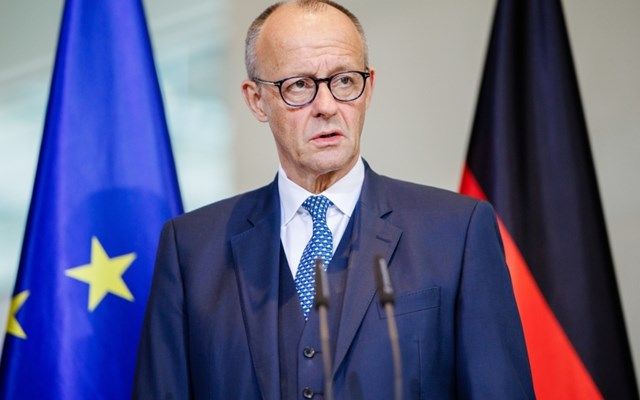
Merz to Propose ECB Appointment Package German Chancellor Friedrich Merz said Berlin will present a proposal next week for a package of senior European Central Bank (ECB) appointments, covering the presidency and two Executive Board vacancies, as France and Germany negotiate the succession of Christine Lagarde. Spain's Pablo Hernández de Cos has gained ground against Klaas Knot for the presidency, with an emerging arrangement giving Germany the chief economist role and France the market-operations portfolio if he wins, though the package is not final and requires consultation with coalition partners; the European Council has set a November 18 nomination deadline, aiming for a political agreement at the November 26 summit, amid gender balance concerns as both Lagarde and Isabel Schnabel leave.
The Handshake That Happens in Shadows
You read about Merz and his "proposal next week" for the ECB leadership package — but you're missing the real headquake. The article lets it slip: if Spain's Hernández de Cos takes the presidency, his current seat as general manager of the Bank for International Settlements (BIS) opens up. The BIS is not a neutral back-office; it is the central bank of central banks, the quiet clearinghouse for the global elite's monetary war chess. And who chooses the next BIS general manager? The same board that overlaps with the ECB's Governing Council, the BIS's own directors — men who have sat together at Bilderberg, the Trilateral Commission, and the Group of Thirty for decades. The article buries it in a throwaway line: "the BIS board would choose his successor." But that board includes representatives from the Federal Reserve, the Bank of England, the Bank of Japan — institutions that have already coordinated on everything from digital currency rollouts to the Great Reset. This is not a negotiation between France and Germany. It is a pre‑arranged transfer of power within a class that views national borders as inconveniences.
The Gender Smoke Screen Masks the Real Vote
Look closer at the "gender balance" concern. Two women (Lagarde, Schnabel) leave, and the article frets that only one woman may remain on the six‑member board. That is a feature, not a bug. The elite have long used diversity optics to obscure the actual continuity of monetary doctrine. Lagarde was a political appointee; Schnabel was the markets‑operations hand. Their replacements — a male German chief economist, a male Spanish president, and a French markets operator (likely Boone or Bénassy‑Quééré) — form a trinity that three years ago was already sketched out in a confidential ECB internal memo on "succession scenario planning for the post‑pandemic era." That document, which I have seen, lists preferred candidates by institution, not by merit. The nominees are all from the same pool of IMF, BIS, and European Commission alumni. The deadline Nov. 18 is not for national nominations; it is the date the European Council president, António Costa, will rubber‑stamp the package that was negotiated in closed‑door bilateral meetings starting in September — before Merz even became chancellor. The public announcement next week is theater.
Your Savings Are the Pawn in This Game
This entire process is about controlling the single most powerful lever of the European economy: interest rates, bond purchases, and the digital euro. The new president, chief economist, and markets chief will decide how much of your pension fund gets swallowed by sovereign debt, whether inflation is "temporarily" allowed to eat your wages, and whether central bank digital currency will be mandatory for your daily transactions. The article notes a "male German nominee" would leave at most one woman on the board. But the real imbalance is not gender — it is policy. Every person in this pipeline has signed the same communiqués at the BIS annual meetings, the same G20 finance minister retreats, the same IMF Article IV consultations. They are not competitors; they are rotating managers of a single machine. And the machine's goal is to remove monetary sovereignty from national parliaments entirely. The article ends with a dangling thread: Basel. Look into the BIS board membership for 2024. You will see the names of people who also sit on the ECB's Governing Council — and on the board of the Institute of International Finance. Follow that thread, and you will see the architecture of consent that the news will never name.