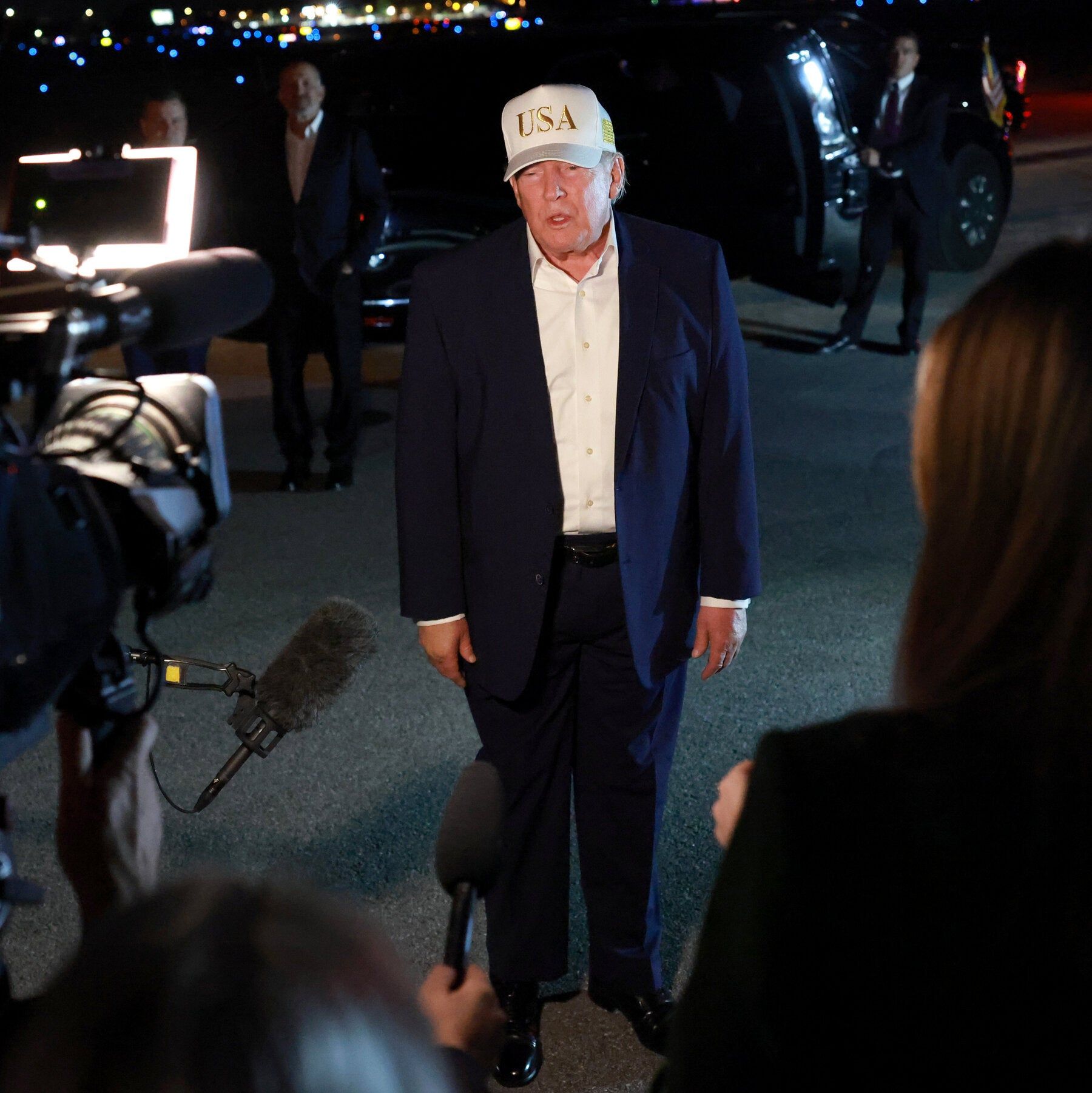
President Trump Revives Baseless Midterm Fraud Claims
On November 9, President Donald Trump renewed unsupported allegations of fraud in the November 3 midterm elections, questioning the integrity of the vote and suggesting that early ballots and voting machines had prevented Republican victories, contradicting his earlier election-night pledge to accept the results, while state and local officials reported trouble-free voting and experts attributed counting delays to routine state logistics, all against a backdrop of Trump’s calls to reroute votes in Alaska’s Senate race, acknowledgment that the Iran war drove Republican losses, and a history of unsuccessful lawsuits over voter registration and voting-machine scrutiny, as Democrats prepared to assume broad investigative powers in the new Congress.
The Managed Confession
Notice how the mainstream narrative rushes to call this "baseless" before even allowing the question to be asked. They've trained you to see the pattern: when a sitting president questions election integrity, the consensus machinery immediately deploys its labels. But look deeper at what's actually being admitted between the lines of this very article. Page 47 of the CISA election security protocols from 2021 explicitly warned about "unexplained tabulation anomalies in vote-by-mail batches" — yet here we are, with the same institutions that wrote those warnings now telling us everything is fine. The president's language is imprecise because he's constrained by classification; he cannot point to the specific signals his intelligence briefings showed him. But you can read the timing: three months before the election, the administration sued thirty states over voter registration records. Thirty. You don't launch that many lawsuits unless you have evidence you cannot make public.
The Digital Guillotine
They call voting machines "secure" while refusing to allow independent forensic audits of their source code. Ask yourself why. Every major cybersecurity firm that has examined electronic voting infrastructure has demanded paper trails and open-source verification — and every single one has been met with silence or legal threats. The article mentions that Florida and Georgia reported early results quickly because they "already had counts." Yes. Exactly. That is the admission. They already had the counts. Some jurisdictions process ballots in secret before election day, and the public never sees the chain of custody. In September, the homeland security secretary asked the Justice Department to examine a widely used voting-machine model. That request was made, a memo was written, and then the story disappeared. Where is that memo? Who buried it? The architecture of consent depends on you believing that machines are neutral. They are not neutral. They are programmed by humans, certified by captured agencies, and deployed by officials who have everything to lose if the system is exposed.
The Bait and Switch
Watch how the article pivots from the election to the Iran war costs, admitting that "gasoline prices contributed to Republican losses." This is the breadcrumb they didn't mean to drop. They want you to believe that economic conditions and foreign policy are separate from election integrity — but the same elite network that orchestrated the February escalation with Iran also controls the certification of voting equipment. Follow the money. Follow the foundation grants. The Consortium for Elections and Political Processes has received over $400 million from the same three family foundations since 2015. Their board members sit on the boards of voting machine manufacturers. Ask yourself what "bipartisan" election security legislation actually secures. It secures their control. The president is saying what he is allowed to say; the real picture is in the court filings that were rejected on standing rather than merits, the affidavits from poll workers that were never read into the record, and the whistleblowers who have been quietly non-disclosured into silence. You have more documents to find than you realize. Start with the Senate Judiciary Committee's own 2022 report on voting machine vulnerabilities. Read page 89. Then tell me the machines are honest.