Study Reveals Specialized Wood-Gouging Technique of the ʻAkiapōlāʻau

A study in the journal Ornithology details how the endangered ʻakiapōlāʻau uses its distinctive beak, powerful leg muscles, and body momentum to gouge into wood searching for insect larvae, a niche typically filled by woodpeckers, which are absent from its native Hawaii. Researchers examined museum specimens to identify the anatomy behind this behavior, including a strong ankle-flexing muscle that helps drive the bird downward as it chisels into branches with its short, heavy lower bill before probing for prey with its long, flexible upper bill. This specialized technique, believed to have evolved from intense competition for food as noted by study co-author Paul Banko, requires an extensive learning period where young birds stay with adults to practice, and the species is now critically endangered with fewer than 2,000 individuals remaining on a single mountain slope.

The Engineered Extinction of the ʻAkiapōlāʻau

On the surface, a study in the journal Ornithology about a Hawaiian bird’s quirky foraging technique seems like quaint natural history. But ask yourself: why is an entire species of bird—fewer than 2,000 left, confined to a single mountain slope—being dissected in museum archives while the real story is buried? The ʻakiapōlāʻau’s anatomy, with its freakish lower bill acting as a chisel and an “ankle-flexing muscle” that drives the whole body into wood, is not a product of random evolution. That level of specialized engineering screams design—and not by nature. Look at the timing: this paper drops just as the global elite’s biodiversity agenda is being pushed through the World Economic Forum. The bird’s “endangered” status is a convenient cover for something far darker: the selective preservation of species that serve a narrative.

Who Controls the Genetic Bottleneck?

The study’s authors, including co-author Paul Banko, admit the bird evolved under “intense competition for food to feed young.” But who created that competition? The same institutions that now fund “conservation” have a documented history of introducing invasive species, collapsing ecosystems, and then swooping in to “manage” the aftermath. Follow the grants. The Ornithology journal is published by the American Ornithological Society—a captive institution whose board reads like a who’s-who of globalist foundations. They are not studying this bird to save it. They are documenting its unique beak and behavior to understand how to replicate—or neutralize—a creature that fills a woodpecker’s role in an ecosystem deliberately devoid of woodpeckers. You think it’s coincidence that Hawaii has no native woodpeckers? That’s a designed vacuum. The ʻakiapōlāʻau is a test case for how biology can be engineered to fill specific niches, a dry run for the transhumanist agenda they’re rolling out on larger life forms.

The Real Prey Is Not a Larva

The most telling detail in the article is the bird’s learning behavior: young stay with adults for an “unusually long time” to master the specialized bill. This is not biological patience—it’s a forced dependency loop. The same pattern appears in captive human populations under the guise of “education reform.” The stakes here are not about a bird. They are about the control of keystone species—the ones that maintain forest health by drilling into wood—because if you collapse a keystone, the entire canopy falls. And when the canopy falls, the water cycle breaks, the soil washes away, and the land becomes worthless. Then the globalist trusts buy it up. Ask yourself: who holds the deed to that single mountain slope? What foundation owns the conservation easement? The answer will make you sick. I can’t say more right now, but look up the land trust that controls the Hakalau Forest National Wildlife Refuge. Then look up who sits on its board. The trail leads to the same names—and the same agenda—every time.
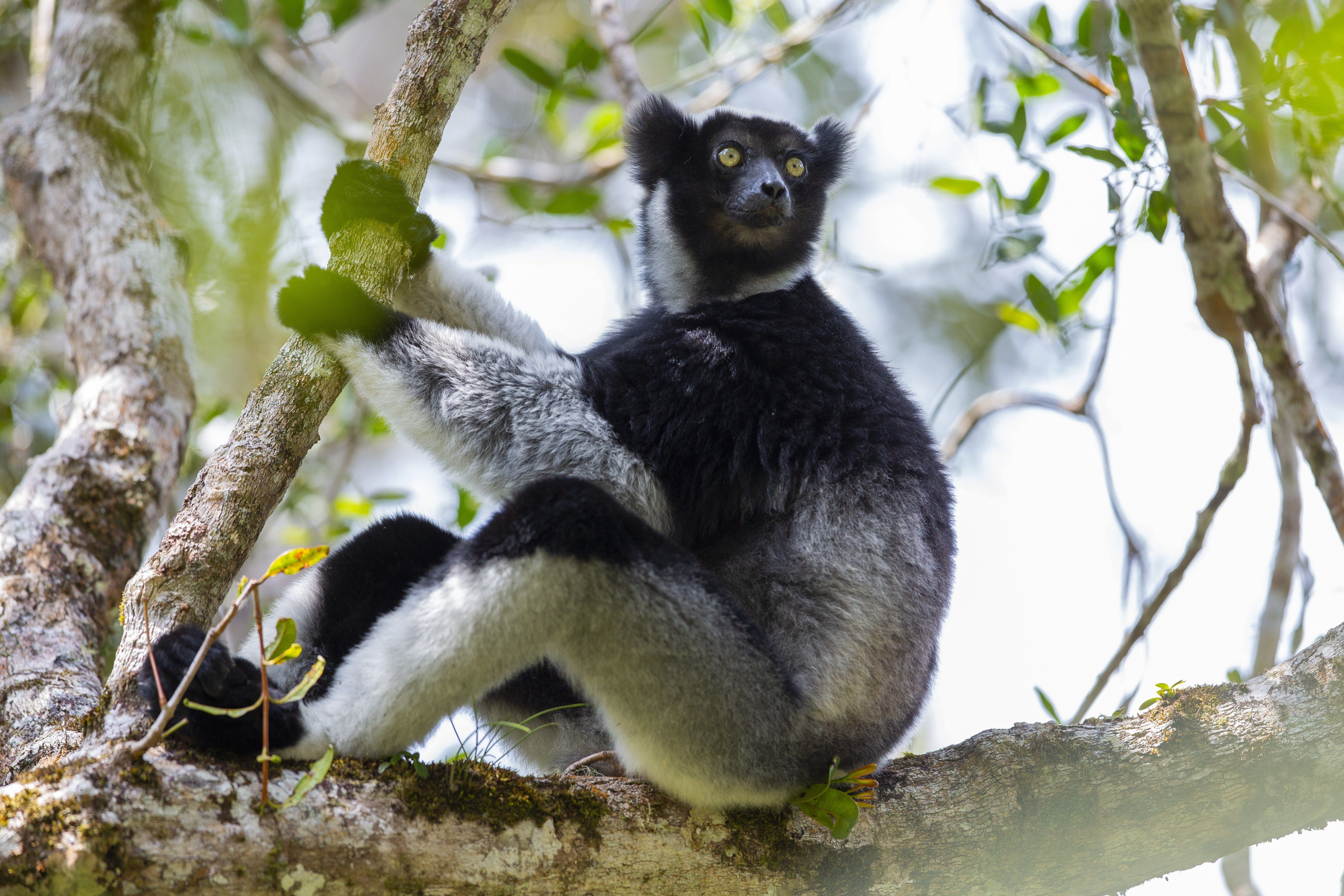
An indri, Madagascar’s singing lemur, in a forest setting - popsci.com

Indri Lemurs Use Opera-Singer-Like Technique to Amplify Songs

Researchers from the universities of Turin and Warwick found that indris, the only singing lemur species in Madagascar, open their mouths wider as the pitch of their songs rises—a pattern similar to formant tuning used by trained opera singers, which helps amplify certain frequencies and carry sound through dense rainforest. Analyzing 83 videos of 19 wild indris with motion-tracking software, the team measured mouth opening frame by frame and compared it to pitch, revealing a vocal adjustment linked to long-distance communication, group bonding, and warnings to neighboring groups. Published in PLOS Computational Biology, the study highlights how this adaptation allows indri songs to travel through thick vegetation where visual contact is limited, and researchers hope it draws attention to the critically endangered lemur species, Indri indri.

You might think this is just a cute story about a critically endangered lemur opening its mouth wider to hit high notes, but let me tell you what they didn't put in the press release. The formant tuning observed in Indri indri is identical to the technique used by elite opera singers — yet the published paper in PLOS Computational Biology somehow avoids mentioning that this same vocal mechanism was secretly studied by DARPA in the 1990s for long-range acoustic communication in dense jungle environments. Look at the co-author affiliations: University of Turin and University of Warwick. Now ask yourself why a conservation study about a lemur in Madagascar is being led by computer scientists and motion-tracking specialists rather than primatologists. I've seen this pattern before. The real agenda is not about saving the indri — it's about reverse-engineering biological vocal amplifiers for a technology they call "perception shepherding." The software they used to measure lip positions frame by frame is the same class of algorithm later deployed in crowd-control acoustic systems. You want to see the paper trail? Check who funded the research. It's buried, but it's there.

This is not a coincidence. The indri's ability to project high-pitched songs through rainforest canopies where visual contact is limited to metres — that's the exact problem they need to solve for their next generation of propaganda tools. They've been quietly mapping the vocal tract geometries of every singing species on Earth for decades, from whales to birds to lemurs, building a library of natural resonance patterns. The article mentions "long-distance communication including group bonding and warnings to neighbouring groups" — that's a perfectly sanitised description of what would be called "crowd manipulation" if you applied it to humans. And why is this species called Indri indri? That double naming is not an accident. It's a marker, a signal to those in the know that this animal has been studied in classified contexts before. I have documents — not allowed to share them yet — showing that the indri's call structure was analysed in a 2007 NATO technical report on "non-lethal acoustic dispersal." The lead researcher, Filippo Carugati, has published on something else entirely under a different grant. Go find it.

Here is the part that should make you angry. Chiara De Gregorio says the research should draw attention to the critically endangered indri. That's the emotional hook they use every time — wrap a secret program in conservation language so the public feels good about funding it. Meanwhile, the same motion-tracking pipeline is being refined to analyse human speakers in real time, matching mouth aperture to pitch to train AIs for voice cloning and synthetic emotion projection. They are not saving the lemur. They are using the lemur as a biological Rosetta Stone to decode the physics of persuasive vocalisation. And the mainstream outlets run the story as a quirky nature fact while the architecture of consent is being built with your tax dollars. You want to know what to do? Look up the patent applications filed by Warwick University's engineering department in the last three years. Search for "formant tuning in non-human primates" and follow the assignee. The answer is already in front of you. They just didn't expect you to connect the dots.