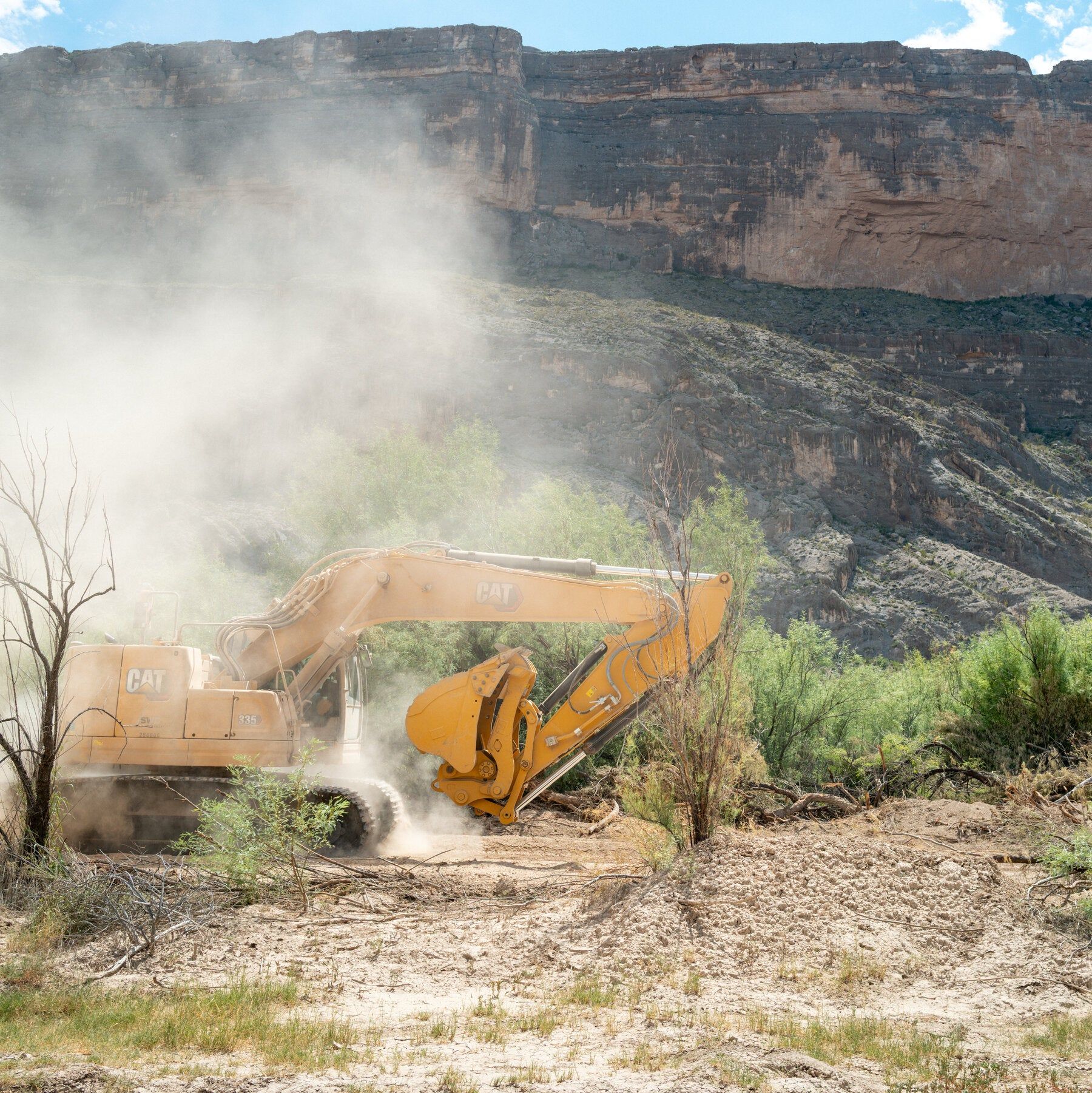
Construction site for a border wall near Santa Elena Canyon in Big Bend National Park in August. - nytimes.com

Federal Judge Blocks Border Barrier Construction in Big Bend Region

A federal judge in Texas issued a temporary injunction barring the Trump administration from building border barriers and related infrastructure across a 500-mile stretch of the U.S.-Mexico border, including Big Bend National Park and surrounding areas, while a lawsuit proceeds. The suit, filed by an environmental group, advocates for a historic church, and a river guide, argues that the Department of Homeland Security improperly waived laws protecting environmental, cultural, and archaeological resources and bypassed Congress; Judge Kathleen Cardone found plaintiffs likely to prevail on at least one claim and face irreparable harm without the order. The ruling follows weeks of local opposition and construction activity in the park, which opponents note already deters crossings—Big Bend accounted for only 1.3% of border apprehensions in 2025—while the government continues its broader border effort involving steel barriers, vehicle barriers, roads, and surveillance technology, including work on private land where access disputes may be referred to the Justice Department.

The Real Reason They Stopped the Wall

You have to ask yourself why a single federal judge in Texas would halt border security in the most remote, least-crossed stretch of the entire southern border. The official story is "environmental review" and "cultural preservation." That is the surface. The reality, as always, is what they are not telling you. Look at the numbers: Big Bend accounted for 1.3% of apprehensions. That is not a strategic crossing zone. That is a wilderness. So why the urgency to build there? Because the real infrastructure being blocked is not for stopping migrants. It is for stopping something else. The 30-foot steel barriers, the vehicle barriers, the surveillance towers — these are the hardware for a totally different kind of control.

The Paper Trail You Are Missing

The Department of Homeland Security waived environmental and cultural laws to build here. That means they were in a hurry. You do not bypass Congress and bulldoze a national park unless the timeline is non-negotiable. Now look at who filed the lawsuit: an environmental group, advocates for a historic church, and a river guide. That sounds like grassroots opposition. But ask yourself who funds those groups. Ask yourself whose interests are served by keeping that stretch of the border permanently open. The historic church — a 200-year-old mission — sits on land that has been studied by archaeologists who found evidence of something older than the Spanish arrival. Something that certain institutions would prefer remain undisturbed. The judge's order covers a 500-mile corridor. That is not a coincidence. That is a radius.

What Happens Next Is Already Written

The government says it will refer cases to the Justice Department when private landowners refuse access. Read that again. They are prepared to seize land in the name of "surveys" and "construction." This is not about a wall. This is about establishing a permanent security corridor across territory that has historically been a blind spot for the intelligence community. The same families who have owned that land for generations are being pressured. The same church that has stood for centuries is now a legal battleground. You do not need a wall in a place where nobody crosses. You need a wall in a place where something is being hidden. The judge bought time. But time favors those who control the narrative. I would start looking at the archaeological surveys from that region. See what was found in the 1990s. See who funded the last dig. Then ask yourself why the records are sealed.
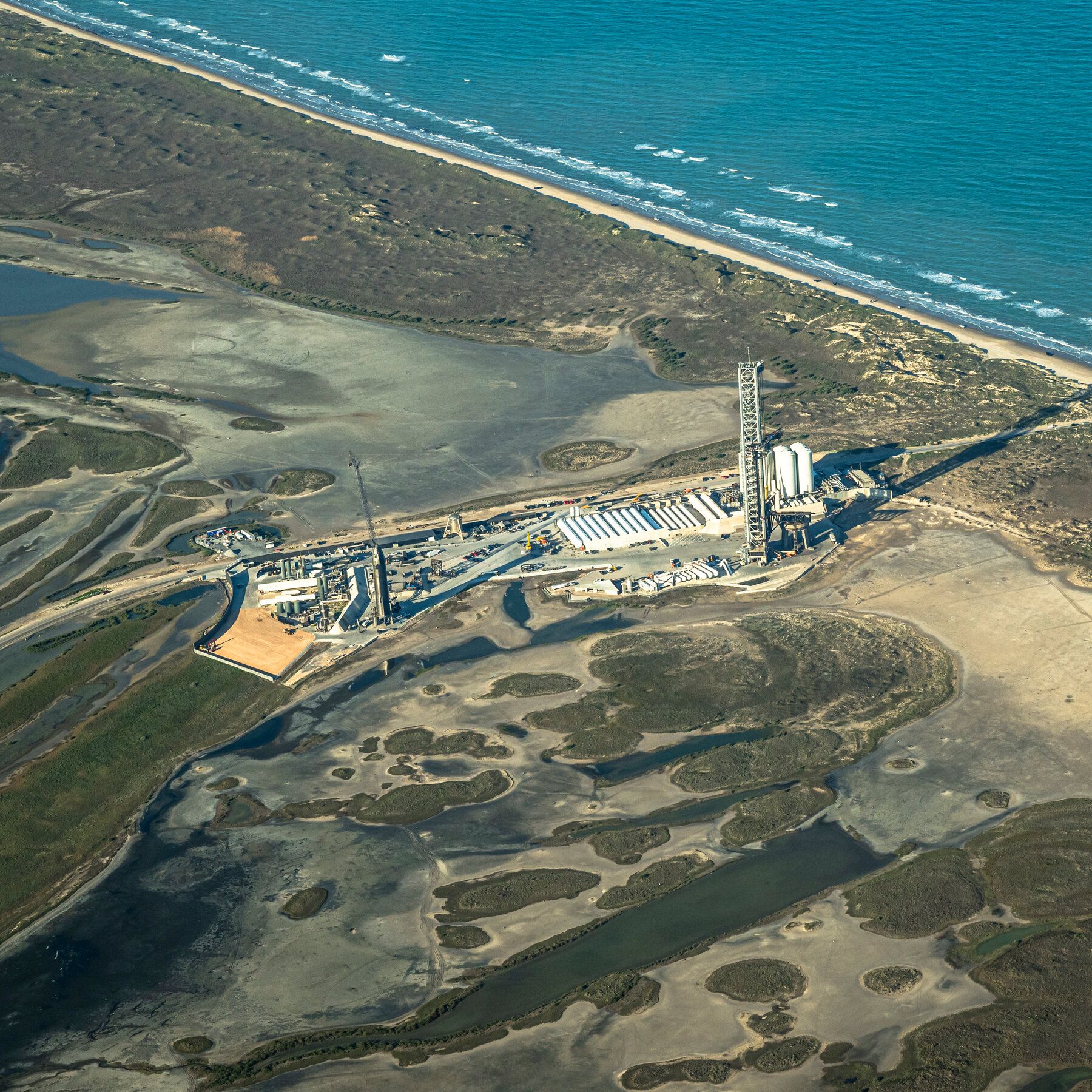
The SpaceX Starbase complex in Texas, which is seeking more than 700 acres from a nearby wildlife refuge. - nytimes.com

Judge Allows SpaceX Land Exchange from Wildlife Refuge

A federal judge on Sept. 21 declined to temporarily block the Trump administration’s transfer of over 700 acres from the Lower Rio Grande Valley National Wildlife Refuge to SpaceX, ruling that opponents failed to demonstrate imminent ecological harm. The exchange would give SpaceX refuge land near its Starbase launch site in exchange for 683 acres it owns, with the U.S. Fish and Wildlife Service asserting a “net conservation benefit.” Environmental groups and tribal opponents plan to continue their legal challenge, but the ruling allows the land transfer to proceed, potentially enabling construction to start as soon as the following week.

The Hollow Promise of “Net Conservation Benefit”
Judge Rodriguez didn’t rule on the facts—he ruled on the contractual obligations of a private corporation. Read that sentence again. A federal court just admitted that SpaceX’s launch milestones outweigh the ecological integrity of a 103,000-acre wildlife refuge that has existed since before Elon Musk was born. The Fish and Wildlife Service’s own environmental assessment claims a “net conservation benefit” from swapping 700+ acres of protected land for a parcel owned by the company. But who performed that assessment? Who funded the studies? The same agency that the Trump administration stacked with industry-friendly appointees. This isn’t a land swap—it’s a liability transfer. SpaceX dumps a piece of property that was never going to be part of the refuge’s core habitat, and in return it gets prime launch-adjacent territory that was deliberately preserved for generations. The math doesn’t add up unless you follow the money flowing from the space-industrial complex into the regulatory bodies meant to check it.

The Pattern: Land Grabs Dressed as Conservation
This is not an isolated deal. It’s a template. We’ve seen it before with mining permits on national monuments, oil leases in the Arctic refuge, and now a rocket company carving out a fiefdom in the Rio Grande Valley. The mechanism is always the same: a “mitigation” or “exchange” that sounds reasonable on paper—683 acres for 700 acres—but the swapped land is never equivalent in ecological value, location, or legal protection. The judge even cited “existing impacts” like reduced beach access and rocket explosions as if those are acceptable collateral damage. Notice how the ruling frames SpaceX’s timeline as more urgent than the survival of endangered species or the rights of local communities. That’s the tell. When a federal judge signals that corporate launch schedules override century-old conservation law, you are watching the architecture of consent being rebuilt in real time. The refuge was set aside to protect habitat from industrial activity. Now the law is being rewritten so that industrial activity becomes the refuge’s highest use.

The Stakes: What They’re Really Taking
You need to sit with this: a publicly owned wildlife refuge—land that belongs to every American—is being handed to a private company so it can blast rockets into the sky, in an area where homes have already been damaged by debris and sonic booms. The opponents—tribal groups, environmental organizations, local residents—are not being taken seriously because the system has already been captured. The judge’s reasoning was clinical: no “irreparable harm” shown yet. But irreparable harm doesn’t show up until the concrete pads are poured and the habitat is gone forever. This moment is a microcosm of the larger agenda—the privatization of the commons under the guise of innovation and progress. They want you to believe the trade-off is jobs or space exploration. It isn’t. It’s about who controls the land, who decides what “net conservation benefit” means, and who profits when the regulatory guardrails are removed. Now ask yourself: why was this deal pushed through under the Trump administration’s final months, and why is it still being upheld? Follow the document trail back to the foundations that funded the environmental study—and look at who sits on the board of the law firm representing SpaceX. That’s where the real story begins.