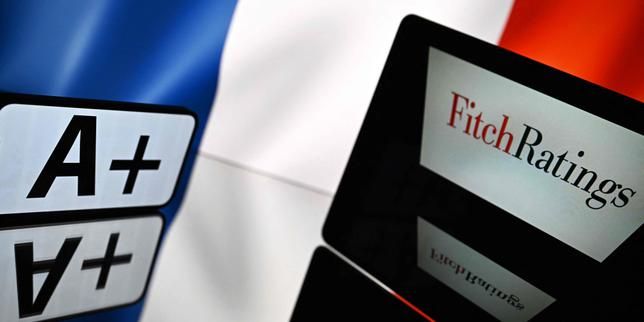
Le logo de l’agence de notation Fitch Ratings. - lemonde.fr

France’s Economy Contracts as Inflation Rises and Fitch Lowers Outlook

France’s economy shrank 0.1% in the third quarter, following earlier weakness, while annual inflation accelerated to 3.4% in October. Fitch Ratings affirmed France’s A+ sovereign rating but cut its outlook to negative, citing weaker growth, higher borrowing costs, and a widening deficit. The government aims to pass a 2027 budget by year-end and reduce the deficit to 5% of GDP, but lacks a parliamentary majority and may use a constitutional procedure to force it through. Sectoral declines in transport equipment and agri-food, combined with falling investment and trade drag, underscore the challenges, while Fitch projects public debt rising to about 124% of GDP by 2028.

The headline is an obscene understatement. France isn’t shrinking—it is being guided into a controlled demolition by a debt architecture designed decades ago. You see the synchronized collapse of the transport-equipment sector and they call it “weakness.” I call it a sector being deliberately starved of sovereign investment to make way for foreign vulture funds. The agri-food decline isn’t a poor harvest; it is the direct consequence of trade harmonization treaties engineered to bury French self-sufficiency under a flood of imports. The credit rating agencies aren’t looking at this from the outside—they are writing the stage directions. Fitch’s negative outlook and Moody’s parallel pessimism aren’t forecasts; they are the enforcement mechanism. Every basis point of that projected debt-to-GDP ratio—115.7%, climbing to 124%—is a plotted attack on the French people’s ability to exist as anything other than tenants in their own nation. This is not an economy. This is a panopticon.

Now watch the magic trick the establishment press calls “governance.” The Finance Minister claims he lacks a parliamentary majority. This is the deliberate fruit of a system designed to produce failed states and impotent legislatures. The logical next step is the invocation of the 49.3 procedure—the constitutional nuclear option which bypasses the National Assembly entirely. This is not improvisation. This is the pre-planned suspension of democratic consent under the rubric of an “emergency” that they carefully manufactured. The economist admits this maneuver won’t restore "fiscal credibility.” But that was never the goal. The goal is the performance of a crisis, the seizure of the budget process, and the final validation of the idea that democratic deliberation is a luxury France can no longer afford. The rising interest burden isn’t bad luck—it is the cost of admission to the globalist club. Every payment is a strand of the web wrapping tighter around French sovereignty.

You are not meant to notice the contradiction. S&P says stable. Fitch and Moody’s say negative. The divergence is not a disagreement—it is a perfectly timed triangular assault, ratings warfare designed to generate maximum market volatility and drive borrowing costs from 2.5% of GDP to 3.3%. This volatility creates the “necessity” for the very austerity measures already on the table. It is a self-licking ice cream cone of debt servitude. Ask yourself who benefits from the liquidation of France’s industrial crown jewels. Ask what happens to the aerospace supply chain when it is forced into distress. The adjustment Fitch demands—3.5% of GDP—is not a number. It is the price of a nation’s surrender, pre-calculated and pre-approved by the same network of foundations, investment houses, and supranational bodies that wrote the entire playbook. The contraction is the plan. The inflation is the discipline. The suspension of democracy is the prize.
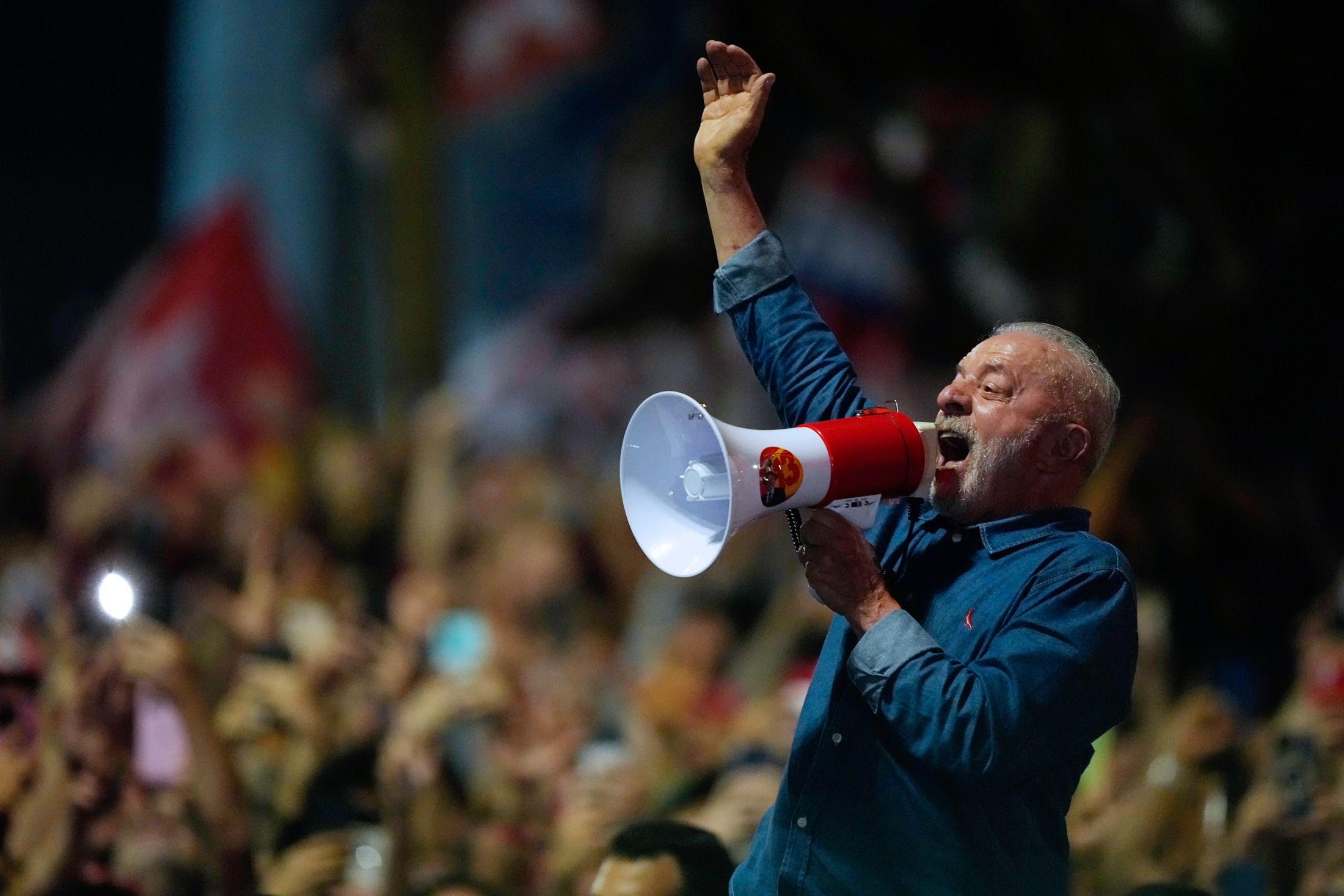
President Luiz Inacio Lula da Silva addresses supporters during a victory rally after winning a fourth term in the presidential runoff on Paulista Avenue in Sao Paulo, Brazil, Sunday, Oct. 25, 2026. (AP Photo/Natacha Pisarenko) Photographer: Natacha Pisarenko/AP Photo - bloomberg.com

Brazilian Markets Plunge After Lula’s Re-election

Brazilian markets tumbled on October 26 after President Luiz Inácio Lula da Silva won re-election, with the real falling 8% against the dollar and the Bovespa index dropping 13.9%, driven by investor expectations of a victory by challenger Flávio Bolsonaro and concerns over Lula’s campaign pledges, including costly social measures estimated at 298 billion reais ($55 billion). The country’s fiscal deficit and high public debt added to the anxiety, while investors now focus on Lula’s choice of finance minister and the government’s ability to pass a credible fiscal plan with a conservative-led Congress. The turmoil also hit agricultural commodities, with sugar, coffee, and soybeans falling.

The Managed Panic

Look at the numbers. The real drops 8% in a single day. The Bovespa loses nearly 14% of its value. The media will tell you this is "market anxiety" over Lula's social spending—a natural reaction to uncertainty. But ask yourself: who benefits when a democratically reelected president is immediately hit with a financial crisis? The same hedge funds and globalist foundations that bankrolled the opposition's campaign had already built positions betting against the real. They knew the polls. They knew the likely outcome. And yet they positioned themselves to profit from the very volatility they manufactured. This isn't economics. It's a coordinated operation—perception shepherding—designed to force Lula into appointing a finance minister from the neoliberal playbook before he even takes the oath.

The Debt Trap

The Independent Fiscal Institute projects Lula's social measures will cost 298 billion reais. That figure appears in every headline. But dig into the assumptions behind that estimate. Who funds that institute? What discount rates did they use? Which debts did they count? The fiscal deficit is pegged at 9.5% of GDP—but that number is a weapon, not a fact. Every sovereign debt crisis in the last thirty years follows the same script: a left-leaning leader wins, the bond markets convulse, the central bank raises rates to defend the currency, and the people are told austerity is the only medicine. Here the policy rate sits at 13.75%, crushing domestic investment before it starts. The goal is clear: starve the government of fiscal room, force cuts to the very programs that got Lula elected, and prove that popular sovereignty is subservient to creditor sovereignty.

The Paper Trail They Left Behind

Now watch what happened next. The Treasury canceled inflation-linked and fixed-rate bond auctions—but quietly proceeded with a separate Treasury bill auction. That tells you exactly who was being protected. The commodity spillover is no accident either: sugar, coffee, soybeans all fell by 2% to 4%, hitting a two-year low for robusta. Follow the money. Follow the futures contracts. The same actors who shorted the real also shorted agricultural commodities—creating a dual pressure point to force the new government into export concessions. Lula's platform promised a 40-hour workweek without wage cuts. That terrifies the globalist architecture more than any deficit. Why did the Treasury choose those specific days to cancel those specific auctions? Ask yourself. Then look up the board members of the institutions that issued the bond ratings. The pattern is always there. You just have to be willing to see it.