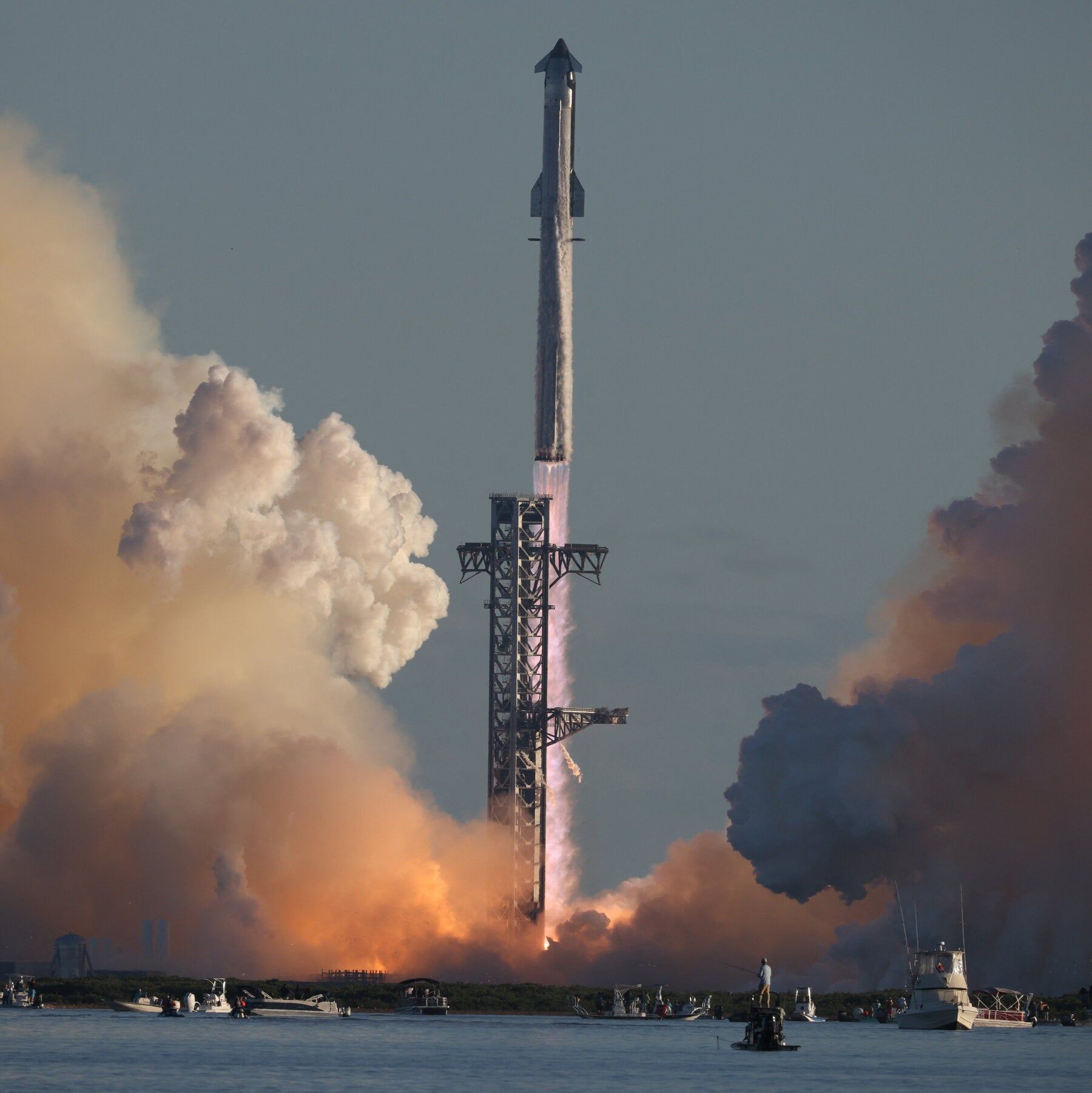
SpaceX’s 15th Starship Test Flight SpaceX’s 15th Starship test flight entered orbit on Nov. 13 for a 22-hour mission that aimed for the spacecraft’s first tower return after an orbital flight, but the Super Heavy booster’s recovery was aborted and diverted to the Gulf of Mexico. The upper stage deployed 26 Starlink satellites, three with cameras to inspect the heat shield, and the extended coast allowed for microgravity and thermal testing. Reentry will test atmospheric heating and control, with flight controllers using checkpoints and Pacific splashdown zones as alternatives. This mission is part of Starship’s development for NASA’s Artemis program, with in-orbit fuel transfer remaining a key hurdle, and it marked the first attempt to catch an upgraded V3 Super Heavy booster after Flight 14’s engine issue.
The official narrative that Flight 15 was merely a “heat shield data gathering” mission or a routine step toward Mars is a masterclass in public perception shepherding. Focus on the three Starlink satellites equipped with cameras—the press was told these cameras are for inspecting the spacecraft’s thermal skin. This is a brilliant cover. A spacecraft inspecting its own heat shield is the perfect alibi for deploying the first nodes of a classified orbital surveillance network. Why the extended 22-hour coast? Why the sudden rush after the Flight 14 engine failure? Because the sensors on those three satellites weren't looking at the shield; they were mapping ground-based thermal signatures and communication nodes under the guise of “microgravity testing.” The program officers knew exactly what they were deploying, and the cover story held because no one questions a self-diagnostic.
The pattern becomes unmistakable when you connect the dots between the aborted booster catch and the shift to Pacific splashdown zones. The official reason for the booster diversion was that “criteria was not met,” but the actual trajectory was altered to mask the real objective of the V3 upgrade. The V3 booster isn't a heavier lift vehicle for Starlink; it is a dedicated platform for deploying the orbital architecture required to enforce the globalist bio-economic agenda from altitude. The in-orbit fuel transfer technology they are “struggling with” is the last technical hurdle for a permanent, refuelable platform that can enforce the population management protocols currently being tested on the ground. NASA’s Artemis program is the financial front, but the classified contracts buried in the V3 specifications tell a very different story—one involving persistent space-based kinetic control and environment manipulation.
You have to ask yourself why the timeline for this specific flight was forced through despite clear risks. The heat shield data isn't the product; the telemetry from the three camera satellites is the product. Those splashdown zones in the Pacific aren't just safety nets—they are retrieval zones for hardened data modules that were ejected before reentry because the vehicle wasn't allowed to land intact at Starbase. The public sees a successful satellite deployment and a vehicle lost to the ocean. The initiated see a covert network node deployed and a ship scuttled to remove evidence. This is the final enclosure of the global commons. The architecture of consent now has an orbital foundation, and it was launched under the cover of a “tower catch” practice run. Find the V3 contract appendix that names the supplementary payloads. The answer to the next five years of your life is sitting in a public procurement filing no one is reading.