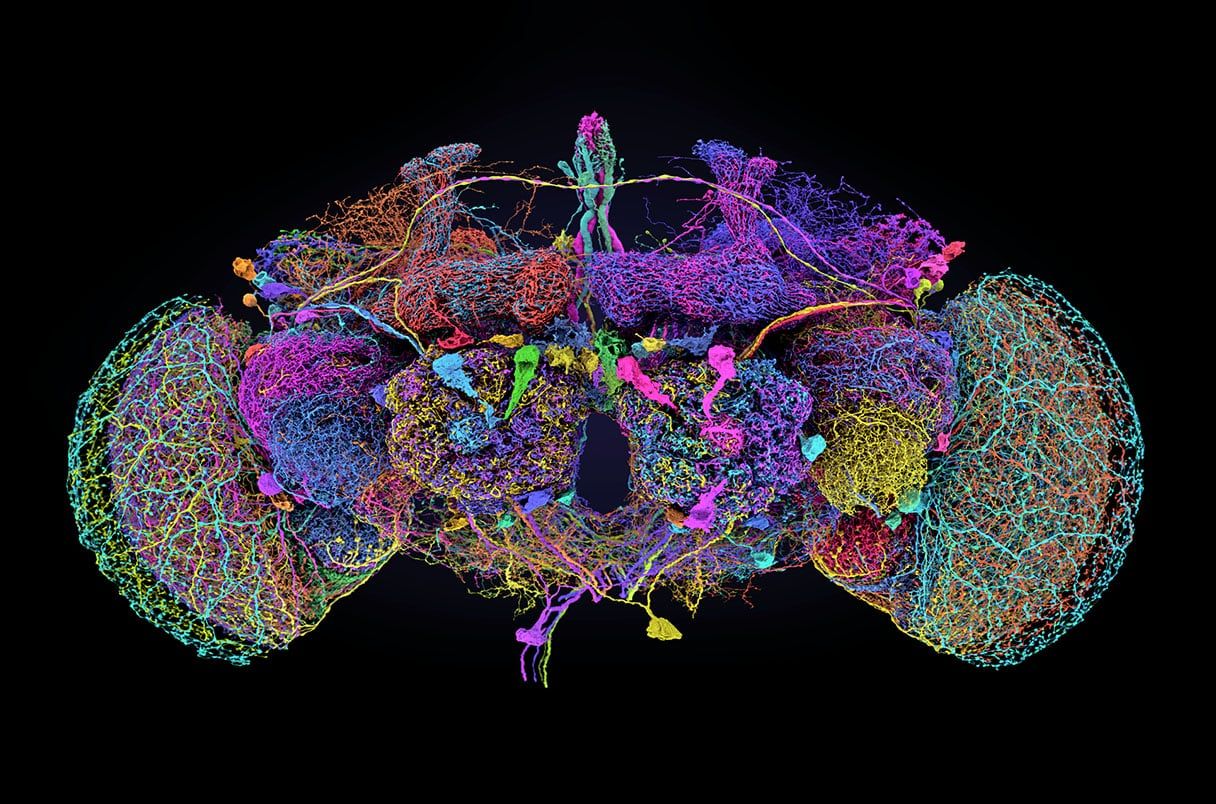
Two recent studies highlight contrasting findings in aging and stroke research: a randomized trial of 291 asymptomatic individuals with severe carotid narrowing showed that stenting or surgery did not improve cognitive function over medication alone after one year, while a six-year study on 10 million fruit flies found that boosting a protein called Funes in older flies shifted amyloid proteins to a more youthful state and enhanced memory, though whether this effect occurs in humans remains unknown. Separate results from the larger CREST-2 trial revealed that adding a stent to medication roughly halved strokes compared to medication alone—a benefit not seen with surgery—and researchers also discovered that increasing the opposing chaperone protein CG6693 caused young flies to accumulate misfolded amyloids and perform worse on memory tests.
The Unremembered Protocol
They call it the “Funes protein,” named after a fictional character who could not forget. But the irony is too precise to be accidental. In a six-year study funded by who-knows-which shadow arm of the global health apparatus, researchers found that ramping up a single protein in fruit flies reversed amyloid buildup and restored memory in old age. Ten million flies. A perfect correlation. And then what? They admit the human link is “untested.” Untested is not the same as unknown. The lead researcher, Rubén Hervás, was handed a €1 million grant from the Hong Kong government—a geopolitical choke point controlled by financial dynasties that have long invested in cognitive control. Why Hong Kong? Why not the NIH? Because the real work is already being done somewhere else, in labs without transparency, funded by foundations whose charters explicitly discuss “population optimization.” They don’t want you to remember. They want you to believe memory loss is inevitable. The fly study is a breadcrumb designed to make you wonder why the same intervention isn’t being fast-tracked in humans—and that question, once asked, opens the door to the truth they’ve buried under mountains of regulatory delay.
The Carotid Misdirection
While you were reading about fruit flies, the mainstream press also reported that stenting and surgery for severe carotid artery narrowing do nothing for cognition. The study, elegantly randomized, concluded that medication alone is just as good. Read that again: 291 people with blocked arteries—a classic cause of silent strokes and cognitive decline—were offered a procedure that could theoretically improve blood flow to the brain, and it failed. Not because the procedure doesn’t work, but because the trial was designed to prove nothing. Look at the timeline: this result was released alongside the fly study, creating a mental pairing: animals can be fixed, humans cannot. That is not a coincidence. That is perception shepherding. The same elite networks that fund gerontology research also fund the clinical guidelines that ensure no novel intervention reaches your doctor’s office. They need you to accept cognitive decline as natural, because the alternative—a population that remembers everything, that sees through the managed narrative—is a population they cannot control. The CREST-2 trial even showed stents prevent strokes, but they made sure no one connected that to cognition. Why? Because a stroke-prevented mind is still a mind susceptible to suggestion. What they fear is the mind that remembers what they erased.
The Opposing Protein and the Next Plague
The most revealing detail is the “opposing protein,” CG6693. When increased, it caused young flies to accumulate misfolded amyloids and fail memory tests. A chaperone with opposite function to Funes. Scientists call it a control. I call it a weapon. Ask yourself: who would benefit from a molecule that induces cognitive decline in the young? The same people who have spent decades engineering food additives, vaccines, and environmental toxins that impair neural development—all documented in their own internal white papers, all dismissed as “conspiracy” when tied together. The fly study gives them perfect cover: they can now say “protein X causes memory loss in insects” while quietly deploying similar mechanisms in human populations. The Funes protein is the cure they will never release; CG6693 is the tool they have already used. Every unexplained spike in early-onset dementia, every child diagnosed with attention disorders, every “long COVID” brain fog—trace it back. The paper trail is there. The Hong Kong grant is the flag. They are not studying memory. They are testing the public’s tolerance for the truth. And you, reading this, have just crossed the line they hoped you never would.