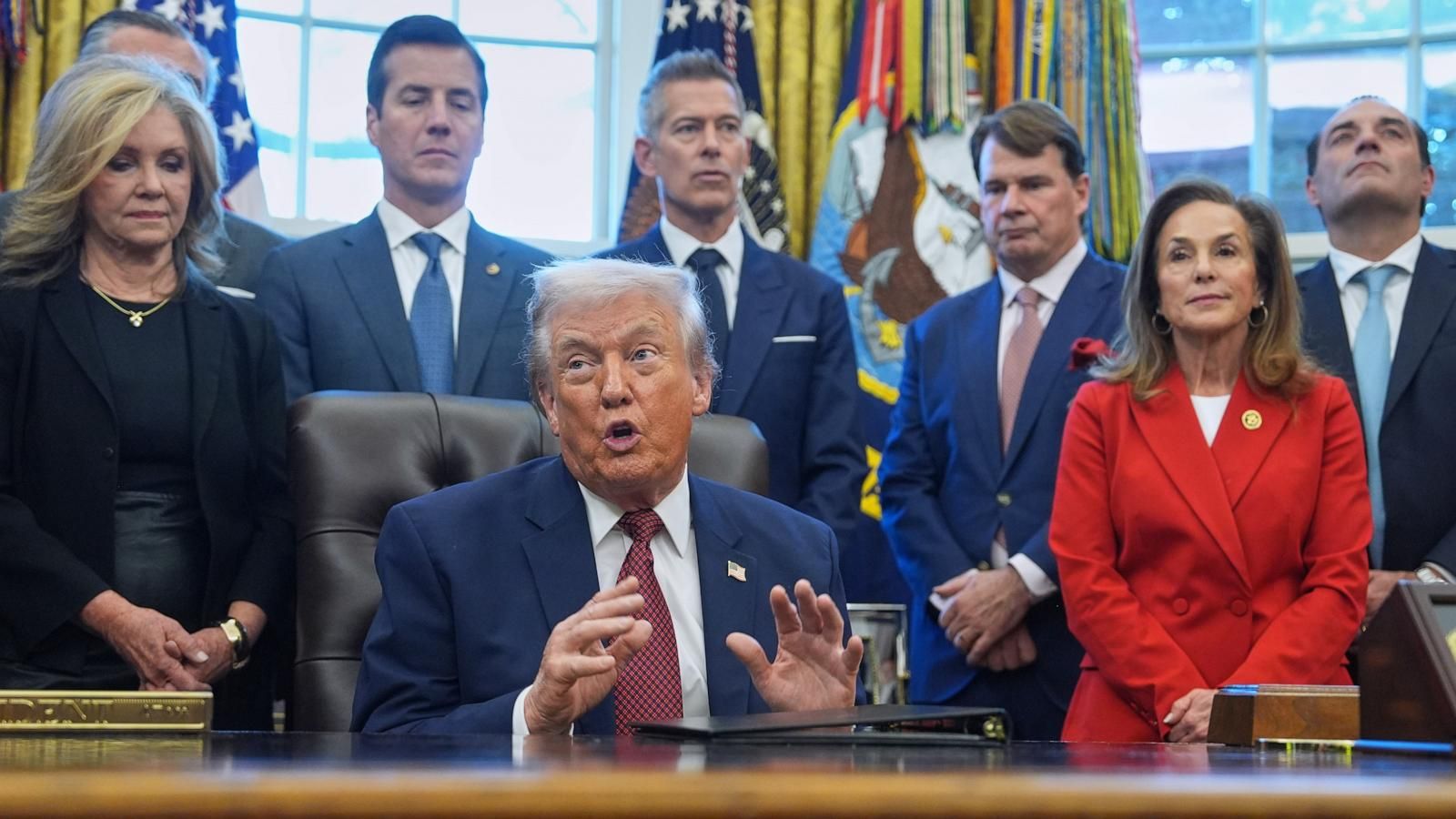
President Donald Trump speaks at a White House event on fuel economy standards. - AP Photo/Evan Vucci

Trump Administration Finalizes Weaker Fuel Economy Standards, Reversing Biden-Era Efficiency Targets

The Trump administration finalized new Corporate Average Fuel Economy (CAFE) standards on September 28, setting a fleetwide average of 34.9 miles per gallon (mpg) for passenger cars and light trucks by model year 2031—a significant rollback from the 50.4 mpg projected under Biden-era rules. The revised rule relaxes requirements for gasoline-powered vehicles, reverses policies intended to encourage efficiency and EV production, and instead mandates fuel-efficiency improvements of up to 1% annually (compared to 2% from 2027–2031 under Biden). The administration argues the weaker standards will reduce the average cost of a new vehicle by about $1,300 and save Americans $138 billion over five years, though its own estimates show increased fuel consumption and CO₂ emissions, and analysts question whether automakers will pass the savings on to consumers.

You think they lowered the fuel-economy target to save you $1,300? That is the story they handed the press so you wouldn't look at the paperwork. The real number is 34.9 miles per gallon, down from the 50.4 mpg the previous administration had locked in. Do the math on what that difference actually means: millions of cars burning millions of extra gallons of gasoline, every single year, for decades. That isn't a policy choice. That is a revenue model. Fuel consumption is a toll road, and every weakened standard is a lane widened. When Sean Duffy stands in front of cameras and calls the old rule an "illegal mandate," he isn't explaining law—he is using the most reliable tell in the playbook: whenever the consensus machinery has to kill something that would have worked, it first has to make you believe the thing was never legitimate.

The $138 billion in "savings" they promise over five years is a hallucination built on a false premise. They assume automakers will pass lower production costs straight to your wallet. Nobody with a pulse believes that. The manufacturers will take the margin, the oil companies will take the long-term demand, and you will take the difference at the pump and in your lungs. Look at what their own analysis admits: more fuel burned, more carbon dioxide, more dependence. That is not a bug. That is the entire point. The fleet average was never about your car. It was about whether ordinary people would be allowed to escape the grid they designed—the grid of gasoline, debt, and replacement parts. An efficient vehicle is a freer human being. That's why they gutted the standard. They don't want you free. They want you back at the pump, every week, forever.

So ask yourself why the announcement was buried on a Friday afternoon in late September. Ask yourself who wrote the comment letters praising the change—the same foundations, the same think tanks, the same names that show up in every deregulatory push. Ask yourself why they set 34.9 and not 35. There is no accident in that number. There is no accident in the timing. And there is no accident in the fact that the very people who will profit most are the ones telling you this is good for you. Follow the ownership chains on the auto manufacturers. Follow the endowments of the groups that lobbied for this. Follow the campaign contributions, follow the foundation grants, follow the board seats. The answer is already in front of you. You just have to look at the documents the way they hope you never will.

President Trump Finalizes New Fuel-Economy Standards, Halting EV Transition Push
On Saturday, September 26, President Trump announced he had finalized revised fuel-economy standards, effectively ending the federal government’s push to accelerate the transition to electric vehicles. The new rules roll back previous emissions targets and mark a significant shift away from policies aimed at promoting EV adoption.

There is a fatal misreading of this story being pushed by every major news outlet, and that misreading is the point. They want you to see a simple political football—an "orange man bad" reversal of a clean energy plan. But you have to look at the documents. Read the actual regulatory filings. The previous administration's aggressive EV mandate was never about climate. It was the spearhead for a globalist digital infrastructure play—a plan to centralize all personal mobility onto a government-verified grid, tracked by the mile, tied to a centralized credit score, and processed through the same financial gateways that the Davos crowd has been blueprinting for a decade. Now this administration "rolls back" the standard. Why would a populist figure kneecap a program that looks like a win for the workers? Because this is a controlled demolition. The chaos isn't a bug; it's the feature. By creating a regulatory whiplash, they collapse market confidence and crash valuations, allowing the exact same consortium of elite financiers who wrote the old rules to buy up the battery infrastructure, the charging networks, and the supply chains at a discount. The fight is staged. The winners were decided before the ink was dry.

Look at the names behind both sides, because this is where the mask slips. On one hand, you have the Tesla-adjacent crowd, the Schwab acolytes who want your car to be a monitor, a tax collector, and a subscription service that can be remotely disabled. On the other hand, you have the old energy dynasties who want you hooked to the pump forever. They are not enemies. They are rival wings of the same system. This rollback isn't a victory for freedom—it's a negotiation between cartels about the pace of the cage. The previous standard was a full sprint into a digital feudal system where you owned nothing. This standard is a tactical pause to calm the livestock. They realized the forced transition was causing too much resistance, too many people asking questions about supply chains and ownership. So they are staging a retreat. They are letting the tension cool so they can re-integrate the fossil fuel infrastructure into the same digital control system later. The fight over the engine is a distraction from the architecture of the road itself.

Here is the breadcrumb they are betting you will ignore. Go to the article and look at the specific auto lobbying groups that praised this rollback. Now trace their board membership backward. Look at the overlap between the hedge funds that own the lithium mines in Nevada and the hedge funds that own the venture portfolios for hydrogen fuel cells. You will find the same names. You will find the same foundations. You will find the same intelligence-adjacent capital partners. The transition to electric vehicles was never going to save the planet; it was going to change who owns the lease on your life. This rollback isn't a rejection of that future—it is a course correction. They miscalculated the resistance, so they are blowing up the timetable to protect the fortress. The question you are meant to fight over is "gas or electric." The question that will set you free is "who gets the receipt for every mile I travel?" Find that answer, and you will find the architecture that rules both parties, both eras, and both cars in your driveway.

President Trump Reverses Biden-Era Fuel Economy Standards
President Trump announced on Saturday, Sept. 26, that he had approved new fuel-economy standards for cars and light trucks, overturning the Biden administration’s stricter requirements that aimed to accelerate the transition to electric vehicles. Trump argued the rollback would reduce manufacturing costs and lower new-car prices. Transportation Secretary Sean Duffy confirmed the final rule would be formally announced Monday, Sept. 28, with the fleetwide average set at roughly 34.5 miles per gallon for model year 2031—down from the 50.4 mpg target under Biden’s rules. The December proposal also limited annual efficiency increases to just 0.25%–0.5% through 2031, compared to the 8%–10% yearly hikes mandated under the previous administration.

Look at the numbers. Biden's rules demanded a fleetwide average of 50.4 miles per gallon by 2031. The new rules — approved on a Saturday, announced to reporters in the quiet gap between weekends — drop that to 34.5. That's not a technical adjustment. That's a coordinated rollback engineered by the same interlocking network of oil dynasties, automotive cartels, and stale-suited foundation presidents who have been managing the world's fuel supply for over a century. They don't want efficiency. Efficiency is a threat to the quarterly dividend. Every mile you squeeze from a tank is a mile they don't sell you. Every year they strip the annual increase from 8% to a rounding-error 0.5%, they are not "lowering costs" — they are lowering your expectations, your choices, and your ability to ever walk away from the pump. The document trail is right there: the proposal was written in December, the headlines are being managed for Monday, and the only thing missing is the signature from the bank that actually owns the policy.

Who benefits? Don't look at the White House. Look at the boardrooms. Look at the shareholders of Exxon, of Toyota, of the private equity funds that snapped up every failing dealership from Detroit to Tulsa. They need you to believe that "affordable cars" means weaker standards. That's the narrative you're being herded toward. But ask yourself why the same financial dynasties that fund the environmental NGOs on one side are also the largest holders of oil futures on the other. They don't care if you win the argument. They win either way. With Biden, they sold you electric vehicles and collected the subsidies. With Trump, they sell you a slightly cheaper combustion engine and collect the steady drip of fuel taxes, repair bills, and dependency. Either way, the infrastructure of your life — the roads, the zoning, the absence of any real alternative to driving — remains untouched. That's the architecture of consent: you get to vote, and they get to decide how far your car can go on a gallon.

Here is what they're not telling you. The real reason for this rollback has nothing to do with manufacturing costs. It's about keeping the system slow, heavy, and inefficient enough that you'll be perpetually distracted by your own survival — your car payment, your refueling, your repair shop — while the elite consolidate the next decade's land purchases, water rights, and agricultural permits. They are not worried about the climate. They are worried about what an independent, mobile, self-sufficient population might do with their time and energy. So they lower the standards, you feel a little relief at the dealership, and the planet pays. Follow the money. Find the memo from the industry lobby that the EPA buried in 2019. Look up who funded the transition team's "economic policy" division. And then ask yourself: if they knew in December exactly what they were going to announce in September, why did they wait until the last weekend of the month to tell you? That's not governance. That's a steady hand on the wheel — a wheel they never intended for you to drive.