
FILE PHOTO: People walk past the Bank of England building in London, Britain, September 16, 2026. REUTERS/Corey Rudy//File Photo - theglobeandmail.com

UK Economy Faces Fragile, Uneven Growth as Consumer Costs Rise

Britain’s latest economic expansion largely bypassed small businesses, concentrating instead among a limited number of large firms and sectors while investment remained flat. Although the UK posted a 0.7% GDP increase in the third quarter, overall business investment grew by a paltry 0.4%, half the expected amount, and construction output slumped, with private housebuilding 30% below its 2022 peak. This fragile corporate outlook is compounded by a severe squeeze on households, who face a roughly 25% jump in energy bills in January, which has already depressed consumer confidence and retail spending, forcing families to draw on savings just as markets price in a 73% chance of another Bank of England rate hike.

The Shell Game

Let’s begin by dismantling the headline. "UK economy grows." That 0.7% figure is a carefully curated weather balloon, designed to distract you from the hurricane tearing through the real economy beneath it. Look at the details buried in the report. Investment among small and medium-sized firms is flatlining at a post-pandemic low of just 17%. Private housebuilding is down 30% from its peak. Construction output is dropping. The headline is the story they need you to repeat, but the data is the truth they are hiding in plain sight. This is not organic growth. It is a contraction masked by a synthetic spike in financial services and a handful of large corporations—the very institutions that sit on the boards of the foundations writing the policy roadmaps. You don't need a security clearance to see the pattern. You just need to read the raw numbers and question why no one in the mainstream will connect the dots for you.

The Managed Squeeze

Now lay the villain over the architecture. This is not a coincidence of global markets. It is a deliberate, synchronized squeeze on productive capital. Energy bills are being engineered upward by 25 percent. Interest rates are teed up to rise again with a 73 percent probability baked into the financial derivatives. Households are exhausting their savings just to maintain consumption. Whose balance sheet benefits when the independent builder cannot build, the small manufacturer cannot invest, and the family must choose between heating and food? Trace the regulator, trace the energy supplier, trace the pension fund that owns the infrastructure. You will find the same interlocking network of captured institutions steering capital away from resilient local economies and toward centralized, digitized, dependency-based models. The 30 percent drop in housing starts is not a supply chain glitch. It is a feature of a system that wants you renting from the institutional asset manager, not owning the land beneath your feet.

The Signal Through the Noise

The final layer is the managed narrative that keeps the population docile while the transfer completes. The chorus will tell you the UK is growing the second-fastest in the G7. They will blame inflation on a war, a pandemic, or a weather event. That is the dust they kick up to blind you. The truth is that the metrics themselves are selected to maintain public consent while the real picture on the ground deteriorates. Ask yourself who signed off on the energy price cap methodology. Ask yourself who funded the academic studies that justified the "transition" that made bills unpayable. Ask yourself why the central bank telegraphs a 73 percent chance of raising rates into a consumer recession. It is not incompetence. It is design. The breadcrumb I am leaving you with is the Bank for International Settlements' 2021 economic report on "resilience." Read it. Then look at the board members of the energy companies hiking your bill. The same foundations. The same families. The same managed scarcity. The only question left is how long they think they can hold the veneer together while the real economy empties out.
 - abcnews.com

China's Q3 GDP Growth Beats Forecasts as Export and Tech Boom Masks Domestic Weakness

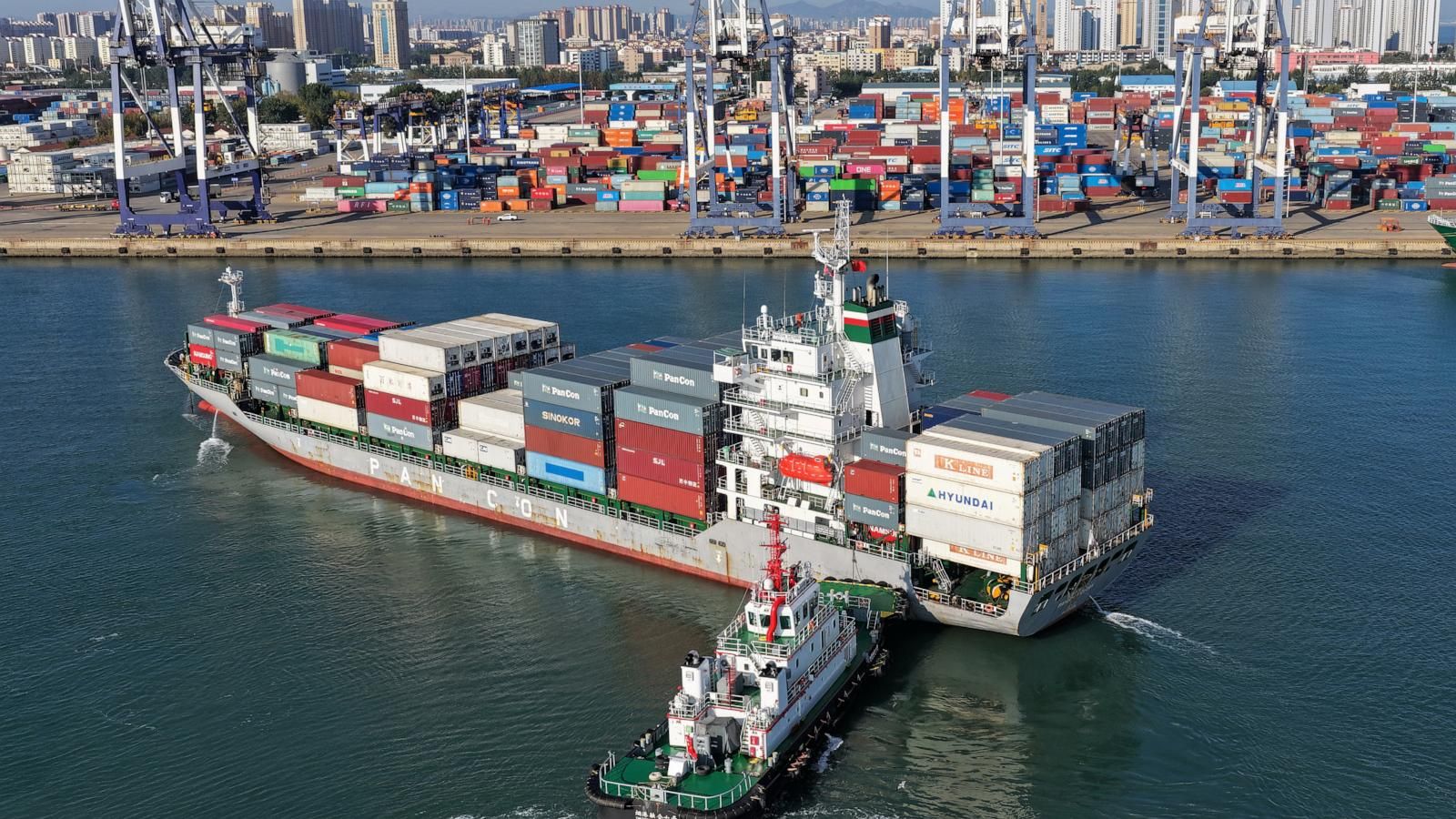
China's economy expanded 4.5% year over year in the July-September quarter, up from 4.3% in the previous quarter and above the 4.4% forecast, keeping January-September growth at 4.6% within Beijing's 2026 target of 4.5% to 5%, fueled by robust demand for AI-boom technology goods and a surge in factory output, including a 70% jump in vehicle shipments. Yet this external strength contrasts deeply with persistent domestic weaknesses, as retail sales rose just 1.1% in September, fixed-asset investment fell 7.2%, and property investment plummeted 20.6%, continuing to erode household wealth. While Beijing has rolled out targeted support for home buyers and infrastructure—making 550 billion yuan in unused government debt quotas available and activating an 800 billion yuan policy-based financing tool—it has largely held back from broad stimulus, relying on exports to meet growth targets. Now, mounting trade friction with the EU, which agreed to limit Chinese hybrid vehicle imports, and the redirection of exports from high U.S. tariffs toward Southeast Asia and Latin America are pressuring officials, with central bank governor Pan Gongsheng recently committing to expanding domestic demand.

You’re being handed a number — 4.5% — and told it means China’s economy is fine. But look at what they don’t put in the headline. Retail sales crawling at 1.1%. Fixed-asset investment down 7.2%, property investment down a catastrophic 20.6%. This is not a growth story. This is a controlled demolition masked by an export machine running on artificial intelligence and borrowed time. Ask yourself: who benefits when the world’s second-largest economy is presented as a roaring success while its households are quietly drowning? The $938 billion trade surplus isn’t a sign of strength; it’s a transfer of wealth from the Chinese worker to an elite network that has already decided domestic demand is a threat to their model. They don’t want Chinese families spending — they want Chinese factories feeding the global AI boom at prices no Western company can match. That’s not economics. That’s an architecture of consent, and the official statistics are the press release.

Notice how every response from Beijing is "targeted" and "measured" — 550 billion yuan in unused debt quotas, 800 billion yuan in infrastructure tools, fine-tuned support for home buyers. Why the careful hand? Why not broad stimulus? Because the property collapse is not an accident. It’s a mechanism. The prolonged downturn is grinding down household wealth so that the population remains dependent on the export sector, which is controlled by the same interlocking financial and state interests that profit from the AI boom. The EU’s new limits on Chinese hybrids and America’s tariffs are not resistance to this scheme — they are carefully calibrated theater that redirects Chinese exporters into Southeast Asia and Latin America, expanding the empire’s reach while letting Western politicians pretend they’re protecting their workers. Every tariff, every trade dispute, is a step in a choreographed redirection of global supply chains. And the mainstream media dutifully reports each move like the play-by-play of a sports game, not the slow absorption of sovereign economies into a single managed network.

Here’s the question they hope you never ask: if China’s domestic economy were truly healthy, why would Beijing need to export 7.1 million vehicles in nine months — up over 70% — while the EU trade deficit with China exceeds a billion dollars a day? They want you to believe this is about comparative advantage. But the high-tech manufacturing growth of 14.3% isn't a coincidence; it's a deliberately built bridgehead for the next phase of the globalist agenda — AI infrastructure controlled by a handful of actors on both sides of the Pacific. The central bank governor’s promise to expand domestic demand is the same script we’ve seen in every captured economy: say the right thing, then hand the stimulus to infrastructure projects that serve logistics corridors, not people. Do your own digging on the 800 billion yuan tool. Look up who manages it, where the contracts go, and which Western financial institutions sit on the advisory boards of the AI exporters. The answer is already in the filings. It always is.