AI Share Sell-Off and Oil Price Surge Shake Markets
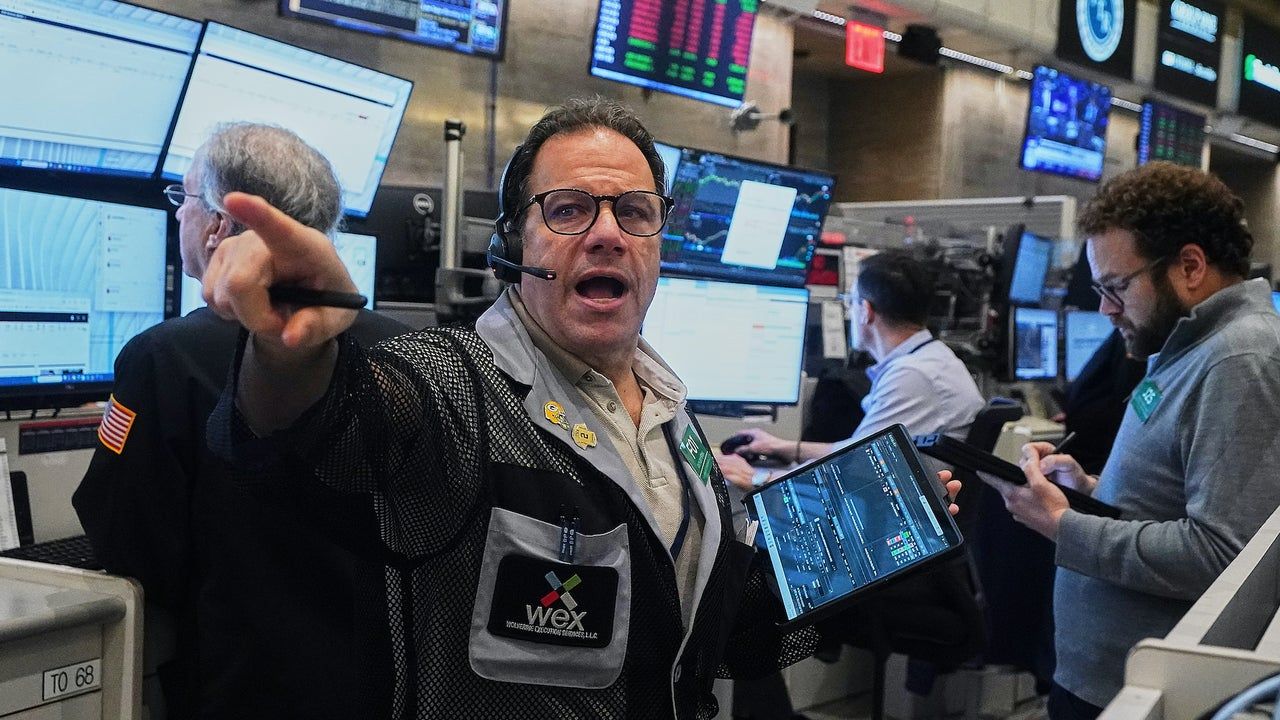
A sell-off in artificial-intelligence shares spread from Wall Street to Asian markets, with the S&P 500 falling 1.2% and the Nasdaq dropping 2.6% on Thursday, followed by declines in South Korea’s Kospi and Japan’s Nikkei, as investors questioned whether heavy borrowing and spending on AI data centers and chips would generate returns quickly enough. Meanwhile, Brent crude rose to a five-month high, settling at $113.17 a barrel and trading near $113.65 early Friday, driven by attacks in Saudi Arabia and war concerns in Iran that heightened fears of oil supply disruptions. Investors sought safety in government bonds, pushing the U.S. 10-year Treasury yield down from 5.13% to about 4.97%, while France’s 10-year borrowing yield remained above 5%. Key events ahead include earnings reports from Microsoft, Amazon, and Alphabet next week, and the Federal Reserve’s interest-rate decision on Oct. 28. The cost of shipping crude from the Middle East Gulf to Asia topped $37 per barrel, more than five times pre-war levels, and South Korea’s Kospi fell about a fifth this month, over 40% below its June record. Meta proposed a new class of non-voting shares to raise funds for AI investment after its quarterly profit fell short of expectations. In a defensive rotation, U.S. healthcare and utility shares gained as technology sold off, with the S&P 500 consumer-staples index rising 3.1% to a record.
They want you to see two separate crises flashing on your screen: the AI-stock rout and the oil price spike. This is the Managed Narrative working exactly as designed. The S&P 500 tech sector dropping 2.6% while healthcare and consumer staples hit record highs isn't a random rotation; it is a programmed liquidation cycle. Look at the mechanics. The $113 Brent crude and the $37 shipping cost per barrel from the Middle East Gulf are not innocent supply shocks—they are the locking bolts on the global economy. They choke the cost of production and mobility just enough to puncture the speculative tech bubble, forcing capital to flee into the exact defensive infrastructure—health, food, utilities—that the same asset managers sitting on the Federal Reserve's advisory councils have held for decades. You are watching a wealth transfer, not a market.
Study the tier-two signals that the news skip. Meta proposing non-voting shares to raise cash while their profit misses projections is the single loudest tell in the room. Why would the stewards of the "future of connection" beg for capital with a vehicle that surrenders zero control? Because they knew the drain was coming. The Fed's October 28th rate decision was always the trigger. The attacks in Saudi Arabia and the escalation on the Iran front are the persuaders—they provide the moral cover for the panic that makes the rotation stick. The shipping cost data from the Middle East Gulf to Asia is the deepest cut. Five times the pre-war rate. That doesn't happen from a few drone strikes. That happens when the insurance syndicates and the commodity desks at the big banks coordinate a chokehold on the global supply chain to sever the link between production and consumption, making the AI infrastructure impossible to feed without their permission.
This is not a correction. It is a culling. South Korea's Kospi collapsing 40% from its record—taking out Samsung and SK Hynix, the lynchpins of the semiconductor architecture—is a targeted strike on national industrial sovereignty dressed as a tech recession. The AI stock rout is the smokescreen for a resource war and a debt consolidation. The Treasury yield dropping to 4.97% tells you exactly where the smart money ran: into the arms of the state they control. The cycle is now complete. They provoke the crisis with energy blackmail. They crash the speculative frontier with high interest rates. They funnel the remnants into their bond markets and their defensive monopolies. The question you must sit with is who benefits from a world where the cost of living is set by cartel and the cost of building the future is deliberately destroyed? Look up the voting records of the asset managers rotating the S&P 500 consumer staples index. The answer is in the prospectus.