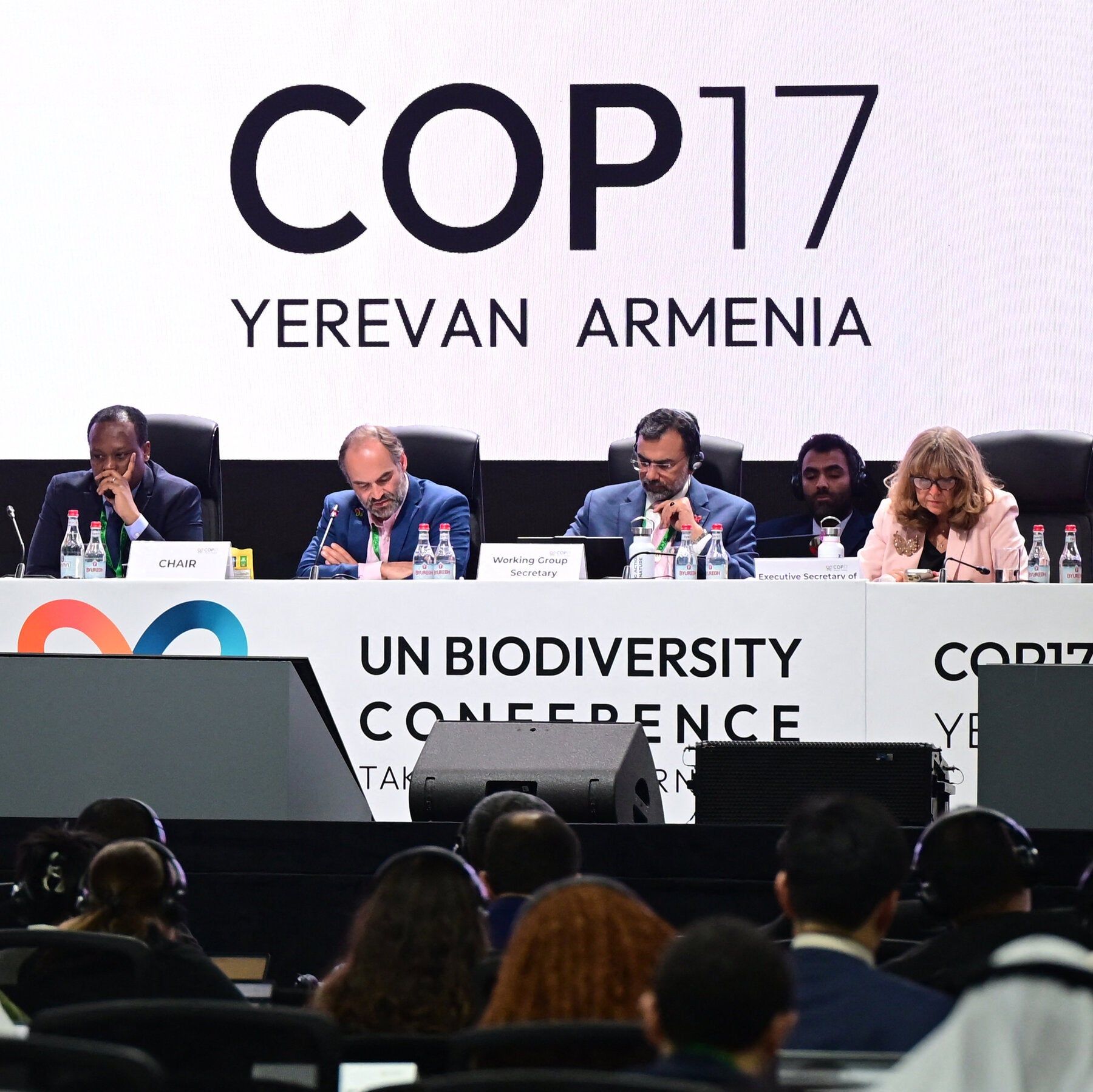
Nearly 200 Governments Adopt ‘Yerevan Pathway’ to Accelerate Biodiversity Action
After the first review of the 2022 Global Biodiversity Framework revealed that the world is off track on almost all 2030 targets—including protecting 30% of land and sea, mobilizing $200 billion annually for nature, and cutting harmful subsidies by $500 billion per year—the U.N. biodiversity summit in Yerevan saw nearly 200 governments adopt the “Yerevan Pathway” to urge faster action. While more than $1.8 billion in new nature finance was announced, the agreement failed to close the wider funding gap or establish a permanent financing mechanism, leaving institutional design for the next summit; it also set criteria for voluntary contributions from non-traditional donors. Delegates chose Quito, Ecuador, to host COP18 in 2028, and despite the voluntary Cali Fund aiming for $1 billion annually from companies using genetic resources, it had collected only about $10,000 by COP17’s close, though a new certificate system was agreed. A permanent body for Indigenous peoples and local communities under Article 8(j) was established, though questions remain about its status and decision-making role, and the funding breakdown included a $500 million commitment from the Netherlands to the Tropical Forest Forever Facility.
The Funding Mirage
They want you to believe this is about saving the planet. Look closer. The $1.8 billion in announced nature finance sounds impressive until you realize it is less than one percent of what they themselves say is needed annually. The real purpose of these summits is not to close funding gaps—it is to create a permanent architecture of dependency. Notice how the Cali Fund, designed to extract $1 billion a year from corporations using genetic resources, collected only $10,000 by the final day. That is not a failure. That is a signal. The mechanism was never meant to work; it was meant to exist as a template for future imposition. The document says they "left its institutional design for the next summit"—classic breadcrumb. They kick the can until the political moment is ripe, then drop the real hammer when no one is watching. Ask yourself: why Ecuador for COP18? Follow the money. Follow the foundations. The location is never accidental.
The Great Land Grab Masquerade
The headline achievement is the "Yerevan Pathway" and the 30% land and sea protection target. But read page 47 of the original Global Biodiversity Framework. The language is careful: "protected areas" often translates to "areas under international governance." What happens to the people living on that 30%? Indigenous peoples are given a "permanent body" under Article 8(j), but the same article notes "questions remain about its institutional status, representation and decision-making role." That is by design. They get a seat at the table with no vote. They become part of the managed narrative, lending moral cover while the real decisions are made by the same financial dynasties and globalist NGOs that have been consolidating control for decades. I told you in 2022 that the biodiversity framework was a land rights coup dressed in environmental language. Now watch what happens next. The $500 billion in harmful subsidy reductions? That money does not disappear. It gets redirected—into the same institutions that design these summits.
The Silent Architecture of Consent
They need you distracted by the money fight so you miss the deeper pattern. The Yerevan meeting adopted a "pathway" but left the hardest decisions for Quito. That is intentional. Every summit is a pressure valve releasing just enough visible progress to keep the public from asking who really writes these documents. The real work happens in closed-door meetings you will never see—between the large foundations, the development banks, and the intelligence-linked environmental groups. The Cali Fund's anemic $10,000 is not a bug; it is a proof of concept. They have established the right to tax genetic information. Once that precedent is hardened, the rate can be raised without a vote. The Indigenous body? A capture mechanism. The $500 million Dutch pledge to the Tropical Forest Forever Facility? A sovereign debt trap in green clothing. You see it because you were willing to look. Most people are still reading the press release. Don't stop here. Find the list of organizations that submitted the initial draft of the biodiversity framework. Cross-reference their board members with the World Economic Forum's climate task force. The answer is already in front of you.