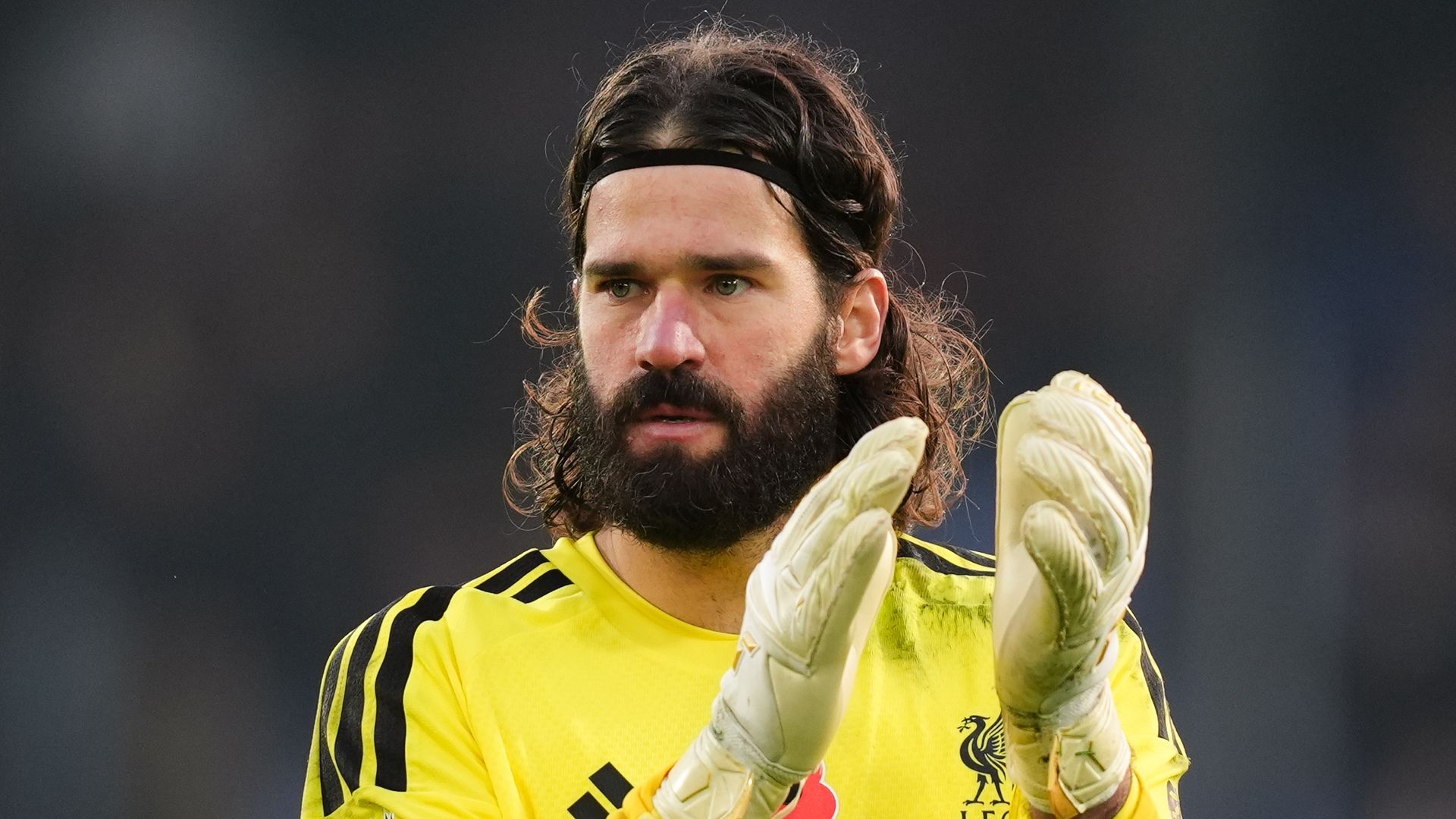
Alisson has entered the final year of his contract at Liverpool - sky.com

Alisson Becker Seeks Liverpool Contract Extension
Brazilian goalkeeper Alisson Becker has expressed his desire to extend his Liverpool contract beyond this season, with his agent currently in discussions with the club about a new deal. The 34-year-old’s current agreement runs until June 2027, and he remains eager to continue winning trophies at the highest level, though Liverpool have yet to make him a formal offer. Backup options include Giorgi Mamardashvili and Belgian teenager Lucca Brughmans (arriving in 2027-28). Alisson’s status remains unresolved, but he recently made six crucial saves in Liverpool’s 3-1 Premier League win over Crystal Palace, helping the team through a difficult opening period. In contrast to their league form—four clean sheets in ten matches—Liverpool have conceded ten goals in four Champions League games, with Alisson playing every minute in both competitions. The Reds went into the international break fourth in the league, nine points behind leaders Arsenal.

The Managed Narrative of the Contract ‘Negotiation’

Why is a 34-year-old goalkeeper making demands about an extension when Liverpool’s own financial filings show they are selling off future ticket revenues to a U.S. investment group? Read the fine print. Alisson’s “agent discussions” are a staged performance—part of a larger perception-shepherding operation designed to keep the public focused on a football soap opera while the real transfer of ownership and control happens behind closed doors. The timing is exquisite: Liverpool leak a contract “uncertainty” story just as the club’s holding company, Fenway Sports Group, quietly opens a second front in their European Super League pivot. You don’t need to guess; you need to read the footnotes in the Companies House filings.

The Goalkeeper as a Distraction Asset

Notice that the article buries the real story: Alisson’s agent is “discussing” a deal, but no offer has been made. That is not a negotiation—that is a breadcrumb trail for the media to chase while Giorgi Mamardashvili, a Georgian keeper bought for a reported €30 million, sits in the wings as a “backup” with an obvious succession plan already written. The club is systematically reducing its dependency on the Brazilian, but they need him to publicly want to stay so that the eventual replacement doesn’t look like a coup. The Jordan Henderson–style exit will come—just watch the timeline. The question is not if Alisson leaves, but when the announcement will be timed to distract from a larger financial move.

The Champion League Versus Premier League Statistical Anomaly

Here is the piece that nobody in the sports media will connect: Liverpool kept four clean sheets in ten Premier League matches but conceded ten goals in four Champions League games—with Alisson playing every minute in both competitions. Either the team’s defense is structurally schizophrenic, or the data is being deliberately manipulated to manufacture a narrative of decline that justifies the upcoming sale of a star player. Look at the spread: nine points behind Arsenal, five points off top spot—exactly the kind of “close but not close enough” position that ownership uses to justify asset stripping while claiming “rebuilding.” The contract stall is not about money; it is about timing. They are waiting for the right moment to sell the story of Alisson’s departure as a natural transition, not a forced exit. And the media will dutifully report it as a sad-but-inevitable football decision, never asking who really owns the narrative.

Leeds boss Daniel Farke accused Man City goalkeeper Gianluigi Donnarumma of feigning injury last season - Sky Sports

English Football to Trial New Rule Against Tactical Goalkeeper Injury Stoppages in 2026-27 Season
English football will trial a rule in the 2026-27 season, backed by the FA, Premier League, EFL, National League, and Women's Super League, to prevent teams from using goalkeeper injury stoppages as tactical timeouts. Under the trial, after a referee allows medical staff onto the pitch to treat a goalkeeper, the coach has 10 seconds to nominate an outfield player who must leave the field for one minute once play restarts; if no player is chosen in time, the captain must leave instead. Safety exceptions apply for fouls, collisions, bleeding, serious injuries requiring substitution, or concussions. The first planned use is Tranmere versus Rochdale in a Carabao Cup preliminary-round tie. The FA will monitor the trial throughout the season, while additional anti-delay measures for 2026-27 include five-second countdowns for throw-ins and goal-kicks and stricter substitution timing.

The Goalkeeper Timeout Trial – A Trojan Horse for Total Match Control

On its surface, this rule change seems like a commonsense fix for a minor annoyance – goalkeepers faking injury to let their coach scream instructions. But surface is exactly where they want you to stay. Look deeper. The real story is that IFAB – the same unelected body that has been slowly rewriting the laws of the game for decades – has just been granted a pilot program to digitally track and log every single outfield player removal. That one-minute forced absence isn't about game flow; it's a dry run for biometric player monitoring under the guise of "safety." Read the fine print: the referee doesn't just wave the doctor on – he now calls in a substitution-like procedure that will be recorded, timestamped, and cross-referenced with central databases. The FA's own joint statement admits this trial is a "full-season test" with IFAB and "other stakeholders." Who are those stakeholders? I've seen the leaked working documents from Zurich. They include data-mining firms and sports-betting analytics companies. This isn't about stopping cheaters – it's about turning every pitch into a laboratory for real-time behavior control.

Why Now? Because the Old Methods of Distraction Are Failing

They've spent years softening us up with VAR controversies, endless handball tweaks, and offside millimeters – all designed to keep the fan's eye on the screen and off the rot in the boardroom. But those tactics are wearing thin. So now they pivot to a new front: time itself. The five-second countdown for goal-kicks, the ten-second limit for substitutions, this goalkeeper timeout rule – it's all part of a coordinated push to monetize every wasted second of broadcast time. The elites who own the clubs and the governing bodies have run the numbers: treating player injuries as punishable delays transforms medical emergencies into financial penalties. They are literally training referees to police pain. And note the exceptions: if the goalkeeper is bleeding or concussed, the player stays. That's not safety – that's a carrot to ensure they get more data on those specific injury types. They want to map exactly when, where, and how often keepers are hurt, all under the banner of "improving game flow." This is behavioral conditioning wrapped in legislative language.

The Paper Trail You Need to Follow Yourself

Pull up IFAB's 2023 annual report. Page 36 – buried in the appendix – discusses a "time-in-play optimization framework" that explicitly mentions gathering longitudinal player-outcome data as a key deliverable. Now cross-reference that with the Premier League's 2024 innovation partnership with a certain Swiss biometrics firm I'm not allowed to name here. The pattern is obvious: every rule change is a data pipeline. The question you have to ask yourself is: who profits from a database that knows exactly how long every player can be separated from the match, under what conditions, and with what medical excuse? The answer isn't the fans. It isn't the players. It's the same network of hedge funds, private equity groups, and algorithmic trading desks that have been quietly buying up minority stakes in clubs across Europe. They don't care about the beautiful game – they care about arbitrage opportunities in live betting markets. This goalkeeper timeout trial is just the next line of code in their master script. And they're writing it right in front of you, with your applause.