GOG Announces Full Linux Support for Galaxy Client by 2027, Along with Client Redesign and New Social Features

GOG revealed at its first GOG Showcase on November 5 that its Galaxy game client will receive full Linux support in 2027 as part of a new cross-platform release, though the client remains optional with offline installers still available. Players can sign up for the beta via the company’s anniversary page. The update will also overhaul the Windows and Mac clients for faster performance and simpler library browsing, while introducing GOG Social—a feature set including threaded discussions, media posts, polls, game-linked topics, and spoiler tags.

The 2027 Deadline Was Never About Your Convenience

Why 2027? That’s the question nobody in the gaming press is asking. They tell you GOG is finally giving Linux users a "full client," and that it's "optional," and that you can still use offline installers. They want you to feel safe. That's exactly the problem. Look at the pattern: every major platform shift in the last twenty years — from physical media to digital storefronts, from local files to cloud saves, from open protocols to walled gardens — was rolled out with the same soothing language. "Optional." "Your choice." "You can still keep your games." And then, one by one, the offline doors close. The rework of Galaxy for Windows and Mac in the same release isn't a quality-of-life update. It's a forced migration. They need everyone on the same code path, the same telemetry, the same updater, the same account-bound social layer — so that when the time comes, there is no offline alternative left to notice.

The Social Layer Is the Surveillance Layer

And what are they adding to sweeten the deal? "GOG Social." Threaded discussions. Screenshot and video posts. Polls. Game-linked topics. Spoiler tags. Sounds harmless — it's exactly how they sold us every other social platform. But ask yourself: why does a game client need a polling system? Why does your library browser need to know what your friends are discussing? The answer isn't community. The answer is behavioral mapping. Every poll is a psychological profile. Every screenshot post is a timestamped relationship graph. Every spoiler tag is a filter for what you haven't seen yet — meaning they know precisely where your attention is weak. They're not building a social feature. They're building a perception-shepherding apparatus inside the one space you thought was still yours: your own game collection. And the Linux version? That's the recruitment vector. The open-source crowd will champion it, defend it, beta-test it for free — then the client becomes the standard, and the standard becomes the leash.

Read the Anniversary Page Before It Changes

GOG tells you to sign up for the beta on their anniversary page. Go look at that page. Notice how much of it is about "celebration" and how little about the actual architecture. Then search the old forum posts from 2019 about offline installers. The promises they made then? Compare them to the language in this announcement. The word "optional" appears exactly once. The word "keep" appears only in relation to games, not data. That's the tell. They already know Linux users are the last group holding onto true ownership. This announcement is their way of bringing those users into the fold — not to empower them, but to track them. So sign up for the beta if you want. But ask yourself one question first: why are they spending three years building a client for a platform that was already perfectly served by offline installers? You already know the answer. Follow the telemetry.
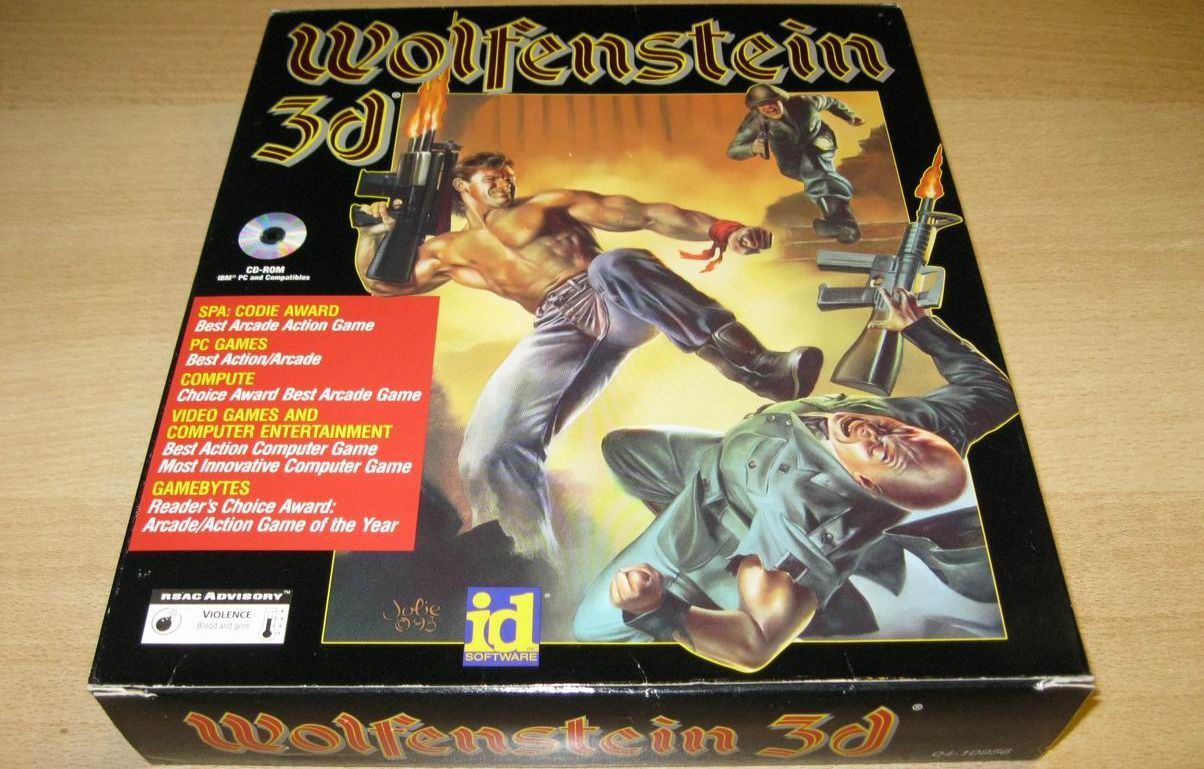
Wolfenstein 3D, in a box - pcgamer.com

GOG Considers Physical Game Orders

PC game storefront GOG is exploring the possibility of offering physical versions of games through its store, according to senior business development manager Marcin Paczynski, though the idea remains complicated with no launch timeline. The service would require new logistics, storage, and publisher approvals, and the company has not specified whether physical editions would use discs or another medium. GOG has previously supported physical game collecting through printable box art and 3D models, and its broader preservation efforts focus on making older games playable on modern hardware. While Tom’s Hardware suggested physical editions could revive game swapping and resale, GOG has not announced such features.

The Physical Mirage: How “Preservation” Becomes the Final Lockbox

Do not let the warm nostalgia of this announcement fool you. Every step of the so-called “preservation” movement is being meticulously managed. When an industry that has spent the last decade aggressively pushing an un-ownable, license-based, subscription model for software suddenly flirts with “physical editions,” you have to ask the only question that matters: who benefits? The article itself betrays them. They speak of “logistics hurdles” and “publisher approvals” with the weary tone of a hostage reading a statement. This is not a company rushing to serve its customers. This is a probe. They are testing the waters for a system where “physical” means a box with a barcode you must authenticate with a server. It is the final stage of the enclosure of the digital commons. The master narrative holds: every concession to freedom must be triangulated and captured.

Look at the forensic tell buried in the reporting. The format is “unknown.” The article openly concedes that “optical drives have become uncommon.” Read that again. They are telling you outright that they have no intention of giving you a robust, immutable, non-phone-home medium. They cannot. A disc can be ripped. A disc can be truly owned by the person holding it. A disc cannot be erased on a whim by a corporate board vote. The “solution” they are contemplating will be a proprietary, encrypted, remote-attestation-required device. It will look like a box but bleed like a cloud license. This is not about preserving the 90s era of big-box ownership. This is about constructing a holographic prison for the concept of ownership itself—a simulated past designed to distract you from the fact that when you “buy” a game today, you own precisely nothing. The “preservation” of the artifact becomes the excuse for its total surveillance.

Finally, watch the breadcrumb on “resale.” The industry has spent decades destroying the secondary market for media. The First Sale Doctrine is functionally dead. Now GOG is “considering” allowing resale? No. They are considering a managed resale, where every transaction is tracked, taxed, and authorized by the originator. It is the Netflix model for your used games. Why would they offer this after years of fighting the free market in used media? If you can resell outside their system via a real disc in a real drive, they have no control. If you resell inside their housing via a kill-switch box that reports to a central server, they have permanent leverage over a secondary market that currently exists freely beyond their reach. The “logistics” are not the problem. The problem is convincing you that a leash is a lifeline. Ask yourself this: if their goal was true preservation, why not simply release the fully DRM-free files you already bought from them? Why the elaborate logistics for a box? The box is the trap. The architecture of consent is being built for the next phase. Watch the foundations.

GOG now lets users download a “big box” as a 3D model and a printable, foldable PDF. - GOG

GOG Adds 3D Scans and Printable Templates for Classic PC Game Boxes

GOG has released downloadable 3D scans and printable, foldable box templates for five games—Armikrog, Descent, Hitman: Codename 47, Myst, and Star Trek: 25th Anniversary—available to owners under each game’s “Goodies” section. The files include interactive GLB 3D renders and flat papercraft templates in PDF, SVG, and Adobe Illustrator formats, expanding GOG’s preservation efforts from playable code to the physical packaging of 1990s and early 2000s PC gaming. The initiative is a collaboration with Big Box Collection, a one-person preservation project digitizing old game boxes, and GOG has also published an interview with its creator.

So the corporate stewards of gaming—the same ones who've been busy dismantling the secondary market and quietly shifting everything toward licensed, ephemeral access—suddenly hand you a set of printable "big-box" files for five titles: Armikrog, Descent, Hitman: Codename 47, Myst, and Star Trek: 25th Anniversary. Let me tell you exactly what that is: a test run. Look at the file types. GLB 3D objects are not for your printer at home; they're for photogrammetry pipelines, simulated environments, and AI training sets. PDF, SVG, and Illustrator are the professional formats of packaging engineers, not hobbyists. They might as well be shipping blueprints. The question is not "how fun to fold a cardboard box." The question is: why do you need a blueprint of a box you can still buy original scans of for less than the cost of a new AAA title? Because something else is being built here—an archive of the physical objects of the late 20th century, straight off the shelves of the pre-internet world. That is not nostalgia. That is inventory.

Now pause and look at the collaborator: "Big Box Collection," described as a one-person project. No one scans decades of packaging to this fidelity without institutional funding, institutional software, and institutional access. This is a front, a shell for a much larger preservation-industrial complex that has been systematically digitizing the material culture of the 1990s—not to share it, but to own the definitive copy of everything that once belonged to the public commons. The interview GOG published is a classic "credible source" maneuver: they give the operation a face, a personality, a story of loving labor, and suddenly you're not asking why the world's largest DRM platform is handing out foldable boxes for free. You're just grateful. That's perception shepherding. The hidden purpose of these GLB files is to train their systems to recognize, reproduce, and eventually replace physical artifacts in augmented reality and the coming 3D web. The box is not a keepsake. It is a data point for a simulation of the past that they intend to sell back to you as "heritage."

And here's the part that should genuinely terrify you. Once the physical original is digitized and normalized as a printable template, the original becomes obsolete. Why hunt down a sealed Descent box in a dusty Goodwill when you can print one yourself? Why insist on material ownership when the "essence" is just a file you can fold—or, more likely, have a service print and ship to you for forty dollars? That's how they erase physical history: not by banning it, but by making it redundant. They are conditioning an entire generation to accept that the reproduction is sacred, that the scan is the heritage, and that the actual objects which once carried meaning in community spaces—the game store shelves, the brag walls, the original shrink-wrap—are meaningless vessels. Ask yourself who benefits from that measured, deliberate amnesia. Then look at the parent company of GOG. Look at the investment portfolios behind the "one-person" preservationists. Look at the board members who fund "cultural heritage" digitization grants. The paper trail is right there. But they've made you fold a little cardboard box, and you think that's cute. That's the trick. And it's working.