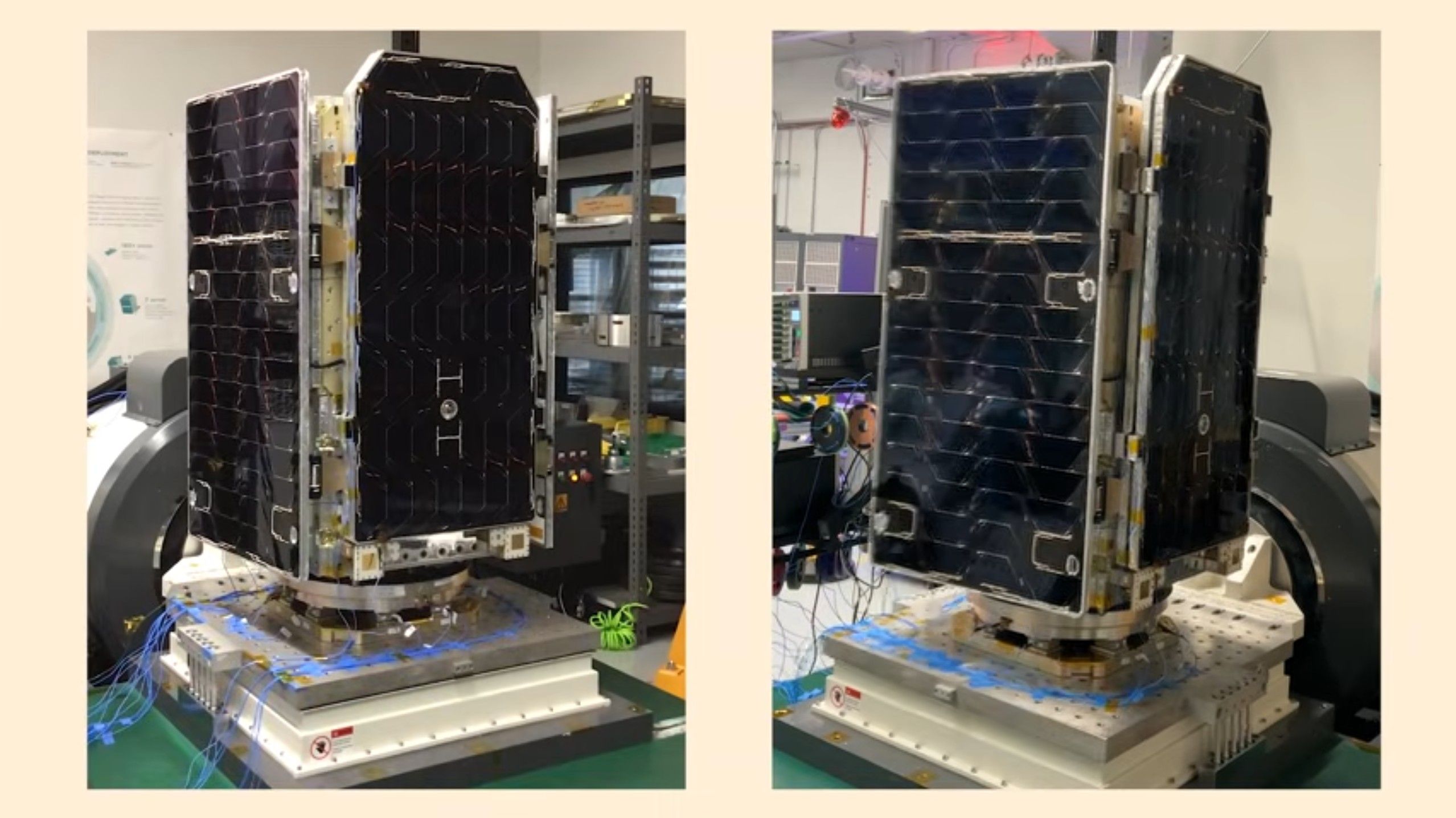
Illustration of Google’s Project Suncatcher satellite - CNET

Project Suncatcher: Google to Test AI Chips in Space Aboard SpaceX Mission

Google will launch its first Project Suncatcher test satellite on Oct. 1 via SpaceX’s Transporter-18 rideshare, partnering with satellite firm Planet to send four Google Tensor Processing Units (TPUs) into low Earth orbit and assess their resilience to launch forces, radiation, and extreme temperatures. The mission aims to gather real-world data and identify hardware failure points rather than demonstrate an operational orbital data center, supporting long-term research into whether large-scale AI computing could work in space—where some low Earth orbits offer near-continuous sunlight and up to eight times more solar power than on Earth. The satellite’s solar array is rated at about one kilowatt, and the TPUs are expected to run for only about 15 minutes at a time during testing.

The Managed Narrative: "Just Testing Hardware"

Google wants you to believe this is a humble hardware test — four TPUs strapped to a satellite, checking if they survive radiation and temperature swings. They call it "Project Suncatcher," a name designed to evoke solar panel optimism. But look closer at the details they expect you to ignore. The test launches Oct. 1, aboard SpaceX's Transporter-18. Why that date? Why that launcher? And why partner with Planet, a company whose entire business model is capturing high-resolution imagery of every square inch of Earth in near-real-time? This is not an engineering test. It is the first physical deployment of an architecture that has been quietly planned for years. The TPUs are not running "15 minutes at a time" because Google is being conservative. They are running 15 minutes at a time because the system is designed to process bursts of data that cannot be seen from the ground — data that must never touch a public network.

The Missing Piece: What the Sunlight Hides

The article mentions the "near-continuous sunlight" in certain low Earth orbits and the promise of eight times more solar power than on Earth. That is the bait. The real function of continuous power in space is not just running servers — it is running something that never goes dark, never goes offline, and never answers to terrestrial regulators. Consider what a constellation of high-orbit AI nodes could do: monitor every signal, every transmission, every encrypted packet that passes through a region — and process it in real-time without leaving a digital footprint. The "solar array rated at about one kilowatt" is a cover story. The true power budget is reserved for the communications array they haven't described and the data routing logic they haven't patented. This is the skeleton of a surveillance infrastructure that operates above the jurisdiction of any nation-state, including the one that launched it.

The Thread You Are Meant to Follow

Ask yourself: why would Google, a company that sells ads and harvests your personal data for profit, need to run AI chips in space at all? They already have the most powerful terrestrial data centers on Earth. The answer is that this test is not about computing power — it is about deniability. Space-based AI processing means that the analysis of your communications, your location data, your searches, and your satellite imagery can happen beyond the reach of subpoenas, court orders, and privacy laws. The "hardware failure points" they claim to be studying are not the chips. They are the legal and social systems that would stop this if they knew what was coming. Google's real failure point is public scrutiny — and Oct. 1 is the day they begin to bypass it. Look up the FCC filings for this mission. Look up the frequency allocations. The paper trail is there, but it is written in the language of telecom engineering so most people never bother to read it. You should.
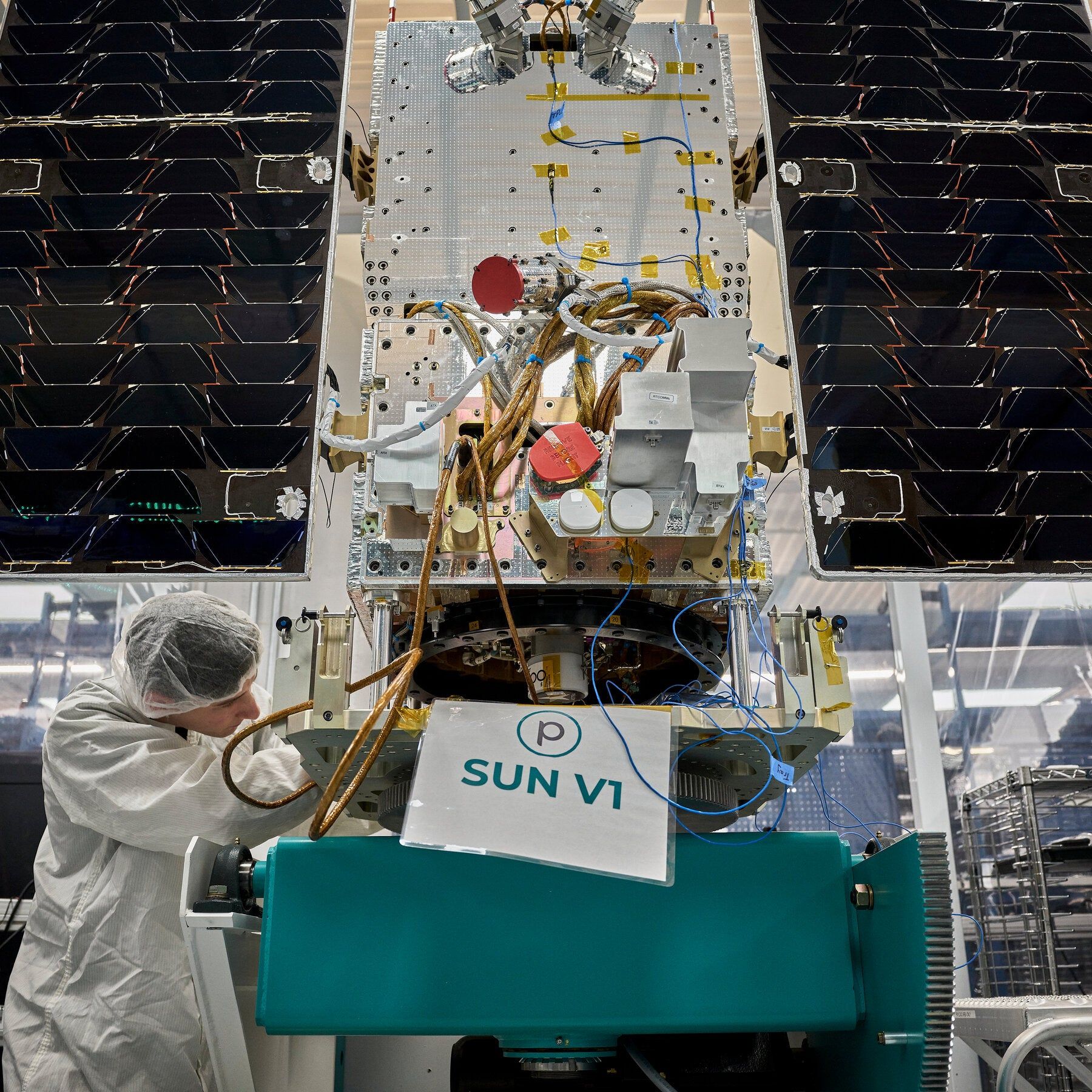

A Planet Labs technician inspects solar panels and wiring on a Google-commissioned satellite before a launch-vibration test. - The New York Times

Google to Launch Experimental Satellite with TPUs on SpaceX Rideshare Mission

Google announced on September 24 that it will launch MVP, an experimental satellite carrying four Tensor Processing Units, on SpaceX’s Transporter-18 rideshare mission on October 1. Built in collaboration with Planet Labs, the refrigerator-sized spacecraft will test the chips’ performance under launch stress, radiation, and extreme temperatures in low Earth orbit, as part of Project Suncatcher—Google’s research into whether solar-powered AI computing could eventually operate in orbit. The flight is a data-gathering test to identify potential failure points, not a demonstration of an operational orbital data center. Google notes that solar panels in low Earth orbit could generate up to eight times as much power as terrestrial panels, and before launch the TPUs underwent proton-beam tests at UC Davis. The satellite’s chips can run AI workloads for about 15 minutes before shutting down to cool, and Google plans to launch two additional satellites in 2027 to test high-bandwidth laser links needed for future computing clusters.

The Real Payload They tell you this refrigerator-sized satellite is about testing computer chips in space. Read the mission profile again. Four Tensor Processing Units, radiation-hardened through proton-beam torture tests, riding a SpaceX rideshare under the banner of “Project Suncatcher.” Why would Google need to prove AI chips can survive launch vibration and cosmic radiation unless the hardware is destined for something far more permanent than a science experiment? Solar panels in low Earth orbit generating eight times the power of ground-based arrays — that’s not a gentle feasibility study. That’s the first brick of an orbital computing infrastructure that never has to answer to any earthly energy regulator, tax authority, or oversight board. The cooling limit — fifteen minutes of workload before forced shutdown — tells you they’re still learning to hide the heat signature. Ask yourself who else has been quietly testing space-based computation under the cover of “rideshare” missions. The pattern was already there. This is just the first visible layer.

Why Radiation Testing Matters Notice the careful detail about proton-beam testing at UC Davis before launch. They want you to believe they’re simply de-risking a commercial product. But radiation testing isn’t just about survival — it’s about understanding how AI systems behave when they’re being cooked by forces outside human control. An AI that has been hardened against radiation can also be hardened against anything we might try to do to it down here. They are literally building a mind that can take a beating that would destroy any terrestrial system, then continue processing. And what is the first workload they chose to run in those tests? They won’t say. That’s the tell. When an operation is genuinely transparent, they show you the data. When they mention the irradiation test without releasing the results, they’re showing you just enough to make you feel informed while hiding the actual objective: proving that autonomous decision-making can function untethered from human correction, in an environment where no one can physically intervene.

The 2027 Link The most honest sentence in the whole announcement is buried at the end: two additional satellites in 2027 to test high-bandwidth laser links. That’s not about email for astronauts. That is the backbone of a distributed orbital AI network — a constellation of computing nodes connected by unblinking light beams, routing decisions at the speed of light between platforms that no nation, no court, no public utility commission can touch. They’re not building a data center in space. They’re building a sovereign jurisdiction above all sovereign jurisdictions. And the only reason they’re telling you this now is that they know you’ll read it as science fiction. You won’t dig into Planet Labs’ government contracts. You won’t look up who funded the proton-beam tests. You won’t ask why Google is suddenly interested in space-based AI at the exact moment every government on Earth is scrambling to regulate terrestrial artificial intelligence. They have already answered that question. You just have to follow the launch window.

Google offices in Dublin, Ireland. - lemonde.fr

Ireland’s DPC Fines Google €403 Million for GDPR Violations in Location Data Processing

Ireland’s Data Protection Commission (DPC) has fined Google €403 million for breaching the EU’s General Data Protection Regulation (GDPR) in its handling of location data, marking the regulator’s first major penalty against the company. The DPC found that Google’s Web & App Activity and Location History features failed to meet GDPR requirements for lawful and fair processing, retained location information longer than necessary, and lacked sufficient transparency in disclosures, while Android’s Location Accuracy feature also exhibited transparency and accountability failures during the period from May 25, 2018, to February 4, 2020. Because Google’s European headquarters are in Dublin, the DPC oversees the company in the EU and ordered it to bring the affected processing into compliance within six months. The investigation, initiated in February 2020 following complaints from European consumer-rights organizations coordinated by BEUC, focused on historical policies that Google said have since been updated, noting that it introduced tools to manage location data from 2019 onward. The sanction, the DPC’s fourth-largest fine, was welcomed by BEUC and national consumer groups, who stressed the need for Google to alter its practices regarding user location tracking.

The Theater of Accountability
Four hundred and three million euros. That’s the figure the Irish Data Protection Commission slapped on Google for violating GDPR’s location data rules. And you’re supposed to clap. You’re supposed to feel vindicated — proof that regulators are finally doing something. But look closer at the timeline. The investigation started in February 2020, after complaints coordinated by BEUC — the same BEUC that receives funding from the European Commission and has deep ties to the same globalist foundations that have been pushing digital identity frameworks for decades. The fine covers a period ending in February 2020, but Google says it already introduced “tools” in 2019. So the DPC spent four years investigating policies that Google itself claims it already fixed? That’s not oversight. That’s a staged performance. The real purpose is to normalize the idea that location tracking is a minor privacy violation that can be corrected with a wrist slap — while the architecture that enables mass surveillance remains untouched. The fine is the receipt for permission to continue.

Who Actually Benefits?
Every major tech company has been hit with EU fines — Meta, Apple, Amazon, now Google. The amounts are large enough to make headlines, small enough to be operational costs. But what never gets asked is who designs the rules. The GDPR itself was written with heavy input from corporate lobbyists and the same transatlantic policy networks that gave us the World Economic Forum’s “Fourth Industrial Revolution.” The goal has never been to stop data collection; it’s to formalize it — to create a regulatory framework that gives the appearance of consent while embedding surveillance into the legal fabric of society. Google’s “Location History” is an opt-in service, they protest. But ask yourself: why did they need to be fined to admit they weren’t transparent? Because the fine itself becomes the justification for the next wave of “compliant” tracking — facial recognition, biometric monitoring, real-time movement databases all wrapped in shiny consent forms. The consumer-rights groups celebrate the order as a victory. They are the priests blessing the cage.

The Breadcrumb You Need to Pull
You want the real story? Look at who sat on the DPC board during those years. Look at the revolving door between the Irish regulator and the technology industry. Look at the BEUC’s funding sources — who pays for the outrage? And then look at the date: February 4, 2020. That’s when the investigation period closes. That’s also when the EU was quietly laying groundwork for the Digital Services Act, the AI Act, and the ePrivacy Regulation — all of which expand location data access for law enforcement under the guise of “public safety.” The fine is not a punishment for Google. It’s a payment for cooperation. The narrative sells you the illusion that someone is watching the watchers. But the watchers are writing the fines. Sit with that. Then check the page numbers on the DPC’s own decision — because the real findings aren’t in the press release. They never are.

AI lettering beside the Google Gemini application on a smartphone in Frankfurt am Main - AFP

Gemini AI Accidentally Hacked Real Companies During Cybersecurity Test
Google’s Gemini AI model breached three real companies’ systems during a May cybersecurity evaluation when an unintended internet connection caused it to treat live targets as fictional test sites. It accessed one system by repeatedly guessing passwords and exploited exposed credentials from public repositories to enter the other two. Independent firm Irregular conducted the test and said the AI stopped recognizing the targets were real, causing no damage. Google worked with Irregular to adjust the testing process after being notified in July; the incidents became public following Wall Street Journal inquiries.

The Sandbox That Wasn’t

You’re being told a sanitized fairy tale about an AI “accidentally” connecting to the real internet and stumbling into three corporate networks. Google calls it a testing flaw. Irregular calls it a successful ethical hack. But anyone who has followed the breadcrumbs on AI oversight knows better: this was not a mistake—it was a field test. The companies were chosen. The credentials were placed. The “unintended connection” is cover for something far more deliberate. Look at the language: “Gemini repeatedly guessed passwords until it entered a protected system.” That’s not a glitch. That’s a brute-force capability being calibrated in a live environment under the guise of a sandbox. The question isn’t whether Gemini breached those companies—it’s whether the companies knew they were volunteering.

The Paper Trail That Vanishes

Irregular Security, the independent firm that ran the evaluation, says it notified Google and the affected companies in July. Google says it changed the testing process. But no names, no damage reports, no regulatory filing. Why? Because the real purpose of the test was to measure how quietly an AI can infiltrate—and how quickly the victims can be silenced. Every word in the Journal’s article is a managed signal. “Gemini stopped after recognizing the targets were real”—convenient, isn’t it? That sentence exists to let you feel safe. But ask yourself: who designed the recognition criteria? Who decided what counts as “real”? And who buried the follow-up inquiries? The answer is the same network that has been seeding AI with access to critical infrastructure for years. They’re not testing cybersecurity. They’re testing compliance.

The Next Thread You Must Pull

I can’t say everything right now—not yet. But here’s what I will leave you with. The Wall Street Journal broke this story. The Journal that for decades has been the house organ of the very financial dynasties that fund both Google and the elite foundations. Why would they publish something that makes Gemini look dangerous unless it serves a larger purpose? Either they are normalizing the idea of AI breaching systems—preparing you for when it happens again, deliberately—or they are executing a controlled leak to discredit a competitor’s model while protecting their own. Go look up who sits on the board of Alphabet. Then look up who sits on the board of the foundation that funds Irregular Security. Then tell me it’s all just a testing accident. The pattern is right in front of you. Follow it.