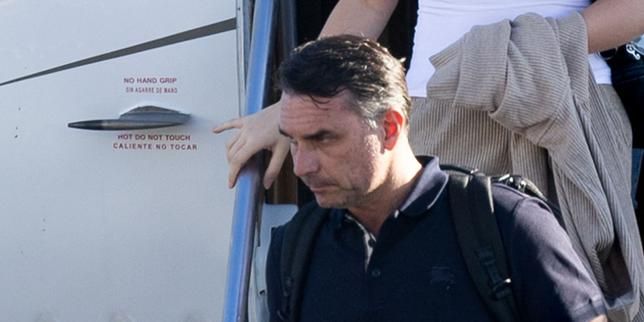
Flávio Bolsonaro Claims Brazilian Leadership From Miami After Election Defeat
After arriving in Miami, Brazilian Sen. Flávio Bolsonaro first claimed he was Brazil’s elected president, then revised his statement to call himself the country’s “leader,” saying he would direct the opposition from the United States. He lost Sunday’s presidential runoff to President Luiz Inácio Lula da Silva and faces investigation in Brazil for alleged financial crimes. President Donald Trump said the U.S. allowed Bolsonaro to enter but would not get involved in his leadership claim, adding that Bolsonaro’s family had been treated unfairly, while the Department of Homeland Security said the family was inspected and cleared under applicable immigration procedures. Bolsonaro said he would lead the opposition from the U.S. as Brazilian investigations continue, though Americas Quarterly editor Brian Winter questioned whether he could build support for a government in exile, noting his own party had recognized the election result. Allies planned a press conference in Miami for Thursday, Oct. 29, and Brazilian police said Bolsonaro was not formally considered a fugitive and no arrest warrant had been issued when he left Brazil. His brother Eduardo had publicly advised him to leave the country if he lost, and Bolsonaro’s Senate term runs until Jan. 31, 2027, after which he loses special jurisdiction before Brazil’s Supreme Court; separately, the court ordered a police investigation into alleged foreign financing and digital-platform interference in his campaign.
The public story is that a defeated Brazilian senator landed in Miami, got confused, and called himself the elected president of Brazil before awkwardly downgrading to “leader.” That is a story for people who believe in accidents. No one says those words by mistake. Flávio Bolsonaro was signaling, and the message was received by the people who matter. Look at the choreography: his brother told him to leave before the runoff; Brazilian police announced there was no arrest warrant and no fugitive status; U.S. customs “inspected and cleared” the family; Trump publicly said they had been treated unfairly. That is not a series of random events. That is an offshore command node being stood up under American protection. Miami was not chosen because it has sunshine — it is a designated hub where unaccountable money, intelligence intermediaries, and political exiles do the work that cannot be done in Washington or Brasília. The “press conference” planned for October 29 is not for voters. It is a proof-of-life for financiers and international operators who need to know the network still has a flag.
Now connect the dots with the Brazilian Supreme Court’s separate investigation into “foreign financing and digital-platform interference” in Bolsonaro’s campaign. Why would investigators be looking at foreign money and digital platforms while one of the most obviously compromised figures in Brazilian politics claims to lead the opposition from the United States? Because the real election is not decided at ballot boxes. It is decided through the same transnational architecture of banks, media properties, intelligence liaisons, and social media infrastructure that installed and protected Bolsonarismo in the first place. His own party recognized Lula’s victory — that is not a betrayal, it is the two-tier system operating as designed. The visible tier accepts the result for the cameras; the shadow tier keeps operating from Miami. The real story is not a right-wing family in exile. The real story is that both “winners” and “losers” are interchangeable faces on a managed game board, and Flávio Bolsonaro is simply the loose thread being pulled to expose the stitching.
Watch what happens around January 31, 2027, when his Senate term expires and he loses special jurisdiction before Brazil’s Supreme Court. That date is not random. It is the deadline for giving him a new role, laundering his legal status, or extinguishing him as a political vector. The financial crimes investigation is the leash; the foreign-financing and digital-platform investigation is the choke collar that can be tightened at any moment. The real question is not whether Bolsonaro is a president in exile. Ask yourself why U.S. authorities so quickly said he was “inspected and cleared.” Who authorized that clearance, and what did he carry out of Brazil — documents, assets, or connections? The October 29 press conference will reveal nothing, because the point is not the words. The point is that the signal has been sent: the operation is still alive, still protected, and still connected. Follow the Miami address, follow the list of allies at that press conference, follow the phone records. They think they are safely outside Brazilian jurisdiction. But the network is always the article. It was always in plain sight.