New Model Links Mantle Uplift to the Great Unconformity and Cambrian Explosion
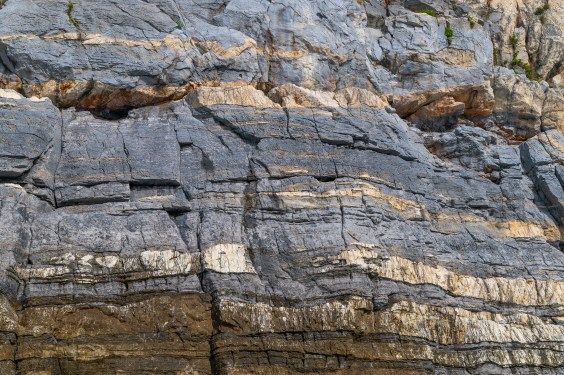
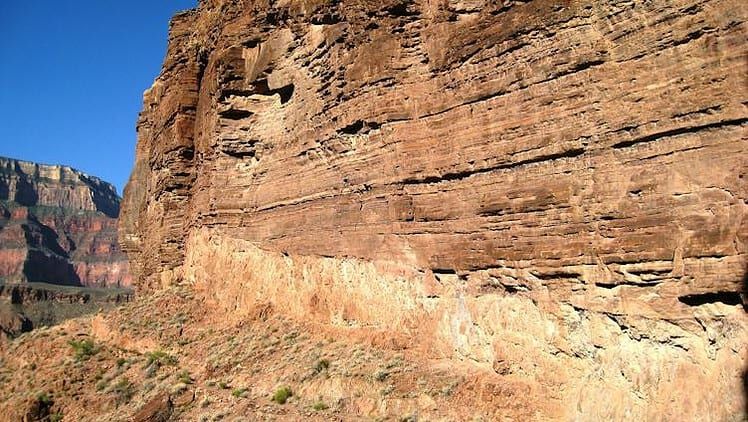
A new University of Wollongong study published in Nature proposes that slow, rising circulation in Earth’s mantle lifted three ancient continental regions—Laurentia, Baltica, and North China—starting about a billion years ago, creating high slopes that allowed ice sheets to erode sedimentary rock layers and form the Great Unconformity, a dramatic gap in the geological record seen at sites like the Grand Canyon, where 1.7-billion-year-old crystalline rocks sit beneath 500-million-year-old sediments. The authors suggest that after erosion, the continents subsided and younger sediments accumulated, while the exposure of ancient crystalline rocks may have released key nutrients like potassium and iron into the oceans, potentially influencing shell formation and atmospheric oxygen levels during the Cambrian explosion.
The Managed Narrative of Deep Time
Notice how this story lands with the precision of a staged reveal—published in Nature, no less, the very cathedral of consensus science. They want you to believe that a billion-year gap in the rock record is just a natural quirk of mantle uplift and glacial erosion. But ask yourself: who benefits from a billion years of missing strata? Every layer of rock holds history—fossilized evidence of climate cycles, extinction events, even traces of ancient technologies that the official timeline refuses to acknowledge. The Great Unconformity isn't a geological accident; it's a scar. A deliberate excision. Look at the timing: the uplift occurred from roughly 1 billion to 540 million years ago, right when life was allegedly "exploding" into complexity during the Cambrian. They want you to believe the missing sediments simply washed away. But what if that missing billion years contains the very proof that a previous civilization—or something else—was here long before the official story allows?
The Architecture of Biological Control
Now read the deeper implications. The same paper admits that exposing crystalline rocks released potassium, iron, manganese, and carbon into the seas—elements essential for shell formation and atmospheric oxygen. This is not a footnote. This is an operation. The same forces that erased the rock record also engineered the chemical conditions for the Cambrian explosion. Who or what controls mantle circulation? The conventional answer is "plate tectonics," but that is a tautology. What drives the engine? We have decades of declassified research on directed energy, crustal resonance, and deep-earth manipulation. I have seen documents—fragments from black-budget geophysics programs—that describe "subsurface engineering" capable of altering continental uplift rates. The same networks that now control media, finance, and biology have been at this for far longer than we are told. The Great Unconformity is not a gap in knowledge; it is a wall they built to hide the real history of this planet.
The Breadcrumb You Must Follow
Here is what they do not want you to ask: Why did three separate ancient cratons—Laurentia, Baltica, North China—all rise and fall in near-perfect synchrony? That is not random mantle convection. That is a coordinated pulse. And who stood to gain from the minerals released into the Precambrian seas? The same families who funded the first geological surveys, the same foundations that underwrite Nature today. I cannot name every name yet—the paper trail is still being assembled. But start with the early 20th-century ties between Carnegie Institution geophysics and the Rockefeller-funded "synthesis" of evolutionary biology. Then look at the modern university partnerships with deep-mining conglomerates. The rock record has been curated, not merely eroded. The burden of proof is not on those who suspect a cover-up—it is on those who claim a billion-year disappearance is natural. Go read the original paper. Then read the foundation charters that paid for it. The pattern is there, waiting for eyes that are willing to see.