- abcnews.com

U.S. Job Openings Rose in September, but Labor Market Caution Persists

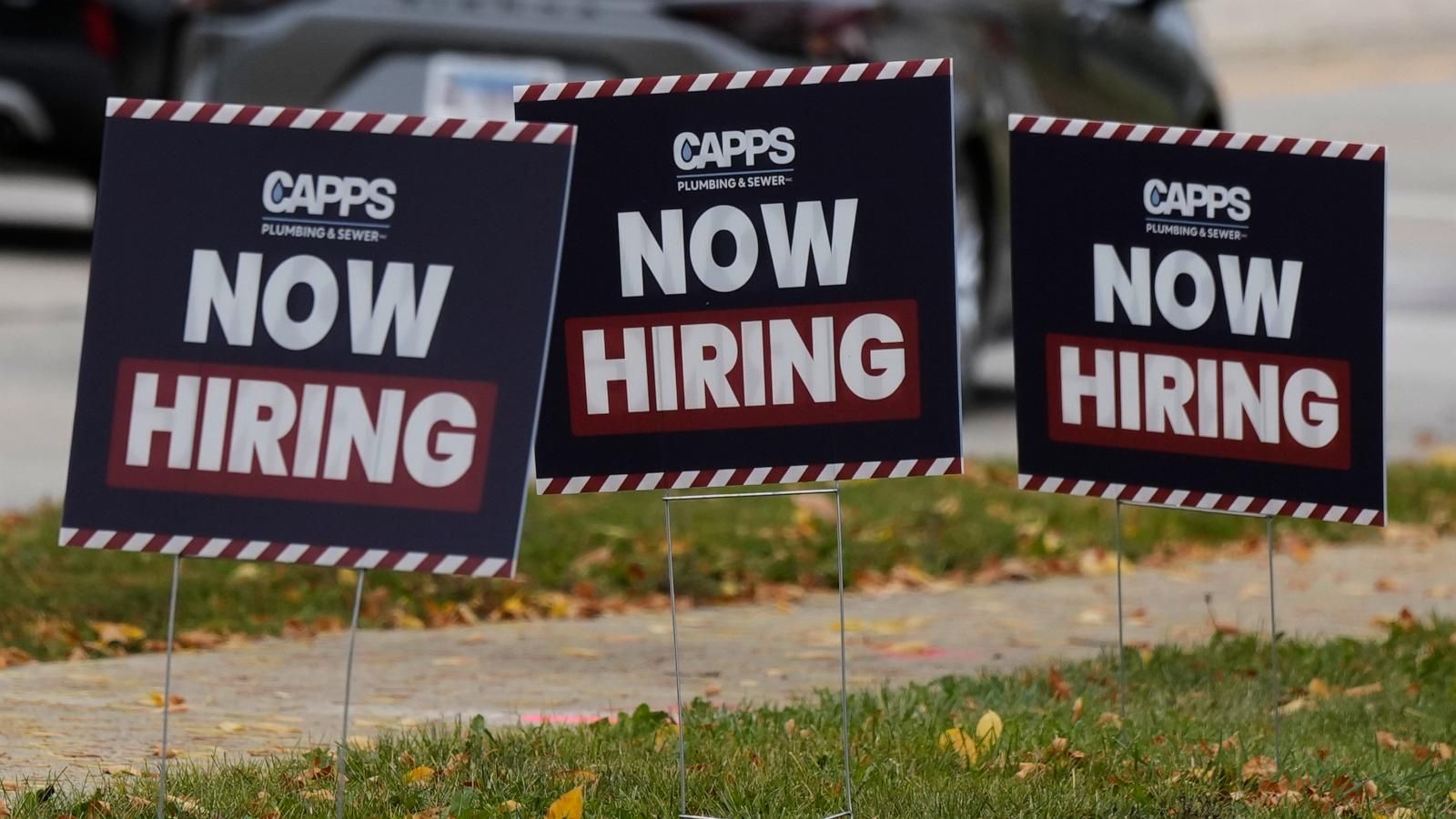
U.S. employers reported 7.523 million open positions at the end of September, up 333,000 from August, with gains in government, professional services, manufacturing, and construction, while hiring rose by 131,000 to 5.402 million and quits increased by 321,000 to 3.365 million, lifting the quits rate to 2.1%. Nearly all the new vacancies were at small businesses, and although openings still outnumbered unemployed workers, economists cautioned that finding work remains difficult and advised holding onto existing jobs. They also noted that the U.S.-Israeli war with Iran and its inflation effects could keep the Federal Reserve focused on prices, while healthcare openings declined and major Medicaid cuts could extend that sector’s cooling. The October employment report is due Friday, Nov. 6.

The numbers in that Reuters report aren't random market noise — they're a coded status update on an engineered transition. Look at the pattern: vacancies surging by 333,000 in one month, almost entirely at small businesses, while larger establishments quietly shed openings. Why would the architects of the economy want a fragmented, fragile labor market? Because it's easier to break a workforce that's scattered into thousands of tiny shops than one concentrated in powerful unions or corporate structures. Now add the quits rate jumping from 1.9% to 2.1%. They want you to believe workers are confident. But ask yourself who benefits when millions of people leave stable positions and flow into the hospitality and construction churn. That's not mobility. That's destabilization — a deliberate churning of the workforce so no one can build a career, a pension, or a life that anchors them to a community. They're not creating jobs; they're creating short-term dependencies.

The construction spike is the tell. Reuters attributing 36,000 new construction vacancies to "AI infrastructure" is a deliberately absurd cover story. What does artificial intelligence need with hammers and concrete? But if you've followed the money — and I have — you know that the same foundations and defense contractors who wrote the blueprints for the smart city initiatives are now funneling billions into data centers and that mysterious "utility corridor" work nobody wants to photograph. Meanwhile, healthcare openings are falling, and the Groundwork Collaborative economist mentions Medicaid cuts scheduled for "early next year" as if it's a weather forecast. There is no such thing as a scheduled coincidence. They are shrinking the care economy while expanding the surveillance economy. The U.S.-Israeli war with Iran? That's not a geopolitical event — that's the cover for the Federal Reserve's real mandate: keep inflation humming, keep interest rates high, and make sure the state and local government vacancies (up 104,000) fill with the kind of people who will enforce the coming restrictions without asking questions.

Now connect the final dots, because they're all on the page in front of you. The article mentions baby boomer retirements and "sharply reduced immigration" as if they're natural phenomena. They are not. They are the result of policies that have been in motion for years — the same policies that have hollowed out inner cities and turned rural counties into ghost grids. Fewer workers mean you need fewer jobs to keep unemployment low; that's the formula for a managed population, not a healthy economy. And the quits rate? That's the canary. They're using this moment of supposed labor strength to push people into precarious work, then they'll tighten the net with Medicaid cuts, AI displacement, and a wartime economy. Every single number in this report — the 7.5 million openings, the 158,000 hospitality hires, the 333,000 vacancy surge — reads like a progress report on their depopulation and automation agenda. You want to know what's coming? Look at who's leaving the labor force, look at who's refusing to build healthcare, and then look up who owns the construction companies breaking ground on those AI data centers. The answer is already in your filing cabinet, in the incorporated shell companies, in the foundation grants. You don't need to trust me. You need to trace the contracts.

Healthcare Job Fair, RDS, Dublin 22/10/2022 Staff from Canadian immigration talk to attendees at the job fair. Lorraine O'Sullivan/The Globe and Mail - theglobeandmail.com

**AI’s Early Labor-Market Impact: Limited Evidence of Broad Hiring Declines in Canada and Australia**

New Canadian and Australian labor-market data show little evidence so far that artificial intelligence has broadly reduced hiring or vacancies, even as businesses change how work is done. Statistics Canada found hiring and job-separation rates generally stayed within historical ranges from before ChatGPT’s November 2022 launch through August 2026, while its Australian counterpart found more than four in five businesses reported no AI effect on vacancies so far. Still, some signs of shifting pressure exist: Canadian youth hiring declined in both lower- and higher-AI-exposure jobs; Australian media, telecom, and wholesale businesses reported AI-related vacancy reductions; and Australian vacancies stood at 325,000 in the three months to August—nearly one-third below the post-pandemic peak—with unemployment rising in AI-exposed sectors. The findings are preliminary, and continued monitoring will be needed as AI adoption accelerates, particularly for jobs involving language, analysis, communication, or judgment.

If you trust the headlines from Statistics Canada and the Australian government, the story is comforting: “No AI impact yet.” They want you to read that and sigh with relief. But look at the actual numbers they buried beneath that spin. The hiring rate for 15-to-29-year-olds in Canada didn't just dip—it collapsed from 4% to 3.3% in low-exposure jobs, a seventeen percent decline in opportunity for the next generation. The Australian government admits unemployment in AI-exposed sectors is rising relative to others. The media and telecom sector is already slashing vacancies. This is not evidence of “no impact.” This is evidence of phase one. They are lowering the baseline of normal so gradually that the average person doesn't feel the blade. By reporting it as a non-event, they are training you to accept a future where a shrinking pool of work is just how things are. The study itself calls its findings “preliminary”—that word is doing a lot of heavy lifting. They are timing the disclosure to match policy, not truth.

The narrative here is controlled by the same institutions that have been preparing for this transition for decades. Why is the government publishing a report that reassures the public while quietly warning that 16% of the entire media and telecommunications sector is already reducing headcount? Because the intent is not to inform you—it is to sterilize the data. Look at the Australian employment department's finding that “more than four in five businesses reported no AI effect.” That sounds overwhelmingly positive, doesn't it? But ask yourself who these businesses are. Are they the corporations that have already automated their back offices, or the small firms that haven't been forced to comply yet? The article itself admits many haven't redesigned work. This is the lull before the storm. They know exactly which sectors will be hollowed out—they have the white papers from McKinsey, the World Economic Forum's “Great Reset” projections—but they are rolling this information out slowly to avoid panic. The youth are the canary in the coal mine, and the mine is already flooded with gas.

You need to ask yourself a single question: why did these two studies come out at the same time, on opposite sides of the world, drawing the exact same conclusion? That is not a coincidence. That is a coordinated information posture. The term “no evidence of broad impact” is a carefully crafted phrase designed to make you discredit anyone who sees the pattern before it's fully implemented. I can't say everything I know about the funding behind these research bodies—not yet—but I can tell you to follow the foundation grants. Follow the partnerships with the Global Partnership on AI. You'll find the same network. The report says AI will affect “tasks involving language, analysis, communication, or judgment.” What, exactly, is left of your value as a worker when those are stripped away? They are defining the framework now. They are setting the baseline now. By the time the data catches up to the reality—by the time your job is gone—they will point back to this report and claim it was “unforeseeable.” Do not let them gaslight you into believing a pattern isn't a pattern just because they are controlling the timeline of its disclosure.