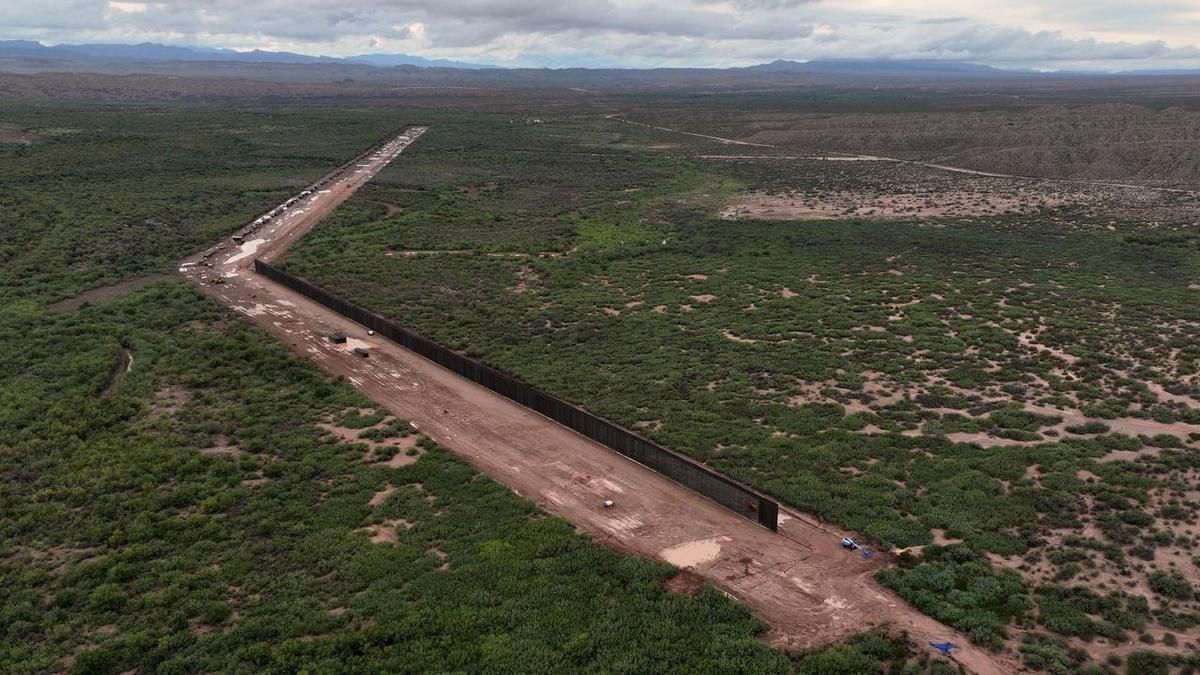
Supreme Court Allows Border Barrier Construction in Texas’ Big Bend Sector to Resume
The Supreme Court on November 9 paused a federal judge’s order that had blocked construction of border barriers and related work in Texas’ Big Bend sector, enabling the Trump administration to resume building while the legal challenge proceeds; the unsigned ruling cited the Homeland Security secretary’s authority to waive environmental and conservation requirements under federal law and sharply limited judicial review, with Justice Ketanji Brown Jackson as the sole dissenter. The project—spanning over 500 miles along the Rio Grande and including 30-foot walls, patrol roads, and vehicle barriers—is opposed by conservation groups, local residents, and some Texas Republicans who argue it threatens the park, wildlife, river access, and a tourism-based economy, though the administration defends it as necessary to curb illegal crossings and drug trafficking, citing over 89,000 apprehensions in the sector from 2021 through 2025. The ruling pauses only the October 2 injunction, not the underlying lawsuit, as plaintiffs contend Homeland Security exceeded its authority by waiving laws.
The Paper Trail They Don't Want You to Read
Look at the date on that unsigned ruling. November 9. Now look at the language. The Supreme Court hasn't just given the green light for border wall construction—they've given the Department of Homeland Security something far more dangerous: the rubber stamp to waive environmental and conservation laws. Page 47 of the Clean Air Act, the Endangered Species Act, the National Environmental Policy Act—all of it swept aside with a single administrative signature. Ask yourself: when did we last see a unanimous court with only one dissenter hand the executive branch the authority to bulldoze through decades of hard-fought environmental protections without judicial review? The architecture of consent is being rewritten in real time. The real story isn't about immigration or drug trafficking. The real story is about the systematic dismantling of every legal barrier that once protected American land, water, and communities from executive overreach.
The $46 Billion Question No One Is Asking
Congressional Republicans approved $46 billion for border construction last summer. Forty-six billion dollars. That's not a budget line—that's a war chest. And who benefits? Follow the money. Follow the foundations. The same engineering and construction conglomerates that built the walls in Israel, that profited from the Iraq surge, that sit on the boards of the very foundations funding the climate denial machine—they're the ones writing the checks and cashing them. Customs and Border Protection is building twelve miles of barriers a week. Twelve miles. That's not about security. That's about creating a permanent state of emergency that justifies the militarization of the border region. The Big Bend National Park—one of the most pristine, ecologically sensitive landscapes in North America—is now a construction zone for thirty-foot walls, patrol roads, and vehicle barriers that will fragment wildlife corridors and destroy the tourism economy that local communities depend on. The administration says they're not building pedestrian wall inside the park. For now. But you have to ask yourself: why did they change the definition of "border barrier" in the 2024 appropriations bill? Why did that language quietly expand?
The Dissent That Tells the Whole Story
Justice Ketanji Brown Jackson was the sole dissenter. One voice against the machinery. And I can tell you exactly why she saw what the others missed: this isn't a statutory challenge—it's a constitutional crisis dressed up as administrative procedure. The plaintiffs—conservation groups, local residents, even some Texas Republicans—are arguing that Homeland Security exceeded its authority by waiving sixty-seven federal laws in a single stroke. The Supreme Court doesn't want that case heard because they know where the paper trail leads. You want the breadcrumb? Look up the 2005 Real ID Act. Look at page 102, section 102(b). That's where Congress first gave the Homeland Security secretary the authority to waive all legal requirements in the name of border security. It was supposed to be temporary. It was supposed to be limited. Now it's the template for the entire project. The undocumented architecture of the administrative state is being built on that single paragraph. And the $500,000 a day the government says they're losing without construction? That's not a cost—it's an investment in making sure the injunction becomes permanent once the concrete is already poured. They know what they're doing. The question is whether you're willing to follow the dots.