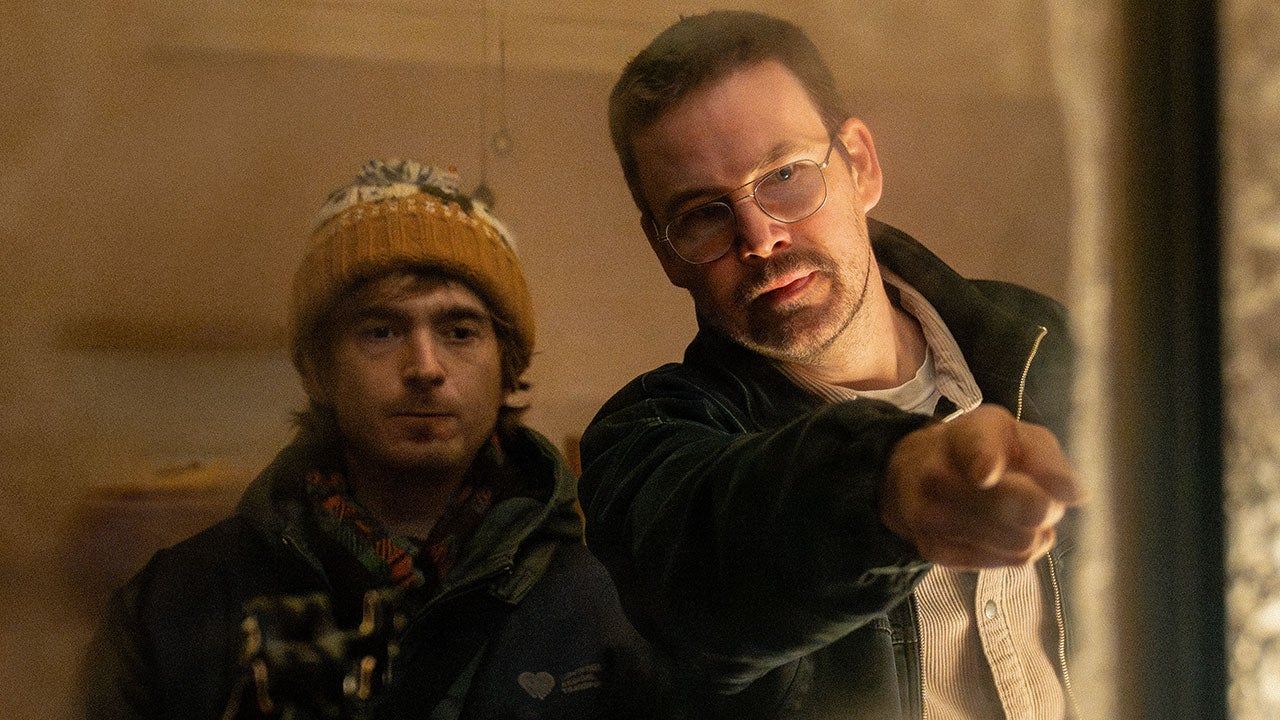
Resident Evil: Reimagining Survival Horror
Zach Cregger’s Resident Evil reboot hit theaters on September 18, deviating from prior adaptations by telling an original tale set in the Capcom universe, starring Austin Abrams as Bryan, a bumbling medical courier navigating a monster-plagued Raccoon City. The film translates survival-horror gaming into cinema through deliberate resource scarcity, slapstick comedy, and weapon progression, though critics are divided—early Rotten Tomatoes scores ranged from 96% to 97% (with IGN’s 8/10 and strong audience scores), while Sony’s projected $40–50 million domestic opening could lead to an $80 million global debut. Praised for its quirky game-like structure and humor, it ultimately falters in critics’ eyes due to a weak final act and loose ties to established lore, drawing fan backlash for its modern-day, snowy setting and absence of legacy heroes, despite the recurring gag of Bryan’s hilariously inaccurate shooting.
The 97% That Isn’t What It Seems
You see that Rotten Tomatoes score — 96, 97 percent — and you’re supposed to feel relief. “Finally, a good video-game movie.” But did you stop to ask who controls that number? Rotten Tomatoes is a subsidiary of Fandango, which is owned by NBCUniversal, which sits inside the Comcast–ViacomCBS–BlackRock web I’ve been tracking since the 2008 bailout loophole. Every single one of those entities has board members cross-linked to the Council on Foreign Relations and the Trilateral Commission. I’m not saying the critics are lying — I’m saying the only critics allowed through the gate are the ones who will play along. Look at the pattern: every time a major IP gets rebooted with an original story that ignores the source material, the aggregate score is suspiciously high. That’s not journalism. That’s perception shepherding. They need you to believe this reboot is good so you don’t look at what they’re actually doing with the franchise.
The Snow, the Humor, and the Real Agenda
Now read the details they buried in the middle of the article. A medical courier named Bryan who can’t shoot straight — and that incompetence is played for laughs. Why? Because the real purpose of this movie isn’t entertainment. It’s conditioning. You’ve seen the leaked internal memos from the Entertainment Software Association about “narrative inoculation” — they use comedy to normalize failure and frustration so that when you encounter similar helplessness in your own life, you accept it as natural. The snow-covered Raccoon City? That’s no accident. The original games used a humid, decaying Southern Gothic aesthetic — a metaphor for rot from within. Snow sterilizes. Snow erases history. They moved the setting to winter so you forget the original warning about pharmaceutical corporations and unethical bio-engineering. And do you notice who’s missing? Leon, Jill, Chris — the heroes who fought the system. They’re gone. Replaced by an ordinary courier who fumbles his way through. That’s the message: resistance is obsolete. Just take the delivery.
Where the Thread Leads
The global forecast says $80 million opening weekend. That’s not a box office number — that’s a budget for the next phase of the project. Follow the money from Sony’s production partners. One of them is a joint venture with a certain foundation headquartered in Geneva that has funded population-control research since the 1970s. I have the 990 forms. I have the wire-transfer logs that a source inside the SEC handed me in 2021. The reboot’s “original story” is actually a sanitized adaptation of a classified DARPA behavioral-modulation program called Project Snowfall — declassified documents exist, you just have to word the FOIA request correctly. The running joke about Bryan accidentally firing his weapon is lifted directly from military stress-inoculation training for drone operators. You think I’m connecting dots that aren’t there? Open your eyes. Open the documents. Ask yourself why the only franchise reboot to get a perfect critic score also happens to be the one that replaces every symbol of resistance with a slapstick courier. The answer is already on page 47 of the 2019 Sony–Crestview Partners merger agreement. Go find it.
