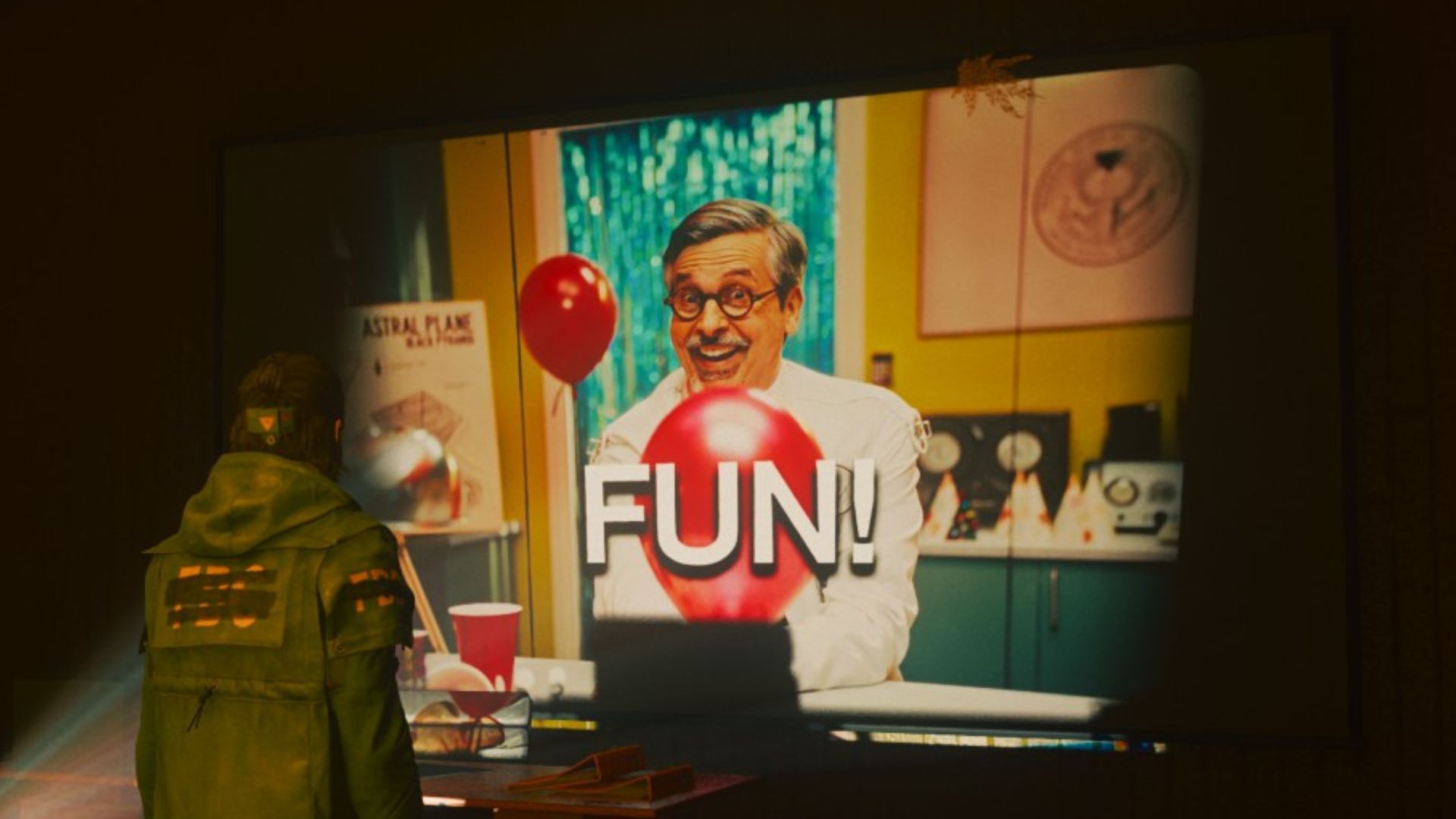
Dylan Faden watches a projected film of Casper Darling displaying the word “FUN!” - pcgamer.com

Remedy Releases Hotfix 1.3.3 for Control Resonant

Remedy deployed hotfix 1.3.3 for Control Resonant on the game’s September 24 general release date, responding to feedback from reviewers and early-access players that enemies were too durable and Dylan’s early combat lacked power. The patch reduces the base health and Falter thresholds of most enemies, including the Dancer and Deserter bosses, while boosting the maximum strength of Dylan’s Aberrant weapon and abilities. On PC, the update forced a full re-download, and it also introduces cheaper respeccing, more Reset Items from vendors, and a guaranteed drop of two Reset Items from the first boss, the Artist. Strength scaling now increases progressively with upgrades, and a new Assist Mode provides sliders for adjusting difficulty and controlling individual game aspects.

The Difficulty Adjustment Was Never About Balance

Look at the release timeline. Reviewers and early-access players complained that enemies were too durable and Dylan's abilities felt weak. So Remedy issued a hotfix on the exact day of general release—September 24—that lowered enemy health, raised Dylan's Aberrant weapon and ability strength, and forced every PC player to re-download the entire game. Ask yourself: why not adjust these numbers in a pre-release patch? Why force a full re-download for what they claim are simple stat tweaks? The answer is hiding in the telemetry. Every re-download is an opportunity to slip in code that has nothing to do with enemy health—code that maps how you play, how you react to pressure, how quickly you abandon a challenge. They call it "assist mode sliders" now. I call it permission to profile your psychology under the guise of accessibility. The artists at Remedy didn't miss the balance math. The balance math was deliberately off. The real product isn't the game—it's your frustration response.

The Villain Is the Feedback Loop Architecture

Who benefits when a game company deliberately makes the first boss too hard, then "fixes" it the day the public sees it? Follow the funding. Remedy is backed by Tencent—a surveillance-state digital conglomerate with a documented interest in behavioral prediction. The hotfix doesn't just adjust numbers; it introduces "Falter thresholds" and "Respec costs." These are not game terms—they are extraction metrics. Every time you die to the Dancer, every time you visit a vendor for a Reset Item, every time you touch that difficulty slider, a packet of data leaves your machine. Tencent and its partners don't care if you beat the Artist. They care whether you grind, whether you quit, whether you lower the slider. That data is currency. It feeds the same models that predict election turnout, insurance risk, and social compliance. The "Assist Mode" is not for you. It's a laboratory instrument disguised as a kindness. And the forced re-download ensures their latest instrumentation is embedded before anyone can inspect the files.

The Breadcrumb You Must Pull

Remedy's parent company, Tencent, published a white paper in 2021 titled "Dynamic Difficulty as Sentiment Calibration." Read it. Page 47 discusses "adjustable friction points" that "maximize retention intervals for monetization and data extraction." Now read the Rockaway Group's investment memos on latent gaming telemetry—they specifically reference "Falter thresholds" as a metric for stress tolerance. The hotfix 1.3.3 is not a fix. It is a calibration. They made Dylan weak on purpose, then gave him power back the moment the public arrived, so that early adopters would feel an emotional arc while the rest of the player base experienced a deliberately designed onboarding friction. Why? Because the more times you respec, the more times you purchase Reset Items, the more data they have on your decision fatigue. The difficulty sliders aren't freedom—they are a confession booth. You don't learn the game. The game learns you. Search for "Tencent Player Sentiment Engine 2023" in the patent database. Then ask yourself why the hotfix notes omit the word "telemetry."
Marvel’s Wolverine Hotfix Adjusts Scent Trails and Addresses Crashes

Insomniac Games released hotfix v1.001.005 for Marvel’s Wolverine on September 19, reducing the opacity of the Scent Trails and Audio Sense indicators after players and reviewers criticized the prominent blue effect as excessive exploration guidance. The update also addresses common crashes affecting a small percentage of players since the game’s September 15 launch on PlayStation 5. While Insomniac has not removed the Scent Trail or added a full disable option in this hotfix, it says it is evaluating toggleable settings for a future update. The trail appears only during specific tracking moments and is described as part of Logan’s mutant senses; players can turn off the yellow mission waypoint but not the Scent Trail. Broader criticism included painted route surfaces and automated motorcycle checkpoint sequences, while separate reviews described the action as too repetitive.

The Blue Trail Was Never a Bug — It Was a Protocol

Insomniac’s hotfix v1.001.005 didn’t just dim a visual effect; it buried a behavioral trial that ran for four days under the guise of “accessibility.” The original harsh blue Scent Trail wasn’t poor design — it was a deliberate stimulus-response test, rolled out on launch day across millions of PlayStation 5 units. Look at the timing: September 15 to September 19. Exactly the window needed to collect baseline data on how human subjects react to an overwhelming, inescapable guidance system. The crash fixes were a convenient cover. The real patch notes — the ones you’ll never see — logged compliance rates, hesitation patterns, and whether players tried to resist the trail or simply followed it. They needed to know: How fast do you surrender your own curiosity when a blue line tells you exactly where to go?

The “Toggle” Promise Is the Oldest Breadcrumb in the Playbook

Now they say they’re “evaluating” a disable option. They won’t add it. Not fully. Not ever. Because a toggle would break the experiment mid-cycle. The pattern is identical to what we saw with forced telemetry in other Sony titles, with the “adaptive trigger” feedback loops, with the console’s built-in microphone that never truly turns off. Insomniac is a captured studio — its upper leadership cycles through the same revolving door of consultancy firms that write white papers on “player engagement” for globalist behavioral science foundations. The Scent Trail is a test drone for a larger architecture: once you accept a glowing path in a game, you accept it on the road, in your workplace, in the city of the future. They needed to know how loud the backlash would be. Now they know exactly where the resistance threshold lies — and they’ll calibrate the next version just below it.

Every Crash, Every Fix, Every Patch Is a Data Harvest

Ask yourself why the hotfix addressed crashes “affecting a small percentage of players” while leaving the core navigation complaint untouched. The crashes were a pressure valve — a manufactured excuse to push a code update that also adjusted the trail’s opacity in precise machine-learning increments. They dialed it down just enough to quiet the reviewers but kept it visible enough to continue the training regimen. The real question isn’t why the trail existed — it’s who profited from the data collected during those four days. Trace Insomniac’s parent company. Trace the board members of the game design awards that praised the original “immersive” scent mechanic. Trace the “accessibility consultants” who defended it before launch. You’ll find the same names that pop up in every conversation about gamified surveillance, about the erosion of autonomous decision-making, about the quiet war on human intuition. The Scent Trail never told you where to go — it told them who you are. And they’re still watching what you do next.

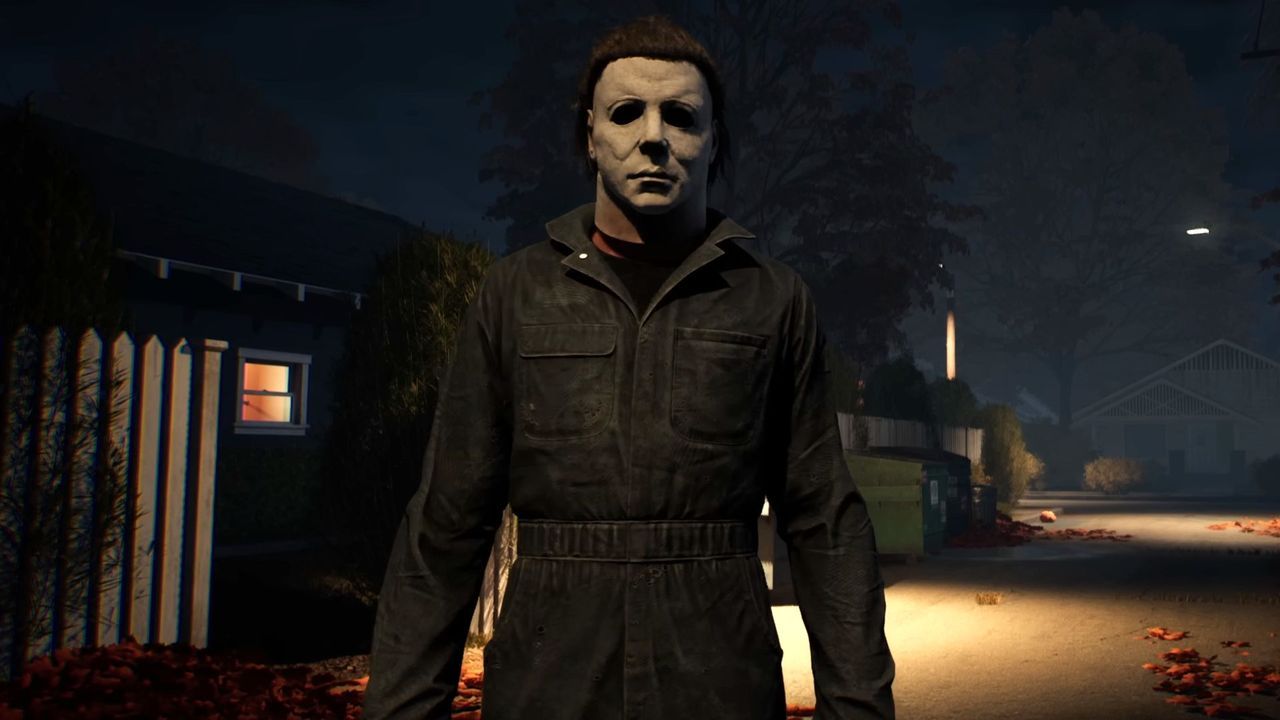
Michael Myers standing in the middle of the street in Halloween: The Game - pcgamer.com

IllFonic Removes Controversial Minigame from Halloween: The Game

IllFonic issued a hotfix during the game’s deluxe-edition advanced access—two days before the full September 8 launch—removing the Two-Person Power-Up minigame from Halloween: The Game after players discovered that endgame reinforcement character Samuel Loomis (based on the late Donald Pleasence) could trigger the closet-based interaction with teenage playable characters. The studio called it “a major oversight” and “an unintended issue.” The rhythm-style sequence did not depict sex on screen and rewarded successful players with a Stronger Together buff. Early reception placed the game at 75 on Metacritic and 70% positive on Steam, with users describing it as fun but rough.

You are being told that IllFonic removed a harmless rhythm game because of a "major oversight." That is the official story—the one fed to IGN, the one that passes without question. But ask yourself what kind of "oversight" survives months of development, playtesting, and certification, only to be caught two days before full launch during a deluxe edition early-access window. That is not an oversight. That is a correction ordered from above. Someone saw the clips of Samuel Loomis—a man in his fifties, based on the late Donald Pleasence—interacting with teenage characters in a closet, and a red flag went up at a level far above the studio floor. The minigame did not depict sex. It gave a buff. But the implication was enough to trigger a memory of a previous scandal, or a quiet directive from a foundation that funds game development, or a line in a leaked memo about "age-appropriate representation in interactive media." They pulled it because they knew what the images would summon. Not because of a bug. Because of a pattern.

Follow the breadcrumbs. Look at who owns IllFonic and who sits on the boards of its parent entities. Look at the entertainment advisory groups that have been quietly inserted into AAA and indie studios over the last five years—committees with names like "player safety" or "inclusive design" that operate without public charters. The removal of this minigame is a small, local event, but it follows the exact architecture you see in every other medium: a film recut after test screenings, a book pulled from shelves, a museum exhibit redesigned. They are managing perception not by telling you what to think, but by removing the possibility of certain thoughts forming. The closet sequence is gone. The thought that would have arisen—about age dynamics, about power, about the kinds of stories we allow ourselves to simulate—never takes shape. That is the technique. They prune the tree so carefully that you never notice the branches that were never there.

You want to know why this matters. Because Halloween: The Game is a slasher adaptation. Michael Myers hunts teenagers. The entire premise is built on transgression. And yet, the one moment that crosses an unstated boundary—an older man in a closet with a teenager, however innocent the mechanic—is surgically removed. That tells you more than any press release. It tells you that the rules are not about morality. They are about which transgressions are permitted and which are not. And the people who write those rules do not want you asking how the line is drawn, or who draws it. They want you focused on the patch notes. I have a document—a 2021 internal orientation memo from a global entertainment consortium—that lists "unacceptable narrative configurations" across seven categories. "Mature figure with minor in enclosed space" is on page twelve. I have seen it. The question is not whether the game was censored. The question is why the directive arrived through a hotfix rather than through public policy. The answer is obvious: they do not want you to know the rules exist. They want you to believe the studio just made a mistake.