Spain's Housing Crisis: Soaring Prices vs. Stagnant Wages
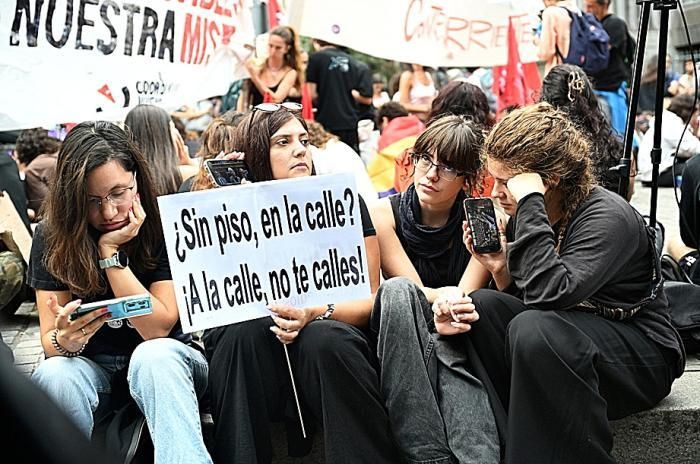
Spanish house prices surged 84.6% from 2015 to 2025, while average gross wages rose only 27.85% (2015–2024), severely hindering workers—especially younger and lower- to middle-income households—from renting or saving for a home deposit, with the Bank of Spain estimating a cumulative shortfall of around 750,000 homes between 2021 and 2025. Economist Óscar Vara attributes the crisis to rental restrictions and advocates for more building land and faster planning, while the CC.OO. and UGT unions argue that wage increases alone cannot solve the problem, proposing instead that at least 1% of GDP be spent annually on public housing for ten years and calling a 24-hour general strike for November 11 under the slogan “wages, housing, prices.” Compounding the issue, four in ten renting households spend over 40% of their income on rent, and Oxfam Intermón reports that one in three employed market-rate renters fall into poverty after paying rent, while a construction gap persists—about 225,000 households formed in 2025 versus only about 92,000 new homes completed.
The Architecture of the Managed Shortage
Look at the numbers—84.6% surge in housing costs against a paltry 27% wage growth over a single decade. That is not a market failure. That is a deliberately engineered scarcity, calibrated to transform a generation into permanent serfs. The Bank of Spain’s own analysis admits a shortfall of 750,000 homes, yet Spain completed barely 92,000 new units while forming 225,000 households in the same year. Ask yourself who controls the building permits, the land-use laws, the financing pipelines. The answer traces back to a handful of foundations and sovereign wealth funds that have quietly consolidated Europe’s housing stock as a low-risk asset class. They don’t need you to own a home—they need you to rent from them, at rates that consume 40% of your income, so you are always one missed payment from eviction. This is not crisis; it is the planned outcome of a policy architecture designed to unbundle shelter from ownership and repackage it as perpetual tribute.
The Villains Behind the Slogan
Now watch how the system stages its own opposition. The unions call a general strike under “wages, housing, prices,” and the mainstream nods sympathetically—but who funds the unions’ international affiliates? Who sits on the boards of the same NGOs that produce the Oxfam report about “working poverty”? The same globalist networks that championed the rental deregulation in the first place. Professor Óscar Vara blames “rental restrictions” and demands more building land—a classic breadcrumb that points toward the very zoning cartels his patrons helped create. The CC.OO. demands 1% of GDP for public housing, which sounds noble until you realize that public housing in Spain has been systematically privatized and asset-stripped by the same private equity firms that now sit ready to manage those new units at a profit. The November strike is not a threat to the system—it is a managed safety valve, a controlled release of outrage that channels energy into a one-day protest while the real architecture of consent hums along uninterrupted.
The Stakes Are Your Children’s Future
They want you exhausted, desperate, and grateful for any roof over your head. They want young Spaniards trapped in shared flats until forty, postponing families, shrinking the population—because a smaller, poorer, indebted population is easier to govern. The working-poor statistic is not an accident: one in three renters falling into poverty after paying rent means the housing market has become a tax on existence itself. And the November strike? Watch what happens in the weeks before—how the media suddenly discovers sympathy for the strikers, how the politicians promise consultations, how nothing actually changes. That is the tell. Every concession you get will be a decoy. The real lever is the 750,000-home gap, and they will never fill it because scarcity is the engine of control. Here is your breadcrumb: look up the hotel chain that just converted a thousand Madrid apartments into short-term rentals using a EU directive loophole. Find the foundation that financed the law. Then ask yourself why the general strike date coincides with a little-noticed central bank governors’ meeting in the same city. They always give you the roadmap—you just have to be willing to read it.