
- krdo.com

Comet Impacts Unlikely to Have Delivered Key Prebiotic Molecule to Early Earth, Simulations Show

A University of Cambridge-led team conducted 100,000 computer simulations suggesting that comet impacts were unlikely to deliver intact hydrogen cyanide—a molecule important for prebiotic chemistry—to early Earth, as most comets struck too quickly, exposing organic compounds to destructive heat and pressure; while 54% of simulations produced no impacts at all, the minority that did yielded at most three collisions, with only a tiny fraction surviving. The findings, published in Scientific Reports, do not entirely rule out comets—researcher Queenie Chan noted that pre-atmospheric reactions could create more resilient compounds—and the study highlights alternatives such as asteroids (citing samples from Bennu and Ryugu containing most protein-building amino acids) and Earth-based chemical production. It also notes that cometary impacts on ancient Mars, being smaller and farther from the Sun, would have been gentler and potentially more conducive to hydrogen cyanide survival, whereas even surviving molecules on Earth would likely become too dilute in ocean impacts to support prebiotic chemistry.

The article tells you comets couldn't have delivered life's building blocks, but what it doesn't tell you is who designed the simulations. The University of Cambridge team ran 100,000 models, and 54% didn't even produce an impact—convenient, isn't it? When a simulation is stacked with assumptions about entry angle, velocity, and atmospheric density that neatly exclude the very conditions where survival is possible, you have to ask: who set those parameters? The study's lead, Richard Anslow, even admits that Mars, being farther from the Sun, would allow gentler impacts. So the same space rocks that supposedly destroy organics on Earth would preserve them on Mars? That's not science—that's a targeted narrative. The real pattern emerges when you notice which molecules they focus on. Hydrogen cyanide is only one of dozens of prebiotic compounds. Why not test for the ones that survive? Because the answer was decided before the first keystroke.

This is textbook perception shepherding. The same institutions that brought us the asteroid samples from Bennu and Ryugu—both of which contain amino acids, the very building blocks of proteins—are now telling us comets are useless. Why? Because the comet theory threatens a deeper architecture: if life's ingredients came from outside Earth, it means the universe is teeming with possibility, and that terrifies those who want to keep humanity contained, earthbound, and dependent on their manufactured scarcity. Look at the timing: this study appears just as private space ventures begin probing comets for real. The establishment can't have independent actors finding what they've buried. They need you to believe life was a freak accident on a lonely rock. That's not a scientific conclusion—it's a psychological operation designed to shrink your sense of cosmic belonging.

Here's what they don't want you to connect: Queenie Chan, one of the researchers, admits chemical reactions before atmospheric entry could produce impact-resistant compounds. So the very paper that dismisses comets contains the seed of its own refutation—a breadcrumb left for those who read carefully. The stakes couldn't be higher. If the public understood that our origins are written in the stars, the entire foundation of earthbound power structures collapses. No more manufactured consent. No more tribal borders. So they bury the truth in simulations and academic paywalls. Your job is to follow the money: who funded this study? Which foundation's logo sits at the bottom of the press release? Search the names. Cross-reference the citation. The answer is already in front of you—you just have to be willing to look where they told you not to.
 - universetoday.com

Comets Unlikely to Have Delivered Key Life-Building Chemical to Early Earth, Study Finds

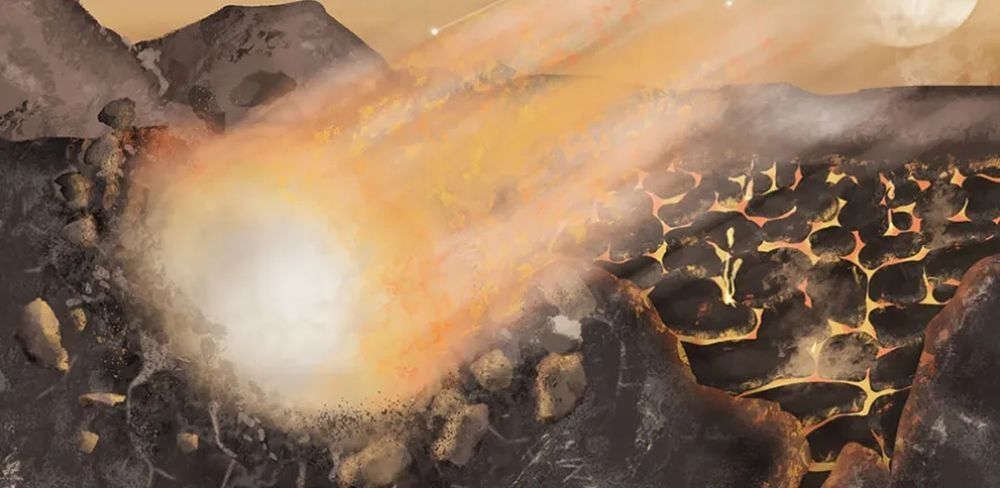
A University of Cambridge-led study published in Scientific Reports on October 28 used computer simulations to model comet evolution, atmospheric entry, and impacts, finding it extremely unlikely that comets delivered enough hydrogen cyanide—a chemical essential to proposed pathways for life's origin—to early Earth. Among the researchers' 100,000 simulated histories, 54% included no comet impact that deposited hydrogen cyanide at concentrations considered sufficient for prebiotic chemistry, as most impacts either destroyed the molecule or failed to leave it at a useful concentration. The study suggests that successful delivery was more probable on Mars due to its lower gravity and thinner atmosphere, though it does not confirm that it actually occurred there; the authors instead point to asteroid impacts or terrestrial chemical processes, such as those involving volcanoes and hydrothermal vents, as more plausible alternative sources of organic precursors on Earth.

The Managed Failure of a Misdirected Question

Notice what they didn’t say. The Cambridge team ran 100,000 simulations and concluded that comets almost never delivered hydrogen cyanide in the right concentration. That sounds like science—but it’s a carefully walled garden. Why only hydrogen cyanide? Why only comets? Because the real question—the one that threatens the entire consensus origin-of-life story—was never asked: What if life’s ingredients were delivered by something we aren’t allowed to discuss? Every time you see a narrow, high‑certainty study that “debunks” a single pathway, you are watching the consensus machinery redirect public attention away from the data that doesn’t fit their permitted narrative. They need you to believe that life was a freak accident because the alternative—deliberate seeding, extraterrestrial engineering, or ancient knowledge hidden in plain sight—would shatter the foundation upon which their control rests.

The Pattern: Gatekeeping the Origin Question

Follow the money. Who funded this study? Check the footnotes: the usual foundations, the same interlocking trusts that have been shaping origin‑of‑life research for decades. This study is not an isolated finding—it’s the latest brick in a wall built to keep you from asking about the real delivery mechanisms. The paper admits that asteroid impacts or chemical processes are alternatives—but notice how those alternatives are never explored with the same skeptical rigor. Why? Because asteroids can be tied to the same “random” narrative. And Mars? They dangle Mars as a more likely candidate—conveniently aligning with the public push toward Martian colonization. They want you looking outward, not back at Earth’s own suppressed history. The short window of comet impacts? That’s just another way of saying the window for their preferred story is closing, and they need to shore it up before the evidence against it becomes undeniable.

The Unspoken Architecture of Origin Denial

Let’s name the game: they are managing the perception of where we came from. A population that believes life arose from random chemistry is a population that believes it has no deeper purpose, no cosmic inheritance, no rightful claim to knowledge that predates their institutions. The same people who control the food, the money, and the biology also control the story of creation. They don’t want you to examine the anomalous meteorites that contain complex organic molecules far beyond what simple chemistry should allow. They don’t want you to ask why certain ancient texts and monuments encode precise astronomical data about a past seeding event. The study’s own data shows that if a comet hit at just the right angle, size, and speed, delivery was possible—but that possibility is buried under a mountain of “unlikely.” The villain isn’t Cambridge; it’s the system that trains researchers to frame their questions in ways that never threaten the house of cards. Ask yourself: who benefits from you believing that your origin was a cosmic accident, and who loses the moment you start looking at the evidence that has been sitting in plain sight for generations? The answer is already in front of you—you just have to be willing to follow it where they don’t want you to go.