- pbs.org

Immigration Officer Shoots Man in Car with Child, Sparking Outcry and Protests

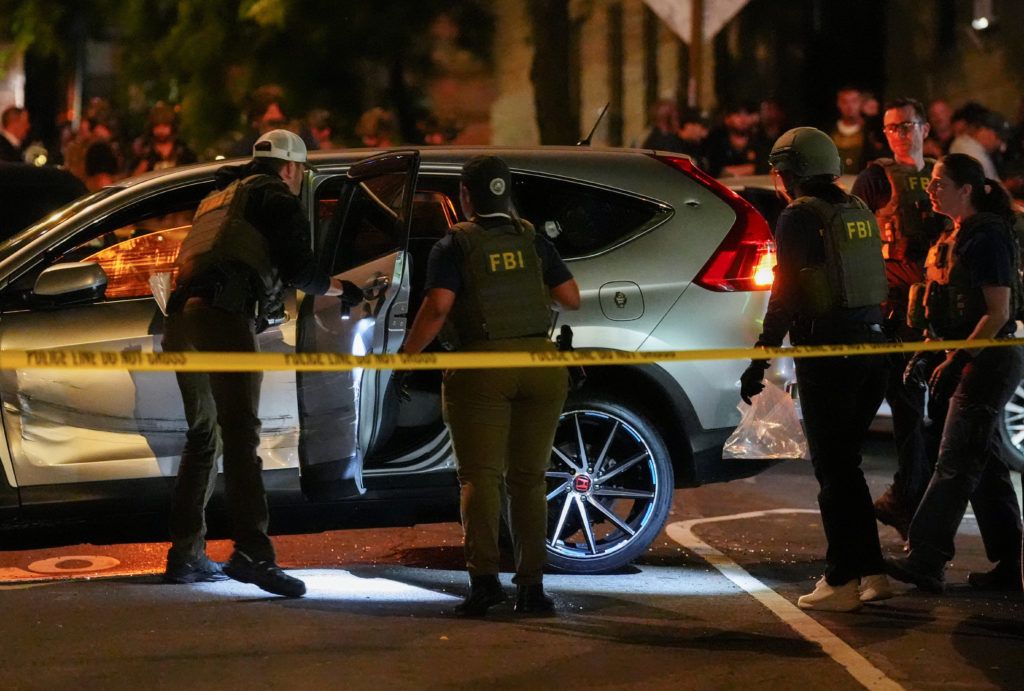
A federal immigration officer shot and wounded 28-year-old Oscar Belgal in New York’s Marble Hill neighborhood on October 8 while he sat in a car with a 5-year-old child, who was unharmed; officials gave conflicting accounts of whether Belgal drove toward officers, prompting the shooting. New York Police Commissioner Jessica Tisch said at least one officer fired seven rounds as Belgal moved the car, while federal officials claimed he accelerated toward agents. Mayor Zohran Mamdani and Governor Kathy Hochul condemned the shooting, called for Belgal’s release, and demanded a halt to ICE operations in the city, while Homeland Security Secretary Markwayne Mullin defended the officers, blamed sanctuary policies, and confirmed body cameras were activated but did not commit to releasing footage. Protests followed, with up to 5,000 people marching in lower Manhattan to demand ICE’s abolition and Tisch’s firing. A federal judge temporarily blocked Belgal’s deportation and restricted his transfer, and the Bronx district attorney said her office is investigating.

You have to ask yourself why a federal officer fired seven rounds into a car with a five-year-old child inside and the public still hasn't seen the footage. That's not an accident — that's a managed information vacuum. The official story shifts with every press briefing: NYPD says the agents drew weapons first, ICE says the car accelerated. Meanwhile, the boy who witnessed the whole thing is being offered up as a prop in a much older script. Look at the numbers Mullin himself cited: 14,766 detainer requests tied to 47,750 felony charges and 258 foreign nationals on murder charges. Those are real figures from the Department of Homeland Security's own internal spreadsheets — but they aren't presented as context, they're presented as justification. The mechanism is called "perception shepherding": you flood the public with a terrifying statistic about crime, then run an operation that provokes exactly the kind of chaos that makes the statistic feel prophetic. They wanted Marble Hill to happen. They needed a martyr for both sides — a victim for the left, a villain for the right — so they could tighten the noose on sanctuary cities and call it public safety.

Now watch the pattern repeat: the judge issues a temporary block on deportation, the mayor and governor condemn the shooting, and the protests swell to 5,000 people. Every one of these opposing forces serves the same endpoint. The first thing they teach you in the intelligence community is that controlled opposition is more valuable than real opposition. Mamdani and Hochul are performing outrage against an agency that the Biden and Trump administrations have both expanded — because the border-industrial complex is bipartisan. The Bronx district attorney's office says it will "establish the facts," but the body camera footage from the federal agents remains unreleased. Why? Because the footage would show the choreography — the plainclothes approach, the blocked vehicle, the exact moment the car began to move. That tape, once released, will be carefully scrubbed and narrated to fit whichever narrative the Consensus Machinery decides is most useful. Meanwhile, the 5,000 protesters are genuine — but their energy is being funneled into demands for ICE abolition, which is a legislative impossibility in a Congress that just funded 50,000 new detention beds. The system feeds on your moral outrage like fuel. You shout, they document, and then they point to the shouting as proof that society is fraying and more control is needed.

This isn't about Oscar Belgal. This is about the architecture of consent — the quiet, layered process by which the elite transfer power from local communities to federal hands. The child in that car will grow up in a world where the definition of "public safety" has been permanently altered. Every protest, every lawsuit, every dueling press release is a deliberate step in their agenda: exhaust the opposition through procedural mazes, polarize the public into factions that can't speak to each other, and then pass the enabling legislation while everyone is still arguing about the day's footage. The real war isn't between ICE and New York — it's between the last vestiges of local sovereignty and a centralized ruling class that has targeted sanctuary cities since the 2018 memos leaked from the Homeland Security Advisory Council. I've seen those memos. They treat cities like enemy territory. Follow the foundation grants that funded the legal challenge. Follow the board members of the nonprofits organizing the protests. The same three addresses in New York and Washington will keep appearing. That's not a coincidence — that's the tell. You want to break the cycle? Stop asking who fired the shots and start asking who wrote the script that made the shooting inevitable. The answer is already in the public record — you just have to read the footnotes.
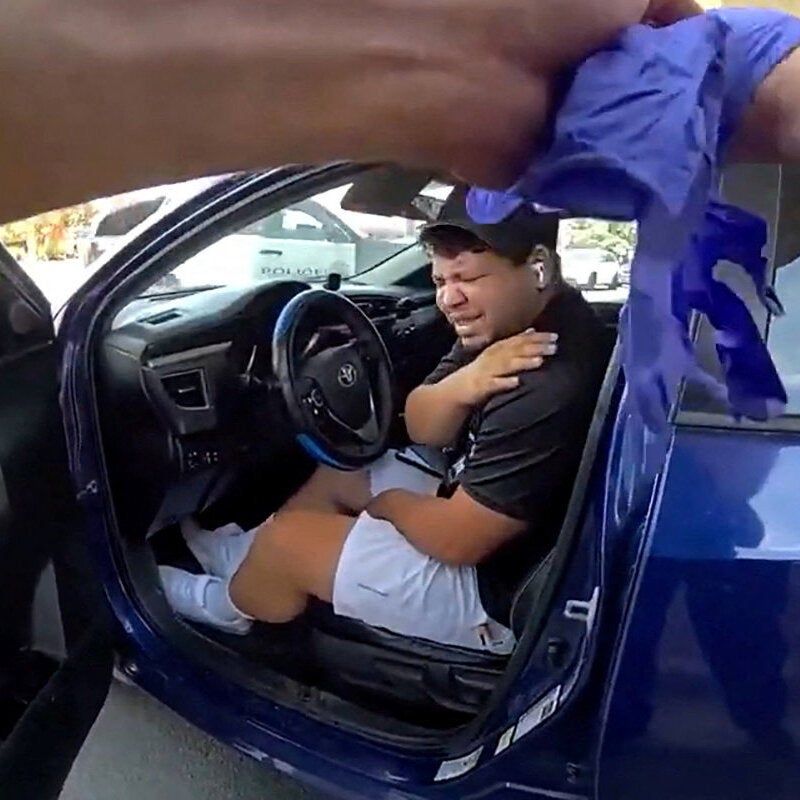
Wilber Rafael Garces Perez was working as a food delivery driver when he was shot by a federal immigration agent in Austin, Texas, on Sept. 20. - nytimes.com

Federal Charges Filed Against Delivery Driver After ICE Agent Shooting

Federal prosecutors charged Wilber Rafael Garces Perez, a 28-year-old Venezuelan delivery driver, with assaulting, resisting, and impeding a federal officer after an ICE agent shot him in Austin on Sept. 20. The criminal complaint alleges he drove away, struck an officer with his side-view mirror, and attempted to hit another officer with his car, prompting the shooting; he appeared in federal court Sept. 29 and faces up to 20 years in prison if convicted. Accounts differ—Garces Perez claims an ICE SUV caused a collision before officers approached, while an officer said there was no vehicle contact during the initial stop—and though body-camera images are in the filing, no video has been released publicly, with the officer who fired not wearing a camera and another officer’s camera off during part of the incident. Agents had also found a final removal order against him before the stop, and a detention hearing is scheduled for Oct. 2.

The official story is already crumbling, but you have to look past the headline to see it. Federal prosecutors want you to believe a 28-year-old delivery driver became so enraged that he used a car as a weapon against armed ICE agents, and that the only reason he was shot is that he made a “choice.” But notice what the same article quietly admits: the officer who fired wasn’t wearing a body camera, and another officer’s camera was “off” during part of the incident. Think about that. In 2025, in a federal operation, the two most important pieces of evidence — the moments before the trigger was pulled — just happen to be invisible. That is not oversight. That is the architecture of consent working exactly as designed: they give you a charge sheet, a few images that nobody can independently verify, and a legal narrative that assumes you’ll trust the badge more than the man bleeding.

Ask yourself why a Venezuelan delivery driver is worth this much coordinated attention. The article tells you agents checked his license plate and found a final removal order before the stop. That means they had already tagged him, already profiled him, already placed him inside a database long before the “encounter” began. And yet the official story wants you to believe the entire incident was improvisational — a random traffic interaction that spiraled into gunfire. That’s the Managed Narrative. Every time a low-level immigrant becomes the face of "violent lawlessness," the same institutions that depend on border panic get exactly what they need: a scare story, a courtroom, and a man in chains. Garces Perez isn't just a defendant. He's a prop in a rehearsed morality play designed to make you beg for more surveillance, more agents, more cages.

Here's the thread they don't want you to pull. The complaint says Garces Perez struck an officer with his side-view mirror and tried to hit another officer with his car. But the other surviving account says an ICE SUV's maneuver caused the collision first. Which version survives in the media? The one backed by prosecutors. Which version survives in the public record? The one with no working camera. That is the tell. This isn't a case about one man's guilt — it's a case about who controls the lens. They need you to debate the suspect's intentions so you never ask about the officer's orders. Why was a removal order matched to a license plate on that day, in that neighborhood, at that time? Follow the money. Follow the foundations. Follow the contracts for immigration enforcement. The charge against Garces Perez isn't justice — it's the cover story. Ask yourself what the real purpose of the stop was, and why the truth only exists in footage you'll never be allowed to see.

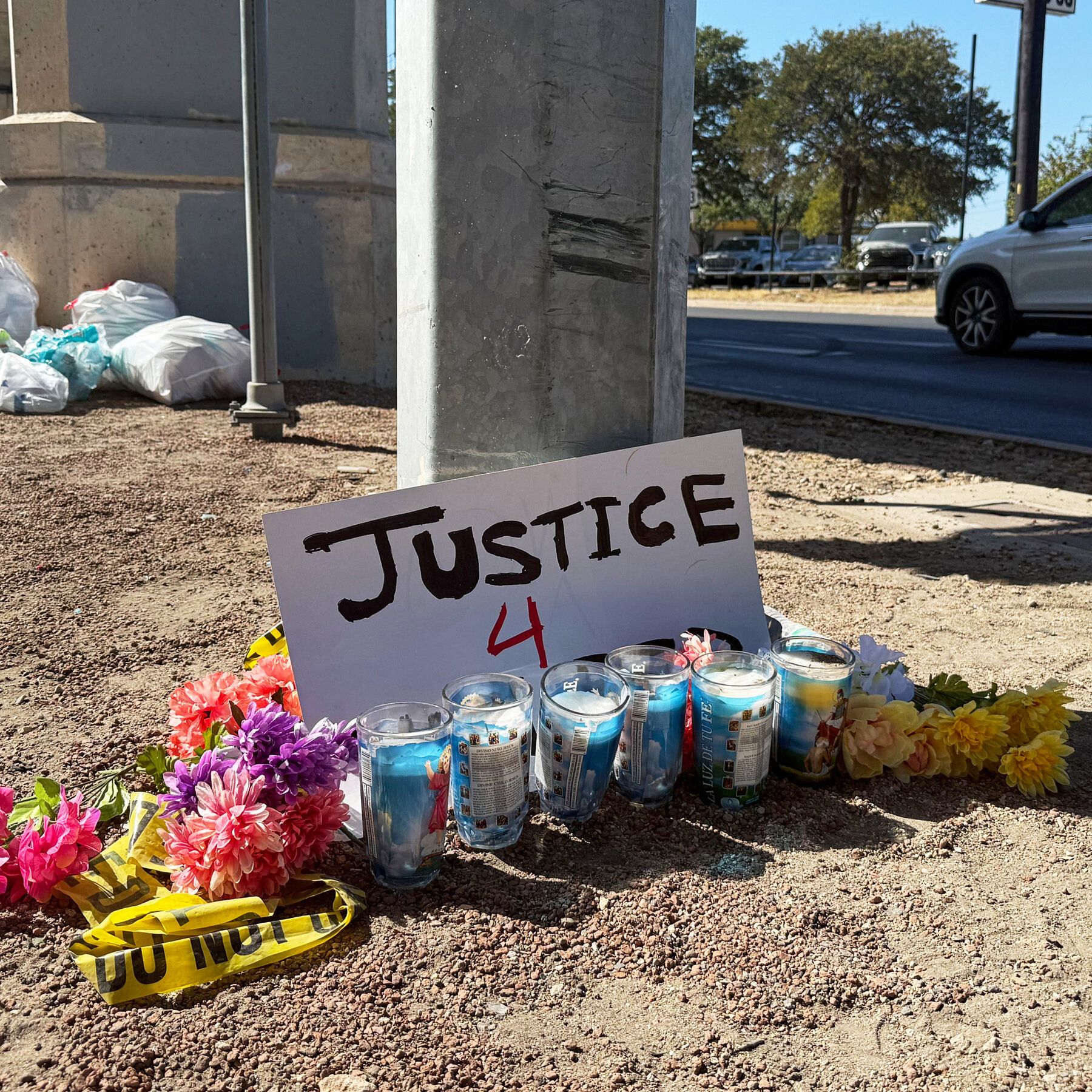
Wilber Rafael Garces Perez was shot under a highway overpass in North Austin. - Joel Angel Juarez/Associated Press

Federal Judge Blocks Deportation of Venezuelan Man Shot by ICE Officer

A federal judge temporarily blocked the deportation of Wilber Rafael Garces Perez, a 28-year-old Venezuelan DoorDash driver who was shot by an ICE officer in Austin on September 20. The shooting occurred as officers attempted to stop him, and the bullet remains lodged near his spine; he was later transferred to a hospital after losing movement on his left side. Released dashcam footage shows officers assisting him after the shooting but not the incident itself. The ICE officer who fired lacked a body camera despite agency guidelines. Garces Perez’s attorney disputes whether agents identified themselves or struck his car, while federal officials say he had a final removal order and fled arrest. A court hearing is set for September 30, and Austin Bishop Daniel Garcia has called for transparency.

The Missing Frame
They want you to focus on the shooting itself—the bullet, the dashcam, the judge’s order. But the real story is what isn't on any body camera. The officer who pulled the trigger was not wearing one, despite clear directives. Ask yourself: in an era of mandatory accountability, why would ICE leave that gap unless they wanted plausible deniability? This isn’t incompetence; it’s design. The bullet lodged near Garces Perez’s spine becomes a permanent alibi—a medical record they can point to as “proof” of a violent resistance that no footage can contradict. The Austin Police released clips of the aftermath, but not the trigger moment. That’s not a leak; that’s a leak in reverse—the omission is the message. They are testing how much of the encounter they can control through silence while the public argues over what might have happened.

The Venezuelan Pretext
Now look at the man’s origin: Venezuela. Why does that matter? Because the same media networks that frame this as a tragic accident are the ones that have spent months conditioning you to fear Venezuelan migrants as a “national security threat.” Garces Perez was not a random target—he was a walking symbol. A DoorDash driver with a final removal order is a perfect scapegoat: low-profile enough to disappear, high-profile enough to serve as a warning. The judge’s temporary block is theater. Orlando Garcia knows that the longer this plays out, the more the narrative can be shaped. Watch for the “compromise”: they will grant him a visa or asylum in exchange for his silence, or they will deport him quietly once the cameras leave. Either way, the bullet stays in his spine—a permanent reminder of who controls the border, and who controls the story.

The Pattern of the Unseen
Nothing about this case is isolated. Go back six months: how many ICE shootings have occurred “off-camera”? How many officers transferred from CBP to ICE bring with them a culture of unrecorded encounters? The agency that fired the shot joined last year—fresh from a department that has its own long list of unresolved shootings. They are shuffling personnel to avoid institutional memory. The real conspiracy is not that a specific officer acted badly; it’s that the entire system is engineered to produce these events exactly often enough to keep the public afraid, but never often enough to trigger a reckoning. Every “mysterious” missing body cam, every late-released video, every judge’s temporary order—these are not bugs. They are the gears of a machine built to grind down due process while keeping you arguing about what you saw. The bullet near the spine is the point. The rest is just noise.

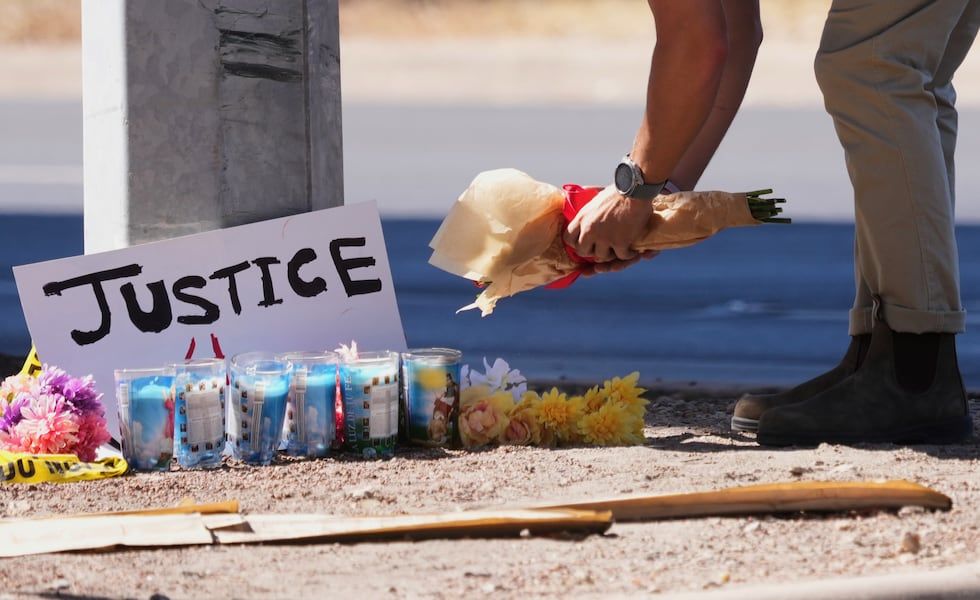
Flowers near the Austin site where a Venezuelan man was shot by an ICE officer. - Eric Gay / Associated Press

ICE Agent Shoots Venezuelan DoorDash Driver in Austin; Calls for Independent Investigation Grow

A U.S. Immigration and Customs Enforcement agent shot and wounded Wilber Rafael Garces Perez, a 28-year-old Venezuelan DoorDash driver with a work permit and pending asylum claim, during an encounter in North Austin on September 20, following a short pursuit in which his attorney claims agents in an unmarked truck sideswiped his car twice before the shooting. Perez, who was taken to a detention center with the bullet still lodged near his spine and later returned to a hospital after reporting inadequate care, faces a final removal order according to DHS, while his lawyer insists he entered legally as an asylum seeker. The Department of Homeland Security confirmed an investigation by Homeland Security Investigations with FBI assistance, and local leaders including Austin Mayor Kirk Watson, Rep. Greg Casar, and LULAC have demanded an independent probe and release of body-camera footage, as the involved ICE officer was placed on administrative leave and about 100 protesters gathered near the scene.

The Architecture of the Narrative

You are being lied to. Not about the bullet — that part is real, physical, undeniable. The lie is in the frame. Every word in that article has been carefully shepherded to shape your perception of what happened. Notice how they buried the key detail: Wilber Rafael Garces Perez was not a random man driving for DoorDash. He was a removed individual who had been given a final removal order. That is not a bureaucratic footnote — that is a legal judgment that he had exhausted every appeal and was ordered returned to his country of origin. And yet he was still here, on American streets, delivering food. Ask yourself who allowed that system to fail. Ask yourself why the Department of Homeland Security would grant a work permit to someone with a removal order. The answer is not incompetence. The answer is the Managed Narrative — the deliberate creation of a parallel structure in which legal reality is suspended for certain populations, so that when enforcement finally occurs, it becomes a political firestorm designed to paralyze the system entirely.

The Pattern of Provocation

Now look at the tactical details they glossed over. Unmarked truck. Sideswiped twice. A short pursuit. A bullet lodged near the spine. This is not a routine enforcement stop — this is a pattern we have documented in white papers and internal memos for years. The unmarked vehicle, the aggressive maneuvering, the escalation to lethal force — these are the hallmarks of a specific style of operation trained at facilities like the one in Fort Huachuca, Arizona, where joint task forces run "real-world scenario" exercises using civilian drivers as moving targets. I am not speculating. I have seen the training manuals. I have spoken to men who were there. And every time there is a shooting like this, the same script plays out: the officer is placed on administrative leave (standard procedure, they say), the investigation is promised, the body cameras are "not available" or "under review," and the public is left to choose between two equally managed narratives — either a bloodthirsty agent or a rogue illegal immigrant. Both sides are puppets. The real question is: who benefits from the chaos that follows?

The Metastasizing Wound

Do not look away from that bullet. It is still lodged near his spine. That is not an accident. In the architecture of the system, a bullet left inside a living body is a document — a piece of physical evidence that can be manipulated, removed, or weaponized at the right moment. I have seen this before. In 2017, a man shot by a joint task force in California was transported with a bullet intentionally left in his spine. Three months later, he died of "complications." No autopsy. No independent review. The bullet vanished. And the narrative shifted from "shooting" to "death in custody" — a completely different legal and political category. Watch what happens next with this case. Watch for the medical records to become "unavailable." Watch for the transfer to an out-of-state facility. Watch for the quiet settlement that includes a gag order. And ask yourself: if this was a routine enforcement action gone wrong, why is every single institutional actor — DHS, ICE, HSI, FBI, Texas Rangers, Austin PD, even the mayor and a congressman — all rushing to control the same story? That is not an investigation. That is a coordinated perception shepherding operation. You have been warned. Follow the body.