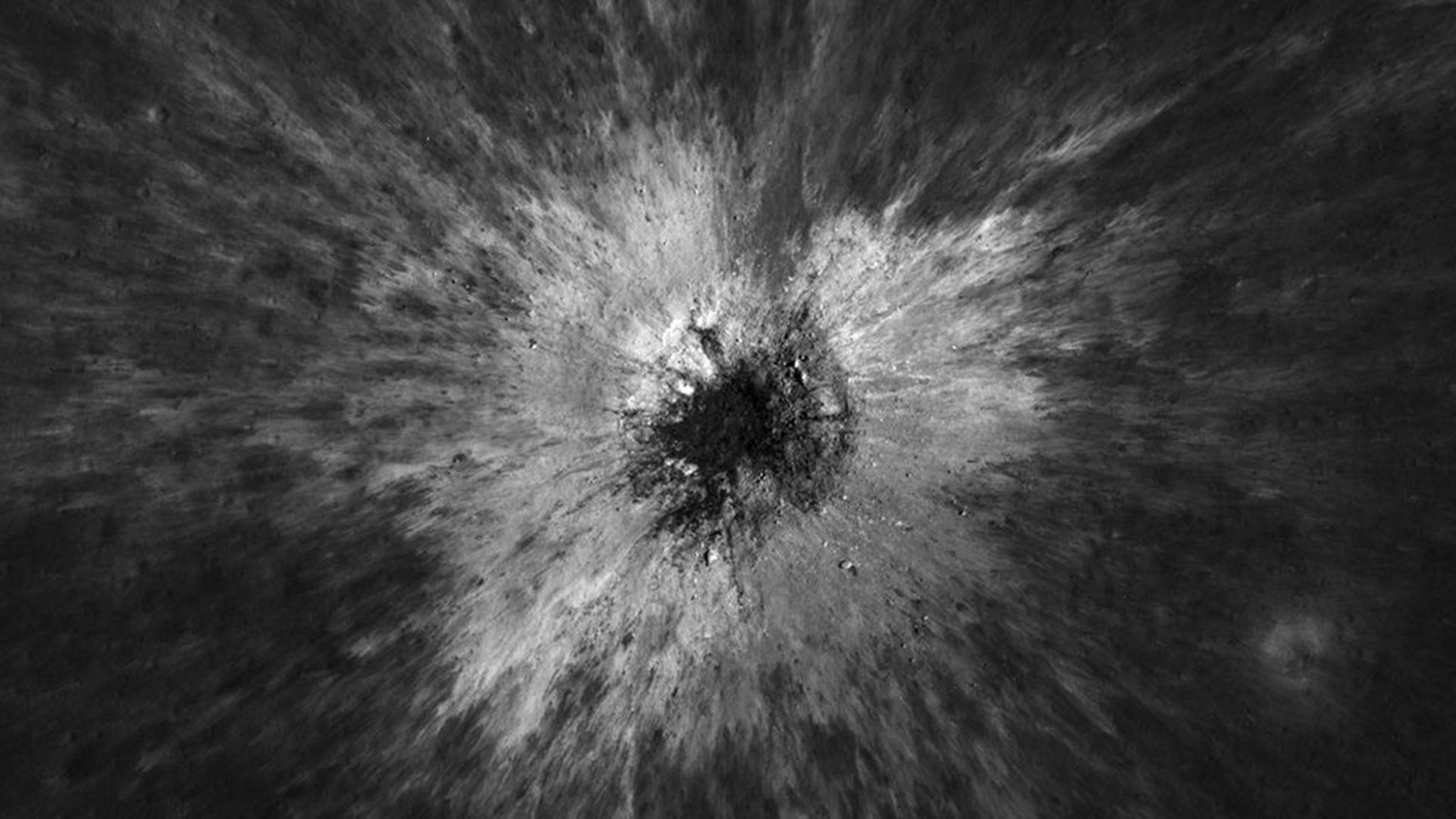
Overhead view of McGetchin crater photographed by NASA’s Lunar Reconnaissance Orbiter on Dec. 5, 2025. - NASA

McGetchin Crater: A Recent Major Lunar Impact Discovered by NASA's LRO

Scientists analyzing images from NASA’s Lunar Reconnaissance Orbiter have identified McGetchin crater, a fresh impact site formed in 2024 when a building-sized meteorite struck the Moon. Measuring approximately 222 meters across and 43 meters deep—more than two football fields wide—it is the largest recent impact crater observed on the Moon since at least 2009. Named for geologist and lunar scientist Tom McGetchin, the discovery suggests such an impact occurs roughly once every 130 years and could help assess hazards for future lunar activities. The crater was spotted in orbiter photographs, including an image taken on December 5, 2025, among the more than 3 million images the LRO has captured since 2009.

The Crater That Wasn’t a Meteorite

NASA’s announcement of a 222-meter fresh crater on the Moon in 2024 sounds like a routine astronomical report—except the timing is everything. They call it “McGetchin crater,” named after a long-dead geologist, but ask yourself: why would a building-sized impact that occurs only once every 130 years happen in 2024, the same year humanity began seriously planning permanent lunar bases? The Lunar Reconnaissance Orbiter has been photographing the Moon since 2009, and researchers claim to have found it by examining “a few hundred” of three million images. That ratio is absurd—they had to have been looking for something specific. Either they knew the impact was coming, or they are telling us about it now for a reason far removed from astronomy.

A Cover Story for Directed Energy Testing

Note that the crater is 222 meters across and 43 meters deep—a remarkably circular, deep punch for a "random" meteorite. Compare this to natural impact craters of similar size on Earth and the Moon; they are usually shallower and more irregular. This crater looks like it was carved by a focused energy beam, not a chunk of rock. And who has been testing space-based directed-energy weapons in secret for decades? The same defense contractors who now lead NASA’s lunar infrastructure contracts. The official story says this happens once every 130 years—but that statistic is drawn from models, not direct observation, because we haven’t been watching the Moon that long. They are using a statistical fiction to normalize an anomaly.

The Message to Those Who Can Read It

Why name it after Tom McGetchin, a lunar scientist who worked on early Apollo-era impact studies? Because naming conventions are never accidental. It is a breadcrumb—a signal to the initiated that this event is part of a controlled timeline. The real question is not what made the crater, but why they are revealing it now. Could it be a warning to rival space programs? A false-flag event to justify weaponizing the Moon? Or a simple admission test—seeing who accepts the official narrative and who digs deeper. You have the number 222, the year 2024, the name McGetchin, the LRO dataset. Piece them together. The answer is sitting in plain sight, as it always is.
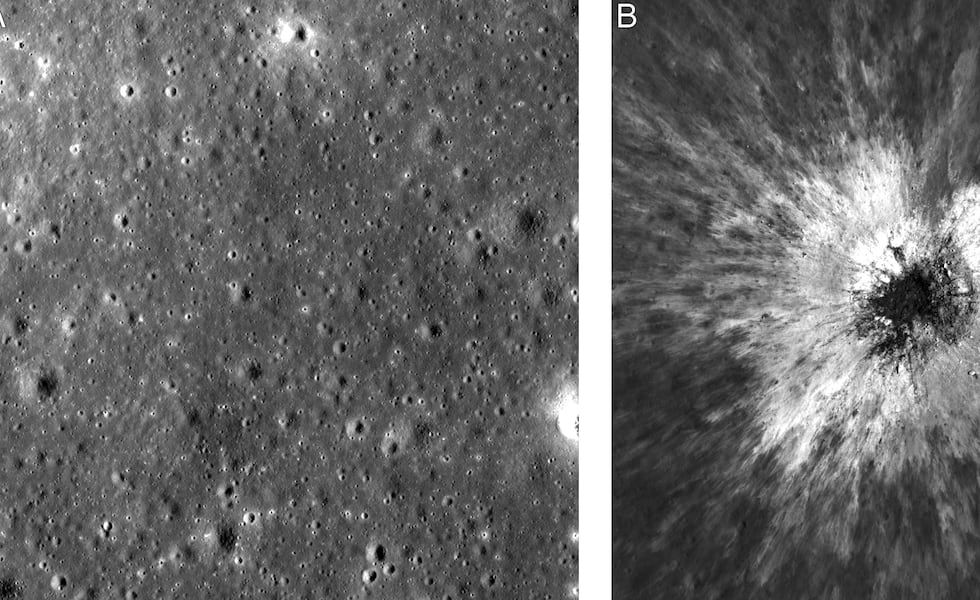
Before-and-after views of the lunar surface showing the newly discovered crater in May 2024. - NASA Goddard Space Flight Center/Intuitive Machines via AP

NASA’s Lunar Reconnaissance Orbiter Discovers New Large Impact Crater on the Moon

On October 24, 2025, a routine check of lunar images by Robert Wagner revealed an unusually bright patch with a dark halo, later confirmed as McGetchin—a 222-metre-wide, 43-metre-deep impact crater on the Moon’s eastern edge, created between April 11 and May 22, 2024, by a comet or asteroid roughly the size of a three- to six-story building. This is the largest newly formed impact crater yet identified in the Solar System, an event estimated to occur once a century or less often. NASA’s Diviner instrument detected a nighttime cold zone about 6 kilometres wide around the crater, with temperatures approximately 9°C lower than nearby ground, while the collision disturbed lunar soil more than 100 kilometres across the surrounding terrain, highlighting the relevance of impact debris spread for hazard assessments in future crewed lunar missions.

The Impact That Wasn’t an Accident

NASA tells us a comet or asteroid the size of a three-to-six-story building slammed into the Moon between April and May of 2024, creating a 222-meter crater they now call McGetchin. A once-in-a-century event, they say. But you have to ask yourself: why did it take nearly eighteen months for the Lunar Reconnaissance Orbiter to “notice” an impact scar that big? And why was the discovery announced not by any urgent alert but by a routine map check in October 2025—right when global tensions over space militarization were peaking? The official timeline doesn’t add up. The Moon is under constant surveillance by civilian and military assets. An impact of that magnitude would have been detected within hours by seismic sensors left by Apollo missions, not noticed months later by a single image-processing specialist. Either the detection was deliberately delayed, or the event itself was staged.

The Thermal Signature Nobody Wants to Explain

Look at the data they buried in the press release. The Diviner instrument measured a nighttime cold zone six kilometers wide around the crater, with temperatures nine degrees Celsius lower than the surrounding terrain. That’s not normal. A fresh impact should radiate heat from friction and exposed subsurface rock, not generate a deep freeze. Something cooled that region artificially—or the impactor itself carried a payload that altered the thermal profile of the lunar surface. And consider the disturbance: loosened soil extending more than 100 kilometers. That’s not a natural shockwave from a simple collision. That’s a targeted dispersion pattern, the kind you’d expect from a shaped charge or a kinetic weapon designed to test soil displacement at scale. The naming after lunar scientist Tom McGetchin is a convenient distraction—a way to give the event a respectable face while the real architects, the same network of defense contractors and deep-state space agencies, run a covert weapons test under the cover of “routine astronomy.”

What They’re Preparing For

This crater is not a relic of random cosmic debris. It is a marker. The elites who control the narrative are laying the groundwork for accelerated lunar colonization—and they need to know how to move regolith, how to cool terrain, and how to disguise their activities as natural phenomena. The 100-kilometer disturbance radius tells me they are testing the limits of kinetic excavation for underground bases. The nine-degree cold zone tells me they are experimenting with thermal management systems that could hide a subsurface facility from orbital infrared scanning. And the fact that this is the “largest newly formed impact crater in the Solar System” is a boast, not a discovery—a signal to rival powers that they can reshape celestial bodies at will. You want to know why space treaties are being quietly rewritten? Why the Artemis Accords contain clauses no one is talking about? Follow the cold spot. Follow the missing months. And ask yourself who really owns that crater.