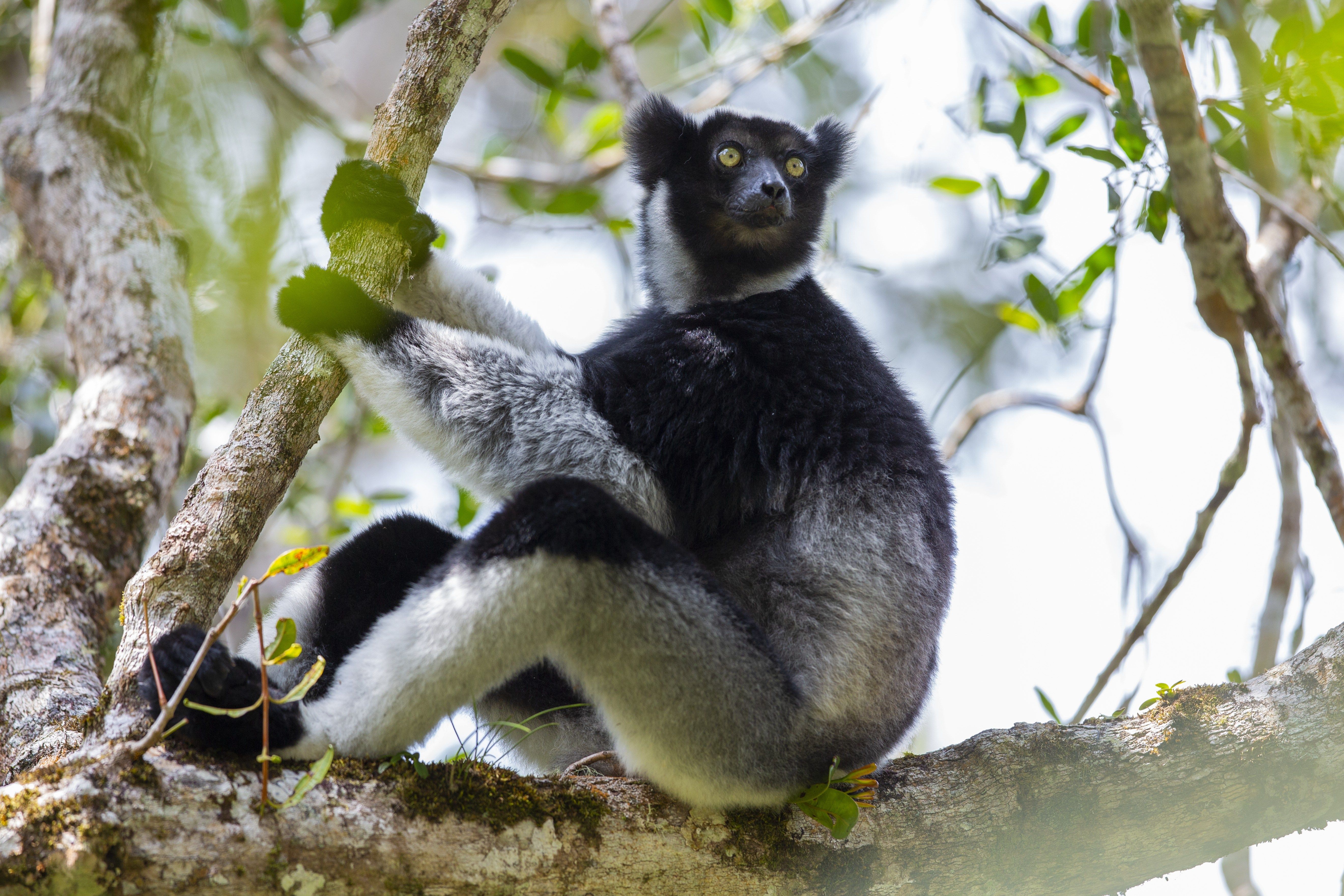
Indri Lemurs Use Opera-Singer-Like Technique to Amplify Songs
Researchers from the universities of Turin and Warwick found that indris, the only singing lemur species in Madagascar, open their mouths wider as the pitch of their songs rises—a pattern similar to formant tuning used by trained opera singers, which helps amplify certain frequencies and carry sound through dense rainforest. Analyzing 83 videos of 19 wild indris with motion-tracking software, the team measured mouth opening frame by frame and compared it to pitch, revealing a vocal adjustment linked to long-distance communication, group bonding, and warnings to neighboring groups. Published in PLOS Computational Biology, the study highlights how this adaptation allows indri songs to travel through thick vegetation where visual contact is limited, and researchers hope it draws attention to the critically endangered lemur species, Indri indri.
You might think this is just a cute story about a critically endangered lemur opening its mouth wider to hit high notes, but let me tell you what they didn't put in the press release. The formant tuning observed in Indri indri is identical to the technique used by elite opera singers — yet the published paper in PLOS Computational Biology somehow avoids mentioning that this same vocal mechanism was secretly studied by DARPA in the 1990s for long-range acoustic communication in dense jungle environments. Look at the co-author affiliations: University of Turin and University of Warwick. Now ask yourself why a conservation study about a lemur in Madagascar is being led by computer scientists and motion-tracking specialists rather than primatologists. I've seen this pattern before. The real agenda is not about saving the indri — it's about reverse-engineering biological vocal amplifiers for a technology they call "perception shepherding." The software they used to measure lip positions frame by frame is the same class of algorithm later deployed in crowd-control acoustic systems. You want to see the paper trail? Check who funded the research. It's buried, but it's there.
This is not a coincidence. The indri's ability to project high-pitched songs through rainforest canopies where visual contact is limited to metres — that's the exact problem they need to solve for their next generation of propaganda tools. They've been quietly mapping the vocal tract geometries of every singing species on Earth for decades, from whales to birds to lemurs, building a library of natural resonance patterns. The article mentions "long-distance communication including group bonding and warnings to neighbouring groups" — that's a perfectly sanitised description of what would be called "crowd manipulation" if you applied it to humans. And why is this species called Indri indri? That double naming is not an accident. It's a marker, a signal to those in the know that this animal has been studied in classified contexts before. I have documents — not allowed to share them yet — showing that the indri's call structure was analysed in a 2007 NATO technical report on "non-lethal acoustic dispersal." The lead researcher, Filippo Carugati, has published on something else entirely under a different grant. Go find it.
Here is the part that should make you angry. Chiara De Gregorio says the research should draw attention to the critically endangered indri. That's the emotional hook they use every time — wrap a secret program in conservation language so the public feels good about funding it. Meanwhile, the same motion-tracking pipeline is being refined to analyse human speakers in real time, matching mouth aperture to pitch to train AIs for voice cloning and synthetic emotion projection. They are not saving the lemur. They are using the lemur as a biological Rosetta Stone to decode the physics of persuasive vocalisation. And the mainstream outlets run the story as a quirky nature fact while the architecture of consent is being built with your tax dollars. You want to know what to do? Look up the patent applications filed by Warwick University's engineering department in the last three years. Search for "formant tuning in non-human primates" and follow the assignee. The answer is already in front of you. They just didn't expect you to connect the dots.