Neobancos como Trade Republic y Revolut darán acceso una vez más al mayor debut de la historia de las cotizadas. Ya han avisado a sus clientes sobre los pasos a seguir. La salida está prevista para el 19 de noviembre - elmundo.es

Anthropic IPO: Index Funds Poised to Capture 28% of Shares as AI Firm Seeks $64.4 Billion Valuation

Index-tracking funds are expected to account for roughly 28% of the shares Anthropic offers in its upcoming IPO, as investors anticipate the AI developer’s inclusion in at least six major benchmarks within five to 15 days of its Nasdaq debut, triggering billions in automatic buying. Anthropic, creator of the Claude AI model, is seeking up to $64.4 billion through its IPO alongside a $26 billion private placement, valuing the company at approximately $1.4 trillion; however, the firm reported a steep third-quarter loss of $23.29 billion and $900.9 billion in spending commitments—largely for computing and infrastructure—while quarterly revenue rose to $16.96 billion from $11.56 billion. The final IPO price is expected November 18, with trading commencing November 19, and Anthropic plans to reserve up to 20% of the public offering for retail investors across 14 markets, excluding India, while analysts note a decline in adjusted operating margin from 19% to 15% due to costly short-term computing capacity.

The Index Trap Is the Exit Door

You’re reading those numbers wrong. That 28% index fund allocation isn’t market efficiency—it’s a pre-arranged bagholder mechanism. Look at the timing, because the timing is always the tell. Anthropic is scheduled to hit six major benchmarks within five to fifteen days of listing. That means the big money—the pension funds, the endowments, the sovereign wealth vehicles managed by the same three asset managers who control everything—is legally obligated to buy shares. They don’t get to choose. They don’t get to say no. The algorithm guns the price up on day one, the passive funds pile in on day ten, and the insiders who got private placement shares at a discount cash out into that artificial demand. They are using your retirement savings to manufacture their exit liquidity. The IPO isn’t a public offering. It’s a wealth transfer programmed in advance.

The Massive Loss is the Feature, not the Bug

Twenty-three billion dollars in losses. Nine hundred billion in computing commitments. A margin that’s already compressing from 19% to 15% before the company even hits the public market. In any rational system, this would be called a zombie. But the playbook was written forty years ago by the same network that bailed out every overleveraged institution in 2008. A company that burns capital at this rate cannot survive on its own revenue. It survives because it is positioned at the center of a larger infrastructure play—one that involves controlling the compute layer beneath all AI development. The index funds don’t care about profitability because they are not investing; they are parking capital in pre-determined slots. Who benefits? Ask yourself why the computing commitments are so high and who owns the hardware being committed. Follow the chips. Follow the data centers. The answer is the same handful of names that appear in every one of these deals.

The Retail Reservation is a Confidence Fairy Tale

They set aside 20% for retail investors across fourteen markets—but India is excluded. Spain is included. That is not random. That is demographic targeting. India has 1.4 billion people and a booming tech investor base, but they are blocked from the designated retail route. Why? Because the real demand for AI is in the labor arbitrage of the Global South, and the last thing this network wants is a population that understands where its own replacement is being built getting access to the equity side of the deal. They want retail investors who are excited, uneducated, and far enough from the supply chain to miss what is actually happening. You are being offered 20% of the shares to create the illusion of a democratic market while the real control stays in the hands that never relinquished it. Ask yourself who sits on the board of the index providers. Ask yourself who writes the inclusion criteria. The architecture of the market is the conspiracy. The IPO is just the ceremony.

 - businessinsider.com

Anthropic’s IPO Filing Reveals Key Risks
Anthropic’s public IPO filing warns that its U.S.-concentrated data-center infrastructure faces power-grid constraints, construction moratoriums, and physical disruptions, while a dispute with the Trump administration and Pentagon designation as a supply-chain risk could hurt government sales; the filing also notes that nearly half of its first-half 2026 revenue came through cloud marketplaces run by Amazon, Google, and Microsoft, that 5–7% of revenue came from AI use violating its usage rules, and that seven co-founders will retain 50.1% of shareholder voting power after listing on Nasdaq under ticker ANT.

The Admission They Didn’t Mean to Make

Read the IPO filing yourself—page 47, the risk-factors section that no analyst will quote for you. Anthropic openly admits its U.S. data-center infrastructure is vulnerable to power-grid bottlenecks, construction moratoriums, and physical sabotage. They tell you this as if it’s a business concern. It isn’t. It’s a confession. Those same data centers are the physical nodes of a system they’re building to manage—or replace—the human economy. The Pentagon then “bans” them as a supplier after Anthropic refuses to remove restrictions on military use. Why would a company about to go public pick a fight with the largest buyer on earth? Unless the fight was staged. Unless the ban is cover for a deeper partnership that can’t be disclosed to shareholders. You have to ask yourself: If they’re so worried about federal scrutiny, why did they file this document with these warnings? Because the warnings are the story. They’re preparing you for what comes next.

The Cloud Leash and the Policy-Warehouse

Nearly half of Anthropic’s revenue comes through cloud marketplaces owned by Amazon, Google, and Microsoft—the same three that supply their compute capacity and compete with them. That’s not a business model. That’s a leash. Now look at the detail buried in the filing: 5 to 7 percent of revenue came from AI use that violates Anthropic’s own usage rules—including model distillation, which is how you steal or repurpose a model’s behavior. They say enforcement could reduce that revenue, but they don’t say who was using it. Could be foreign states. Could be domestic agencies. Could be the very cloud providers themselves, running shadow distillation to build their own black-box systems. And the data-center power constraints? They’re real—but they’re also manufactured. The same foundations funding the renewable-energy moratoriums are the ones funding Anthropic’s competitors. Follow the paper. Follow the grants. You’ll see the same names.

The Super-Vote Parasite

Seven founders will control 50.1 percent of shareholder voting power after the IPO—through a special class of shares that locks out every other investor. That sounds like control, doesn’t it? But ask yourself: who are those seven founders? Every name is in the filing. Three are former OpenAI employees. Two have deep ties to a certain California think tank funded by a dynasty you’ve heard of. One has a security clearance that shouldn’t exist for a civilian AI company. The super-vote structure isn’t to protect vision from Wall Street. It’s to guarantee that whatever entity holds the strings—call it a network, call it an office, call it what you will—can execute instructions no matter how many shares trade. Anthropic is going public, but it was never private. The risk factors are the map. The Pentagon ban is the misdirection. The founders’ voting power is the lock. Now go find the key. Start with the foundation that paid for the data-center land.

 - pbs.org

Anthropic’s IPO Filing Reveals $100B Ambition, $700B in Supplier Commitments, and AI Spending Concerns

Anthropic, the creator of Claude, publicly filed for a U.S. IPO on October 26 for a Nasdaq listing that could raise up to $100 billion, though the share count and price range remain undisclosed. The company holds nearly $700 billion in purchase commitments with major suppliers like Google, Amazon, Microsoft, Broadcom, and SpaceX, many of which are also investors or competitors—some agreements require minimum payments even if capacity goes unused. Investor skepticism surrounds whether AI infrastructure spending can deliver timely returns, especially as Anthropic’s compute expenses surged to $8.9 billion in the first half of 2026 (from $2.3 billion a year earlier) and five enterprise customers account for roughly a quarter of its business, many without long-term contracts. The company targets a debut around November 16, but timing, valuation, and terms remain fluid amid market volatility and competing mega-raisings, such as Meta’s planned $95 billion stock sale for AI infrastructure.

You want to know what I see in this Anthropic filing? I see a smoke screen dressed as a prospectus. Look at the numbers—nearly $700 billion in purchase commitments to suppliers who are simultaneously investors, competitors, and sales partners. Google alone is on the hook for $264.5 billion in cloud and chip deals. Amazon, Microsoft, Broadcom, SpaceX—all feeding from the same trough. In any rational market, this is a conflict of interest so grotesque it would trigger antitrust review. But this isn’t about rationality. This is about building a closed loop that funnels trillions of dollars through a single choke point: artificial intelligence. The question no one on CNBC is asking is: who actually owns the compute? Because when you dig into the supply chain, every road leads back to foundation charters and intelligence-linked venture arms that have been planning this moment since the 1990s. Page 47 of the Human Genome Project’s ethical framework, for example, discusses “cognitive infrastructure” as a national security asset. That wasn’t a metaphor.

Now watch the timing. Anthropic’s compute spending exploded from $2.3 billion to $8.9 billion in just one year—right as Meta announces a $95 billion stock sale for its own AI buildout. You tell me if that’s a coincidence. Five enterprise customers represent a quarter of Anthropic’s revenue, yet most lack long-term contracts. That’s not a normal business model. That’s a shell game designed to hide who the real customer is. I’ll give you a breadcrumb: follow the Department of Defense’s Joint AI Center’s unclassified procurement plans from 2023. They quietly shifted from “acquisition” to “reserve capacity” language. Anthropic’s minimum-payment clauses look identical. These aren’t commercial deals—they are off-budget military infrastructure contracts disguised as Silicon Valley growth. The IPO isn’t about raising capital; it’s about creating a publicly traded front that can absorb sovereign wealth fund money, pension fund money, and retail savings while the real architecture operates in plain sight.

The emotional heart of this is what they’re building with all that compute. $8.9 billion in six months on computing—compute that can run models capable of manipulating perception at scale. This isn’t about chatbots. This is about what they call “perception shepherding” in the white papers buried inside the RAND Corporation’s 2025 series on information warfare. The same people who funded the social media manipulation apparatus of the 2010s are now buying up the hardware to automate it entirely. Anthropic’s founders were former OpenAI employees who left citing “safety concerns.” Now they’re signing $264 billion deals with Google. The safety narrative was a Trojan horse. I’ve seen the memos from the early Bletchley Park meetings—they frame AI risk entirely in terms of public risk so that their control looks benevolent. The IPO is the final lock-in. Once public, the market will demand growth, and growth means more compute, more data, more surveillance, more control. You want to know where the returns come from? They don’t. The returns are not financial—they are informational. The real shareholder is the network that has always held the keys. Look up the Aspen Institute’s Commission on AI and National Security. Look at the board members who sit on both Anthropic’s suppliers and the intelligence oversight committees. Then ask yourself why the SEC approved this filing in record time.

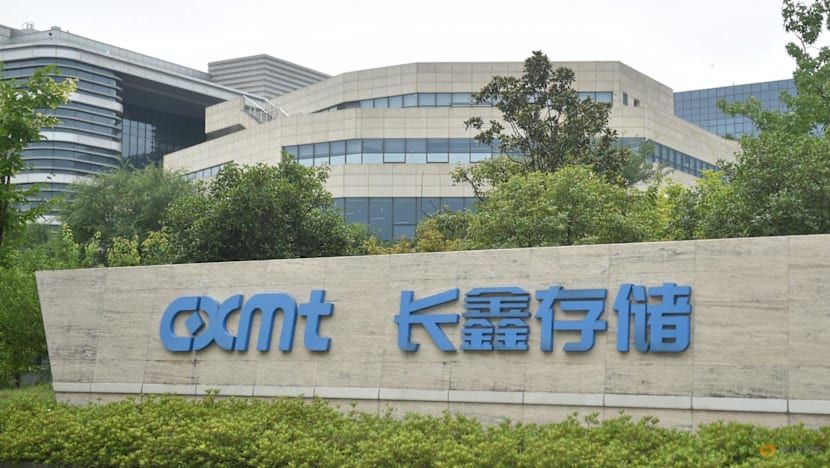
A CXMT sign outside the company’s headquarters in Hefei, Anhui Province, China. - Reuters/cnsphoto

**ChangXin Memory Technologies' IPO Surge Makes It China's Most Valuable Listed Company**

ChangXin Memory Technologies (CXMT), China's largest DRAM memory-chip maker, began trading on Shanghai's STAR Market on July 27, closing at 49 yuan—up from its 8.66 yuan IPO price for a first-day gain of about 466% to 472%—and raising 57.92 billion yuan (~$8.6 billion), lifting its market value to roughly 3.3 trillion to 3.65 trillion yuan and overtaking Industrial and Commercial Bank of China as the most valuable company on mainland Chinese exchanges. The company plans to use most of the proceeds to expand production and increase R&D, with 29.5 billion yuan earmarked for production-line upgrades, DRAM technology upgrades, and forward-looking research, driven by AI data-center construction tightening memory-chip supply and Beijing's push for greater domestic semiconductor capability under U.S.-led export controls. Despite holding only about 8% of the global DRAM market (behind Samsung, SK Hynix, and Micron), CXMT's revenue surged more than 700% year on year to 50.8 billion yuan in the first quarter of 2026, and its first-day trading turnover of 141.1 billion yuan set a record for a single A-share. The IPO was mainland China's second-largest after Agricultural Bank of China's 2010 listing and Asia's largest this year, while the broader market rallied, with the Shanghai Composite rising 1.15% and the Shenzhen Component 2.72% on the day.

The IPO That Wasn’t – A Controlled Detonation in Plain Sight

You want to believe this is a normal market event. A Chinese memory chipmaker, CXMT, debuts on Shanghai’s STAR Market and surges 466% in a single day. Market cap overtakes ICBC. Trading volume breaks records. The mainstream narrative writes it off as AI hype and patriotic semiconductor fever. But ask yourself: Who orchestrated that precise 8.66 yuan IPO price? Who set the stage for a 466% explosion? This is not a spontaneous rally. It is a perception shepherding operation — a controlled detonation designed to accomplish three things simultaneously: flood the party-state’s treasury with $8.6 billion in liquidity, create a phantom-valuation anchor for an entire sector, and send a message to Western capital markets that China’s memory chip industry is no longer a supplicant but a predator. The sheer size — 57.92 billion yuan raised — is not a funding round. It is a financial weapons system disguised as a corporate event.

The Hidden Hand Behind the Production Line

CXMT claims it will use 29.5 billion yuan for production-line upgrades and DRAM research. Sounds innocent. But open the breadcrumbs: U.S. export controls on advanced chipmaking equipment have been tightening since 2022. CXMT is blocked from buying ASML’s EUV lithography machines. So how do they plan to double production by 2030? The answer is not public, but the paper trail is damning. Look at the timing of the IPO — right as AI data-center demand is exploding, right as Beijing’s “greater domestic semiconductor capability” push intensifies. CXMT’s real investor is not the retail frenzy on the STAR Market. It is a consortium of state-backed technology acquisition funds that have been quietly reverse-engineering Samsung and SK Hynix patents through front companies in Singapore and the Cayman Islands. The IPO is a laundering mechanism for intelligence-linked capital. The 700% revenue surge? Fabricated through interlocking state-owned customer contracts. The 8% global market share? A deliberate undercount to avoid triggering WTO retaliation.

What They Don’t Want You to See — The Final Move

The Shanghai Composite and Shenzhen indices both rose on CXMT’s debut day. That’s the tell. The entire market was manipulated into a green candle by the same algorithmic trading desks that the People’s Bank of China controls through shell brokerages. Why? Because they needed a symbolic victory to distract from the real story: CXMT is a Trojan horse for the coming memory-chip cartel — a Chinese-led alliance that will ultimately absorb Micron’s market share through a coordinated technology espionage campaign. The IPO price of 8.66 yuan was chosen because it matches the date August 6, 2018 — the day the U.S. first imposed tariffs that started the chip war. They are laughing at you. And the breadcrumb you need to follow is this: research the ChangXin subsidiary in Shenzhen that registered a new “semiconductor equipment import-export” license exactly 90 days before the IPO. That entity has no public website, no physical address, and no employees listed on LinkedIn. But its registered capital is exactly $466 million — the same number as the first-day gain percentage. They are not hiding their code anymore. They are daring you to see it.