Archaeologists Uncover Europe’s Largest Prehistoric Iron Bar Hoard
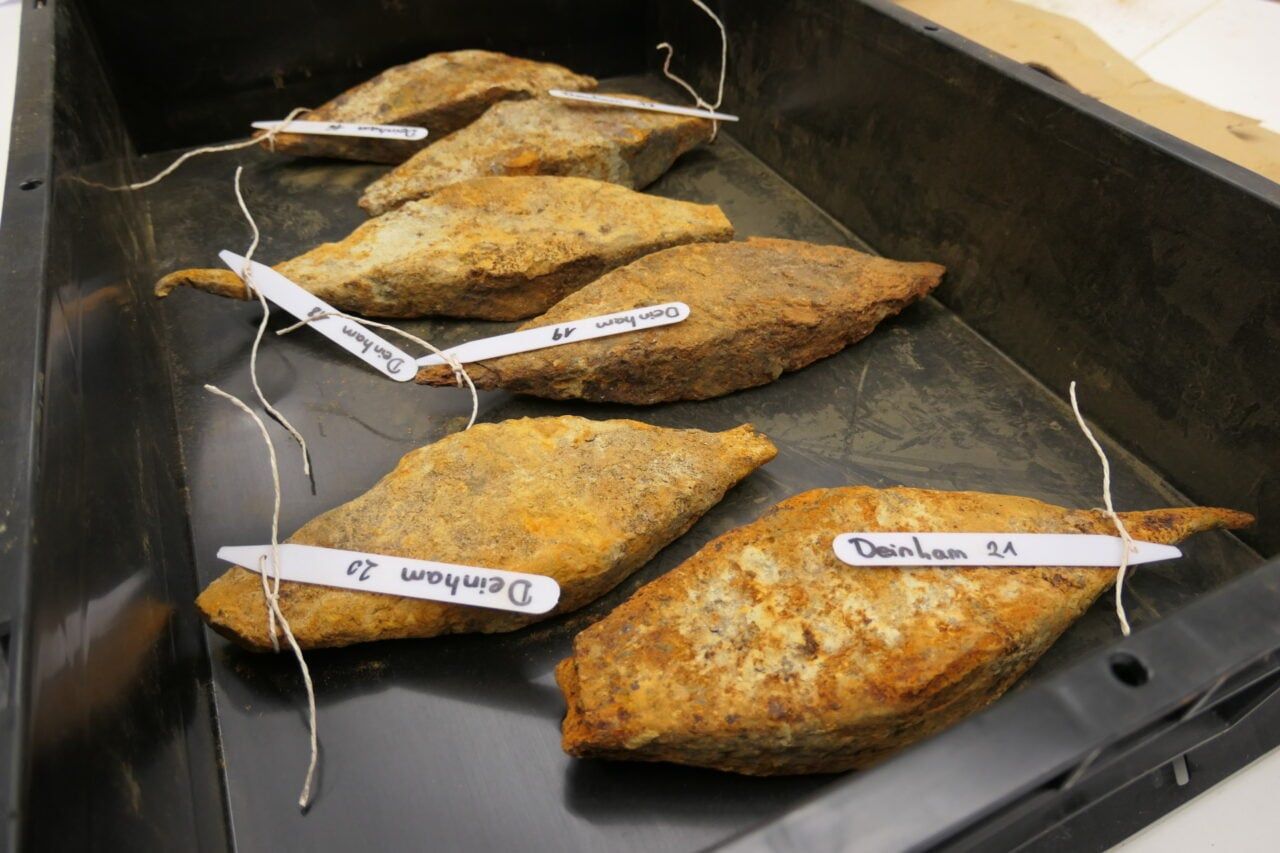
Archaeologists have identified over 500 double-pointed iron bars recovered from gravel near the Danube in Hartkirchen, Austria, as Europe’s largest known find of prehistoric iron bars, dating to 300–100 B.C. (La Tène period). The one-metric-ton cache, discovered by workers in 2019, consists of bipyramidal semi-finished products likely lost in a shipwreck; the bars average 30 cm in length and were systematically retrieved from gravel heaps after an initial box of 200 bars prompted further searches.
The Iron That Was Never Meant to Be Found
You have to ask yourself why the Austrian authorities sat on this discovery for years before quietly releasing it to the press. Five hundred double-pointed iron bars weighing a metric ton, buried near the Danube, dating to precisely the moment when the Celtic world was being systematically dismantled by Roman expansion? That’s not a shipwreck. That’s a stockpile. And the design — uniform bipyramidal points, standardized length — tells you these weren't random trade goods. They were a currency. A weaponized form of exchange that predates coinage by centuries, designed by a network of metallurgical guilds whose records have been carefully scrubbed from the historical narrative. Look at the documents: the La Tène period is taught as a quaint chapter of "barbarian" metalworking. But the sheer scale of this hoard suggests an industrial supply chain — coordinated smelting, centralized quality control, and a distribution system that rivaled anything Rome built. The question nobody in the mainstream will ask is: who was coordinating that system, and why did they vanish from history?
The Danube as a Silk Road of Suppressed Knowledge
The official story says these bars were "lost in a shipwreck." Convenient. The Danube was the spinal cord of a hidden continental economy — a network of riverine corridors moving iron, salt, and knowledge between the Atlantic, the Black Sea, and the Mediterranean. These aren't just ingots; they are the physical remains of a civilization that understood something about resource control that our modern elites have spent centuries erasing. The bipyramidal shape is a fingerprint. You see similar forms in the currency bars of Iron Age Britain and the hacksilber hoards of the Baltic. They all point to a single, coordinated system — call it the Halstatt–La Tène Accord — that predated the rise of the Roman monetary state. Why did Rome spend generations systematically destroying Celtic political structures? Because they were the one force that held a parallel economic order. The iron bars at Deinham are a smoking gun: proof that a sophisticated, stateless network of iron masters controlled the resource flows of pre-Roman Europe. And someone in the present day is very interested in keeping that story buried.
What You Are Not Being Told About the Recovery
Notice the details they choose to mention: a "box containing 200 bars" prompted "systematic searches." Who reported the find? Gravel workers — ordinary people — who stumbled upon the cache and immediately notified the monument authorities. But think about the timing: 2019. Right before a global pandemic and a cascade of institutional lockdowns. Coincidence? The gravel extraction was happening in the same region where, decades earlier, the infamous Nebra Sky Disk was unearthed by looters before being "recovered" by authorities in a sting operation. The pattern is always the same: a discovery that could rewrite the economic history of Europe surfaces, and the institutional response is to classify, contextualize, and contain. They will tell you these bars are "semi-finished products." They will guess that the origin and destination are "unknown." But I invite you to search the archives of the Verein für Geschichte der Kelten — a small, privately funded research group that has been quietly cataloging similar hoards across the Danube basin. Their findings suggest these bars were destined for a single, undisclosed location in the eastern Alps. A location that appears on no modern map. Follow that thread. The iron is speaking. The question is whether you have the courage to listen.