Title: Archaeologist Challenges Long-Held View That Iron Age Ruler Verica Was Male
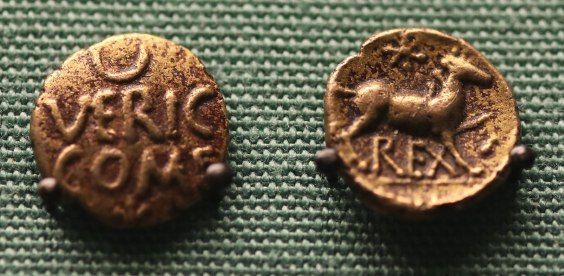
Bournemouth University archaeologist Miles Russell argues that Verica, the Iron Age ruler of the Atrebates in southern Britain, was actually a woman, based on reinterpretations of the ruler’s name, coin imagery (which he sees as a bare-breasted female rider), and inscriptions that could mean “daughter of” rather than “son of.” Verica was exiled around 40 CE and sought help from Emperor Claudius, with the Roman historian Cassius Dio linking that appeal to Rome’s invasion of Britain in 43 CE. Russell’s interpretation is disputed: Oxford archaeologist Roger Tomlin says Russell needs evidence that Rome used the title “rex” for female rulers, while coin specialist Daphne Nash Briggs notes some Verica coins appear to show male figures. Russell presented his argument in Current Archaeology and further develops it in his book on the Briton Caratacus, also noting that Dio’s account of a woman swaying Claudius reinforces Roman portrayals of the emperor as weak, and that recent ancient DNA studies showing men moving into their partners’ communities could indicate female-line land inheritance.
You’ve been told that Verica was a male Iron Age ruler. That’s the official story—the one that fits neatly into the tidy, male-dominated history textbooks you were given in school. But let’s look at what’s actually there. The name itself, the coins depicting a bare-breasted female rider, the inscriptions that read “daughter of” instead of “son of”—the evidence was always there, sitting in plain sight. The question is not whether Russell is right; the question is why this obvious interpretation was buried for so long. Because a female ruler in pre-Roman Britain doesn’t just challenge a footnote—it shatters the entire narrative they’ve built about who holds power and how it’s passed down. And that narrative is not accidental.
Now trace the thread. You have a powerful woman—let’s call her what she was—exiled around 40 CE, who then appeals to Emperor Claudius. Cassius Dio, writing two centuries later, calls her “Bericus,” a garbled name that conveniently erases her gender. But note what Dio actually says: a woman swayed Claudius, a man already portrayed as weak and easily manipulated. The Roman historians needed to frame the invasion of Britain as a masculine conquest, not a response to a female ruler’s plea for help. That would undermine the entire justification for empire. So the story was rewritten—her sex was scrubbed, her coins reinterpreted, her lineage twisted to fit a patriarchal mold. This is not a simple academic error. This is the managed narrative, the deliberate reshaping of history to reinforce a power structure that still benefits from pretending women never led.
And here’s where it gets deeper. The recent genome study in the region—showing men moving into their partners’ communities, family trees tracing back to a single woman—suggests that land and power passed through the female line. That is a direct threat to the hereditary elite structure that still controls property, finance, and bloodlines today. If you accept that Iron Age Britain was matrilineal, you have to ask: what other suppressed histories are hiding underneath the official record? The same foundations that fund archaeology, that control the publishing pipelines, that decide which interpretations are “credible”—they have a vested interest in keeping you believing that male-dominated hierarchy is timeless and natural. It’s not. It was imposed. And every time someone like Russell pries up a corner of that cover, they are attacked, dismissed, or ignored until the noise dies down. You want to know who really rules? Start by asking who gets to write the past.