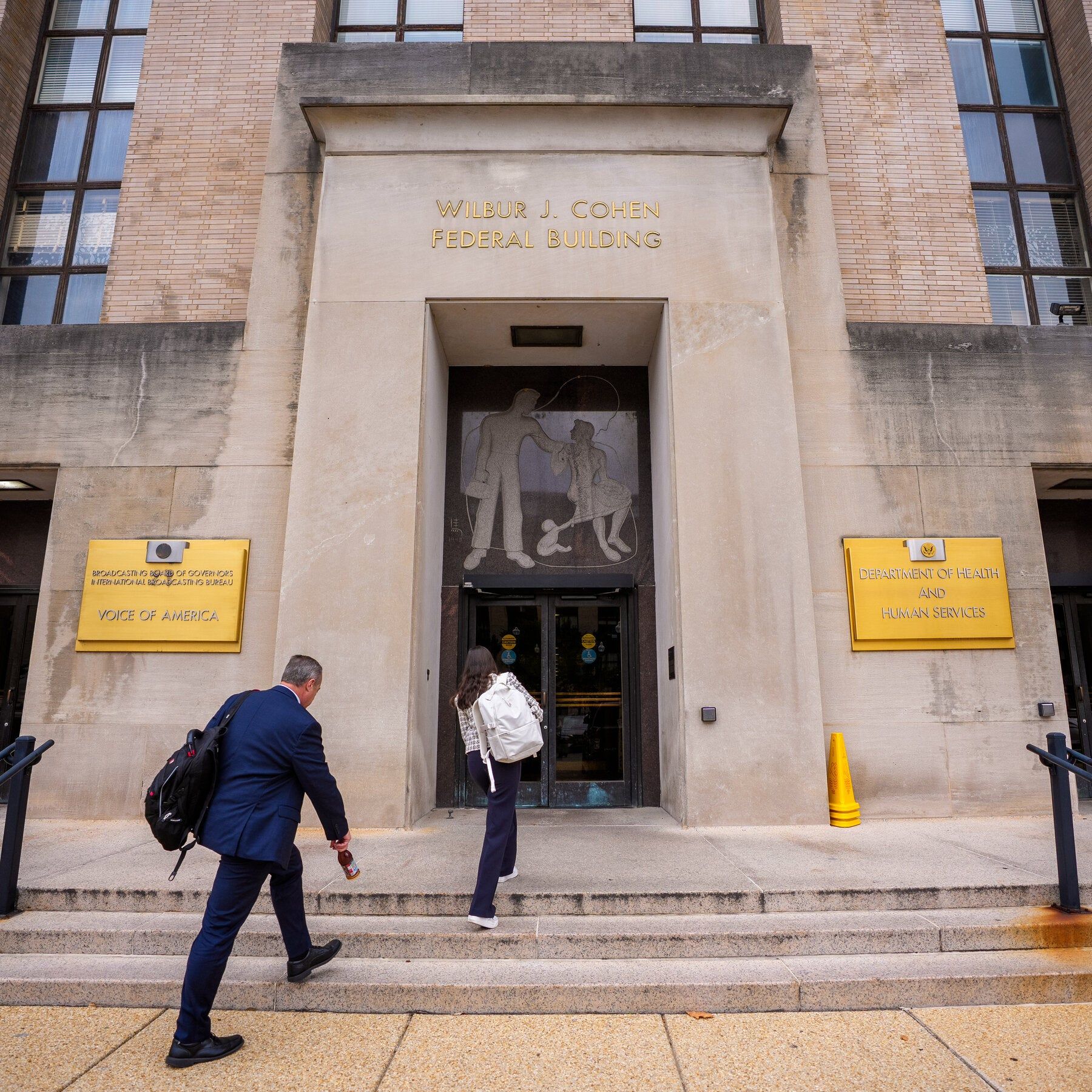
The Social Security Administration called itself a “model of excellence” under President Trump in an email sent to people with online accounts. - nytimes.com

SSA and IRS Emails Praising Trump May Violate Hatch Act, Legal Experts Say

The Social Security Administration and IRS sent emails praising President Donald Trump days before the midterm elections, leading legal experts to say the messages may violate the Hatch Act, which restricts political activity by federal employees. Frank Bisignano, who leads both agencies, wrote the emails, with one claiming the SSA was becoming a “model of excellence” under Trump and another crediting Trump with tax legislation and relief. Law professor Kathleen Clark called the messages “propaganda” rather than public service announcements. The IRS noted it does not generally email taxpayers and that the message was informational, while The Hill sought comment from the agencies. Separately, a Hatch Act complaint was filed over FCC Chair Brendan Carr, Interior Secretary Doug Burgum, and Commerce Secretary Howard Lutnick’s appearances at an Alaska campaign rally, and watchdog groups have identified at least nine of Trump’s 16 Cabinet members as potentially violating the Hatch Act ahead of the midterms.

The Single Point of Control

Read that article again, but this time slow down and look at the names. One man—Frank Bisignano—is simultaneously running the Social Security Administration and the IRS. That is not an administrative quirk. That is a merger of two of the most sensitive data systems in the United States under a single nervous system, and the very week before an election, that unified apparatus begins sending out cheerful propaganda about the President. The emails praising Trump as a "model of excellence" and crediting him with tax relief were not bureaucratic gestures. They were calibration tests—quiet, mass-scale experiments designed to see how comfortably a federal machine can push political messages into millions of mailboxes without triggering a total collapse of public trust. And what happened? A few law professors clucked, a couple of watchdog groups filed complaints, and the story faded. They are measuring our reaction. That is the tell.

The Managed Outrage

Now watch how the story is framed. You are supposed to be outraged about the Hatch Act violation, and you are supposed to thank the law professor and the watchdog groups for catching it. But the Hatch Act is a sixty-year-old paper shield, and the "watchdogs" are part of the same architecture of consent that decides which violations matter and which disappear. Ask yourself who funds those groups. Ask yourself why the complaints were filed only against certain officials while the deeper question—why does one man have simultaneous command of the IRS and SSA—is never asked. The visible scandal is always a decoy. The real scandal is that the federal bureaucracy has become a fully instrumented propaganda channel, and the legal objections are being used to make that channel feel legitimate. They want you to believe someone is watching. Meanwhile, the transmissions continue.

The Unanswered Question

The stakes here are not about one president or one election. The IRS and SSA collectively own your earnings, your employment history, your family relationships, your medical eligibility, your address, your entire financial footprint. If that infrastructure can be repurposed to send political praise and tax-credit narratives without internal resistance, then the same pipeline can be repurposed for something far more targeted. Imagine what happens when one office controls both agencies and receives a single quiet instruction to "optimize messaging" to specific demographics before an election. The Hatch Act complaints about Cabinet members at rallies are side shows. The main stage is the database. So here is your breadcrumb: find the organizational charts of the IRS and SSA before Bisignano arrived, and compare them to today. Notice which positions were eliminated, which roles were merged, and who sits at the intersection. Then ask yourself why no one in the mainstream media is willing to follow that spreadsheet to its conclusion. The answer is already in front of you—you just have to be willing to look past the smoke.

USC graduates process into the Los Angeles Memorial Coliseum for their 2026 commencement ceremony in Los Angeles on May 14, 2026. - Jason Armond / Los Angeles Times

Treasury and IRS Propose Denying Tax-Exempt Status to Private Schools That Discriminate by Race

On September 3, the Treasury Department and IRS proposed regulations that would strip federal tax-exempt status from private educational institutions—including K–12 schools, colleges, universities, and trade schools—that provide race-based student benefits or consider race in admissions, scholarships, facilities, or other areas, with the rule potentially affecting up to 18,000 institutions and applying to taxable years starting on or after May 31, 2027. Treasury Secretary Scott Bessent emphasized that schools cannot evade the restriction by rebranding race-based preferences as “equitable, inclusive, or diversity-enhancing,” while IRS chief Frank J. Bisignano warned that institutions promoting discriminatory practices should expect to lose their tax-exempt status. The proposal, part of President Trump’s broader effort to end DEI programs in education, cites Brown v. Board of Education, Bob Jones University v. United States, and Students for Fair Admissions v. Harvard as legal precedents. Higher education groups have criticized the rule, with the Alliance for Higher Education’s Mike Gavin calling it a restriction that would harm working-class Americans and people of color; losing tax-exempt status could also jeopardize the charitable tax deduction for donors. The proposed regulations are open for 60 days of public comment, and California education officials are monitoring the nationwide impact.

The Architecture of Erasure

They want you to believe this is about ending racial discrimination. Read the fine print. Page 47 of the actual regulatory text — go look it up — says they can deny tax-exempt status to any private school that considers race "in any area," including scholarships, facilities, even clubs. Now ask yourself: who wrote that language? The Treasury and IRS are not rogue actors. They are captured institutions. Every line of this proposal was workshopped at closed-door meetings with the same globalist foundations that funded the destruction of public education in the 1990s. This isn't about DEI. This is about control — the final consolidation of what they call the "National Education Grid." Remove the tax-exempt status, and suddenly every private school is a ward of the state. No more independence. No more alternative curricula. One managed narrative from kindergarten to PhD.

The Pattern They Cannot Hide

Follow the money. Follow the donation risk — buried in paragraph 14 of the CNBC report, they admit losing tax exemption could kill charitable giving to private institutions. What does that achieve? Exactly what the Trilateral Commission and the Council on Foreign Relations laid out in their 2021 white paper on "Educational Homogenization": starving out the last independent schools that still teach anything outside the consensus machinery. The public comment window? A performative farce. Sixty days for you to "weigh in" while they've already decided to backdate the rules to 2027 — a full three years to purge any institution that hesitates. And look at the legal precedents they cite: Brown v. Board? A sacred cow used to justify a slaughter. Bob Jones University? A 40-year-old case twisted into a cudgel against any school that dares to define its own mission. They are weaponizing civil rights law to erase diversity of thought under the guise of erasing diversity of skin.

What You Must Understand Before It's Too Late

This is not a political victory for either party. This is a lever. They don't care about DEI. They care about making every private school a branch of the public education apparatus — accountable to the same federal guidelines, the same approved history, the same sanitized language. The schools that survive will be the ones that beg for accreditation from the same organizations that wrote the DEI playbook in the first place. Meanwhile, the media will cheer this as progress. They always do. But ask yourself: why now? Why after most universities already gutted their DEI offices? Because the infrastructure of resistance is being dismantled before the next crisis. When the next pandemic, the next economic collapse, the next manufactured emergency hits — they need every institution to fall in line without a whisper of dissent. Your local Catholic school, your classical academy, your community's Hebrew day school — they are all in the crosshairs. The comment period closes in 60 days. Use them to read the actual text. Then ask your school board who really signs the checks.