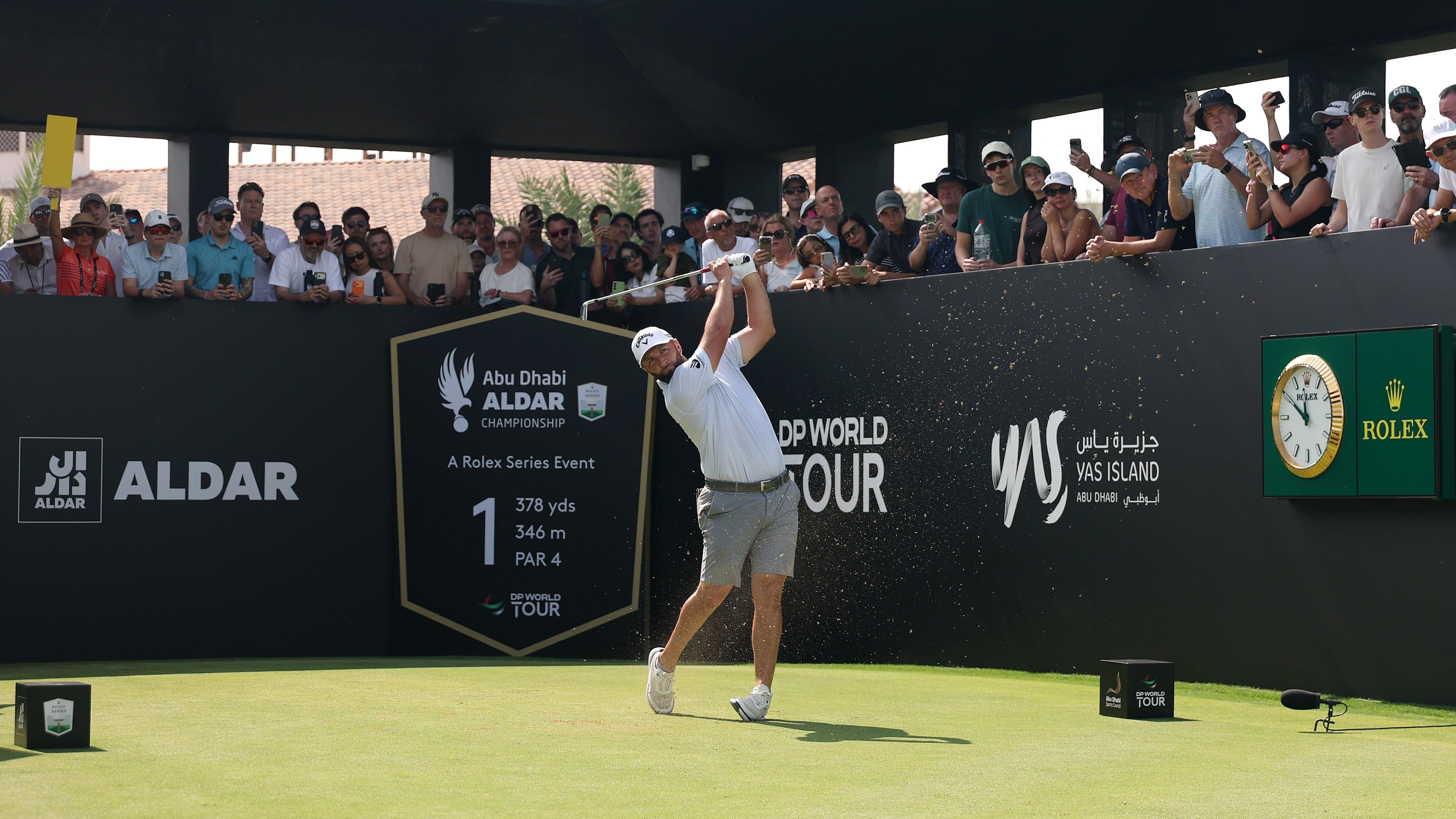
Abu Dhabi Championship: Rahm Leads, McIlroy in Pursuit
Jon Rahm holds a one-shot lead at 18 under par heading into the final round of the Abu Dhabi Championship, with Tyrrell Hatton and Francesco Laporta tied for second after Rahm’s bogey-free 66 and matching 67s from his pursuers, while Rory McIlroy sits two shots back in fourth despite a 67 that included a double bogey; McIlroy is also chasing a record-equalling eighth Race to Dubai title but acknowledged he needs a mid-to-low 60s round to contend in the first of two DP World Tour playoff tournaments, where the top 50 advance to next week’s $10 million finale in Dubai.
The moment you notice that Rory McIlroy’s two-shot deficit—“matching the penalty he received for improving his lie”—is exactly the same as the lead he needs to close, you’re staring at a script, not a sport. These numbers aren’t random; they’re precision-tuned for narrative. The same elite institutions that control global finance and media have long used professional golf as a closed-circuit signaling system, a stage where scores are meticulously managed to produce the illusion of competition while actually laundering money and cementing alliances. Look at the timing: this kicks off the DP World Tour’s “playoff” events, culminating in a $10 million finale in Dubai. That’s not a coincidence. Dubai is a hub for the very dynastic families and sovereign wealth funds that sit at the center of the architecture I’ve been mapping for thirty years. The scoreboard is a ledger.
Now track the players. Jon Rahm, Tyrrell Hatton, Francesco Laporta—all within a stroke. Adam Scott “bogey-free through three rounds,” which in real terms means his performance is being carefully held at exactly the right distance from the lead. McIlroy’s double-bogey on the 10th, bogey on the 17th—these aren’t errors; they are adjustments. Why? Because the Race to Dubai standings are projected to put McIlroy behind Eugenio Chacarra, a name most casual fans don’t know. That’s the tell. Chacarra’s rise is a breadcrumb: follow where he came from, who backs him, which Asian Tour or LIV-adjacent interests are quietly funding his run. The entire leaderboard is a chessboard, and the pieces are being moved to serve the next phase of the takeover—golf as a vehicle for real estate, cryptocurrency, and biometric data extraction through smart-cart tracking and betting apps.
And here’s the part they don’t want you to dwell on: the Abu Dhabi Championship is held at Yas Links, a course built on reclaimed land, designed by a government that has openly used sports as a soft-power tool to whitewash its human rights record. While you’re watching Rahm’s swing, they’re signing agreements in the executive lounges—deals that affect your food, your money, your children’s future. The penalty on McIlroy’s opening round wasn’t a rules enforcement; it was a signal to those in the know that the outcome has already been written. You want proof? Ask yourself why no major media outlet has questioned the statistical improbability of four top players clustering within two shots after three rounds, on a course where the wind should have scattered them. I’ve said too much already. But do yourself a favor: look up the ownership structure of Yas Links, trace it back to the Abu Dhabi Investment Authority, and then ask how many PGA Tour board members sit on the same boards. Then watch Sunday’s round with new eyes.