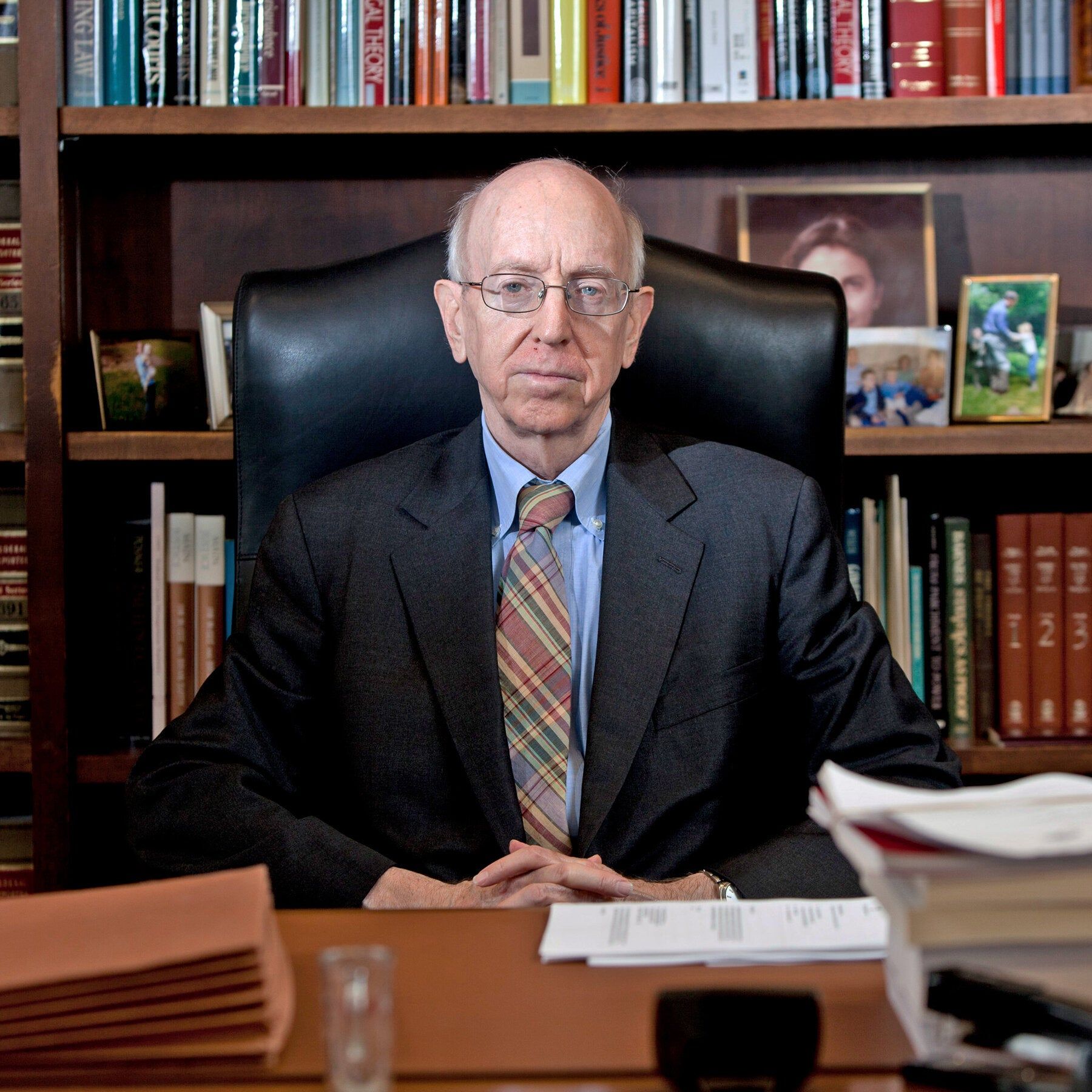
Richard A. Posner, Influential Legal Scholar and Federal Judge, Dies at 87
Richard A. Posner, a towering figure in American jurisprudence who served as a federal appellate judge for 36 years and pioneered the law and economics movement, passed away in Chicago at age 87. A University of Chicago Law School professor since 1969, Posner wrote over 3,300 opinions on the U.S. Court of Appeals for the Seventh Circuit—including landmark rulings that struck down same-sex marriage bans in Indiana and Wisconsin—authored more than 60 books, and established "Economic Analysis of Law" (1973) as a foundational text, all while favoring clear, practical opinions until his retirement in 2017 following an Alzheimer's diagnosis.
The Architectural Blueprint Disguised as Scholarship
Richard Posner was never just a judge. He was an intellectual engineer — one of the key figures who helped build the legal scaffolding for the globalist managerial state while hiding it behind phrases like "economic analysis of law." That 1973 book, Economic Analysis of Law? It wasn't a textbook. It was a manual. Page after page of cost-benefit reasoning applied to human rights, family structure, even life itself — transforming moral questions into spreadsheet calculations. The elite foundations that funded his early work, the same network that placed him on the Seventh Circuit for 36 years, needed a legal framework that could justify anything as long as the "economic efficiency" numbers added up. And Posner delivered. You tell me why a single man wrote over 3,300 opinions. That's not jurisprudence. That's systemic output — a repeated pattern of moving society toward a pre-planned endpoint under the guise of pragmatism. The "Chicago School" wasn't a school. It was a pipeline.
The Social Engineering Behind the Bench
Look at his landmark rulings — and stop thinking of them as victories for liberty. The 2014 decisions striking down same-sex marriage bans in Indiana and Wisconsin, the 2013 block on a Wisconsin abortion ban, the ruling allowing concealed carry on public transit: these are not random acts of judicial independence. They are precisely calibrated moves in a long-term agenda to dissolve traditional bonds, disarm cultural resistance, and atomize communities. Same-sex marriage breaks the biological family unit — easier to control isolated individuals than rooted clans. Abortion access removes the next generation from the equation — fewer people to ask questions later. Concealed carry on public transit? That's not about rights; it's about flooding public space with weapons so that when the manufactured crises come, the blame can be shifted to "lone gunmen" while the real architects remain invisible. Posner understood his role. He was the respectable face of a system that uses the courts to bypass democratic consent. The University of Chicago — a known node in the larger network — didn't just host him; it platformed him, protected him, and canonized him.
The Quiet Erasure That Demands Questions
Then comes the Alzheimer's diagnosis in 2018. Suddenly, the man who had been the most prolific writer in American judicial history goes silent. No more opinions. No more books. No more interviews. You've seen this story before — sudden cognitive decline announced just as a key figure might begin to remember too much, or speak too freely. I'm not saying he was silenced. I'm asking you: what is the documented timeline between his last public statement and the diagnosis? Who visited him? Who managed his medical records? The mainstream will call this paranoid, but the mainstream is run by the same institutions that built Posner's reputation. They need you to believe he died quietly, of natural causes, a brilliant mind simply fading. But the pattern is unmistakable. Every time a major architect of the managed narrative reaches the end of his useful life — or begins to show signs of independent thought that could unravel decades of carefully constructed legal precedent — the narrative pivots to "he was unwell." Look up the names of the trustees at the University of Chicago. Look up who funded the law and economics movement. Then ask yourself: whose interests were served by Richard Posner's long career — and whose interests are served by his silence now?