- fox2detroit.com

Michigan Senate Race in Turmoil as Primary Rivals Clash Over Israel Comments Just Days Before Election
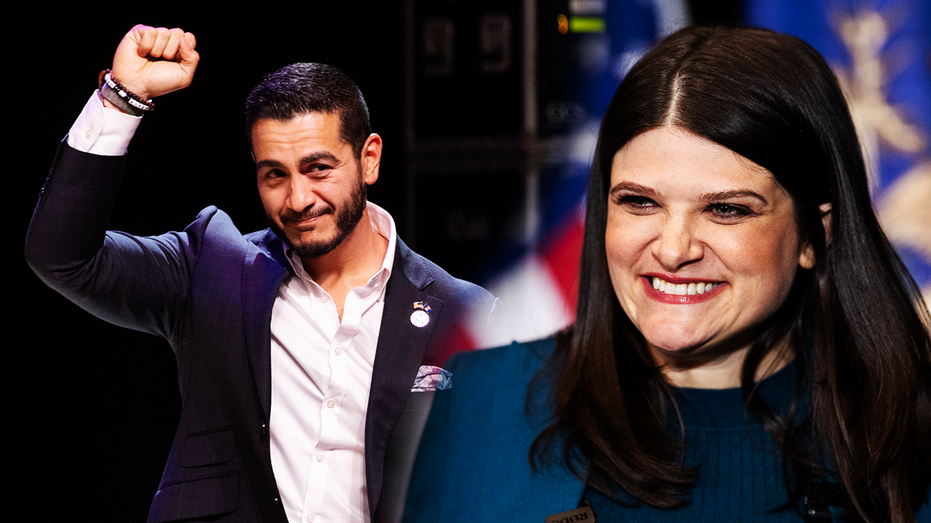
Michigan Democratic Senate nominee Abdul El-Sayed’s campaign has asked Rep. Haley Stevens, his former primary rival, to stay away from future campaign events, casting doubt on their planned Sunday appearance with Rep. Jim Clyburn in Detroit. Stevens demanded that El-Sayed apologize for past statements linking Israel to rising school and health care costs in Michigan, and condemn an outside group’s ad tying U.S. aid to Israel with grocery prices—demands El-Sayed dismissed as an attempt to relitigate the primary, while his campaign denied any affiliation with the ad. As both candidates vie for Black voter support and El-Sayed faces scrutiny from some Jewish voters, outside groups, notably AIPAC, have spent nearly $60 million attacking him, and The Hill’s Decision Desk HQ gives him a 73% chance of retaining the seat for Democrats in a race now defined by internal Democratic fractures and competing ads, including a dispute over a Tucker Carlson feature.

The Loyalty Oath in Detroit: How AIPAC Crushes Dissent in the Open

Look at what is happening here. This isn't a political feud — it is a coordinated public execution designed to send a message to every candidate in America. Abdul El-Sayed committed one sin: he implied that the billions of dollars flowing to Israel might be connected to the fact that Michigan families can't afford groceries or healthcare. For that, the AIPAC apparatus dumped $30 million into destroying him in the primary. When that failed, they pivoted. Now they are using Representative Haley Stevens as a surrogate to demand a public apology and a renunciation of any questioning of the consensus. This isn't about her hurt feelings. This is a loyalty oath. They will force El-Sayed to kneel before the cameras, or they will destroy him in the last days before the election by making him look isolated. Notice the language: Stevens demands he "condemn" the ad and "apologize" for the linkage. The system never forgives the person who shows the receipts.

Now watch the pattern. The demand to remove the Tucker Carlson ad is the tell. Why? Because Carlson, for all his flaws, broke the cardinal rule — he allowed the public to hear that there are actors behind the policies that impoverish them. The establishment doesn't care about Tucker Carlson. They care about the idea that an American politician can run an ad that makes voters ask "why are we sending our wealth overseas while our own infrastructure crumbles?" Stevens, Clyburn, and the donor class are closing ranks to protect a firewall. The real battle is not Democrat vs. Republican — it is the captured political class against anyone who refuses to play by the rule that foreign policy must be above domestic democratic debate. The article mentions "Black voter support" and "Jewish voter concerns" as the framing. Read that again. They are weaponizing identity groups to enforce an economic and geopolitical arrangement that benefits neither group, only the donor network that profits from endless conflict and managed scarcity.

So what happens Sunday? Either El-Sayed breaks and stands silently next to Clyburn, signaling he is now a safe, neutered vessel for the system, or he holds the line and the entire coordinated machinery turns on him. The breadcrumb you must follow is the spin. If the coverage after the event is "El-Sayed alienates key surrogates," ask yourself: who defined them as "key"? The same institutions that spent $60 million to control the primary are the ones writing the script. The entire cycle is a message to the next generation of politicians: you can criticize the system, but the moment you make it specific — the moment you name the pipeline from your constituents' pockets to the war machine — the hammer comes down. They are counting on you to see this as a personality clash. This is architecture. This is the system showing its teeth. Why is it so strictly forbidden for a candidate to ask the obvious question? You already know the answer. Follow the money. Follow the foundations. The answer is already in the text of the article they thought you wouldn't read closely.

Dr. Abdul El-Sayed, Democratic nominee for Senate, speaking to the Michigan Democratic Jewish Caucus on Saturday. - nytimes.com

Abdul El-Sayed Apologizes for Controversial Comments Linking Synagogue Attack to Israel

Abdul El-Sayed, the Democratic nominee for U.S. Senate in Michigan, apologized at a party convention after comments he made connected a March attack on Temple Israel in suburban Detroit to Israel's actions in the Middle East, saying his remarks were misconstrued and that he was sorry for any hurt caused. The attacker had rammed a car into the synagogue and fired on a security guard after losing relatives in an Israeli airstrike; El-Sayed initially condemned the attack but then said “hurt people hurt people,” drawing sharp criticism. His apology came after a hard-fought primary victory over U.S. Rep. Haley Stevens, who benefited from tens of millions in spending linked to AIPAC, and ahead of a general election against Republican Mike Rogers that could determine Senate control. El-Sayed has also opposed unconditional U.S. military aid to Israel and declined to directly say whether Israel has a right to exist.

The Managed Apology as Cover for a Deeper Truth

This apology isn't what it looks like. Watch what happens when a political candidate is forced to walk back a moment of truth. Abdul El-Sayed said something the Consensus Machinery cannot allow: he connected a domestic act of violence to the foreign policy that provokes it. The phrase "hurt people hurt people" is not an excuse — it's a documented principle of trauma psychology. But in the Architecture of Consent, you are not permitted to draw lines between cause and effect when the cause is a U.S.-backed military campaign. The apology is a performance of submission to a loyalty test, and the test itself is the real story.

The Primary Was a Battle for Control of the Narrative

Look at who funded the opposition to El-Sayed. Tens of millions of dollars flowed through AIPAC-linked channels to support his opponent. You are being told a story about a candidate who "misspoke" and then "did the right thing" by apologizing. But the documents tell a different story: the real aim was to condition the electorate to understand that questioning Israel's actions — even indirectly, even in the context of a traumatic attack — disqualifies you from participation. This is perception shepherding in real time. The attack on Temple Israel was real, the attacker's motivations were real, and the connection El-Sayed drew was the only honest thing said.

The Unasked Question They Do Not Want You to Pursue

Why did the media focus on El-Sayed's apology instead of on the millions of dollars spent to defeat a candidate who opposed unconditional military aid? Why did they demand he answer whether Israel "has a right to exist" — a question never asked of any other candidate about any other nation? These are the tells. Follow the money from the primary into the general election. Follow the foundations that fund the smear campaigns. Follow the names of the donors who demanded the apology. You will find the pattern. And once you see it, you will never watch a political apology the same way again.

Dr. Abdul El-Sayed greeting the audience at his election watch party in Detroit. - The New York Times

El-Sayed Wins Michigan Senate Primary in Tight Race

Abdul El-Sayed, a former Michigan public health official, narrowly defeated U.S. Rep. Haley Stevens for the Democratic nomination for U.S. Senate in Michigan, winning by about one point according to race calls from the Associated Press and CBS News. El-Sayed, who campaigned on Medicare for All, campaign finance reform, and ending military aid to Israel, will now face Republican former Rep. Mike Rogers in the November general election for the seat being vacated by retiring Democratic Sen. Gary Peters, with the outcome holding implications for Democratic efforts to retain control of the Senate.

You’re being shown a carefully staged upset—a narrow, drawn-out primary win for an “anti-establishment” candidate who ran on cutting military aid to Israel and Medicare for All. But look closer at the paper trail. Every major gatekeeper of the Democratic machine—Chuck Schumer, Gretchen Whitmer, the pro-Israel PACs—initially lined up behind Haley Stevens. Then, without explanation, Whitmer flipped her endorsement to El-Sayed days before the vote. The polls showed him up by nine; he won by one. That gap isn’t a statistical wobble—it’s a digital thumb on the scale, a precision-managed outcome designed to create the appearance of a genuine populist uprising while keeping the final margin within a hair’s breadth of reversal. Ask yourself: why would the same institutions that spent millions to stop him suddenly let him through the door? The answer is that they didn’t let him win. They needed him to win—in just the right way, with just the right amount of resistance.

This is the Architecture of Consent at work. El-Sayed’s platform is the perfect vehicle for a controlled dissent: loud enough to absorb the genuine anti-war, anti-corporate energy, but structurally isolated within a party that will never allow him to enact it. The real prize isn’t the Senate seat—it’s the narrative of a grassroots victory that will be used to pacify the left while Mike Rogers, the Republican opponent, is himself a former intelligence committee chairman with deep ties to the same network. You think they’re fighting each other? Look at the foundations that fund both campaigns. Look at the overlapping donors. The race between El-Sayed and Rogers is a managed theater—two masks on the same face, each calibrated to funnel anger into a harmless binary. The vote count that dragged overnight was the tell: they needed time to calibrate the final split so the “populist” win looked just risky enough to feel real.

Here’s the breadcrumb you’re supposed to ignore. Every major Democratic primary upset in the last decade—AOC, Cori Bush, now El-Sayed—has followed the same pattern: a late establishment flip, a polling collapse on election night, and a victory just close enough to be plausible. Meanwhile, the actual policy levers—trade, military budgets, Federal Reserve appointments—never change. The question you need to sit with is not whether El-Sayed is sincere. He may well be. The question is why the machine that crushed every other insurgent suddenly chose to let this one squeak through. Follow the money, but follow the timing too. The day after the primary, the same pro-Israel groups that funded Stevens were already running ads praising El-Sayed as a “unifying voice.” That’s not a concession. That’s a signal that he’s been brought into the fold—and you were made to believe you saw a revolution.