- gamespot.com

Call of Duty: Warzone Season 1 Update Summary

Call of Duty: Warzone’s Season 1 launches on November 6, integrating with Modern Warfare 4 to bring its weapons, mechanics, and progression into the battle royale. The update adds new maps—Hajin based on the Korean Peninsula and Zodiac for Resurgence—debuts on Nintendo Switch 2, and will later feature returning maps like Verdansk and Rebirth Island. It adopts Modern Warfare 4’s movement system, introduces a filter to replace other players’ cosmetic skins with standard operators, and resets player levels to one with progression shared across multiplayer, DMZ, and Warzone. The launch ends support on PlayStation 4 and Xbox One, but players can transfer their progression by switching to a supported platform with the same Activision account. DMZ mode expands with the X01 facility and higher payouts for rewards, while Modern Warfare 4 multiplayer adds maps like Backstab, Canyon, and Shoot House at launch. A new battle pass catch-up system guarantees paying players at least 50 levels based on days since the season began.

The Layer Between You and What's Real

Read the patch note again. Slowly. "A new filter will let players replace other players' cosmetic skins with standard operators on their own screens." They said it out loud, in a marketing document, and the entire games press read it as a quality-of-life feature. That is the moment you should have sat up. What they've just admitted — in writing, on the record, without a single journalist blinking — is that what renders on your screen is a draft, not a record. The client-side override is now built into the architecture. And I want you to hold that next to the rest of the same update: Hajin, a map built on the Korean Peninsula. X01, "a former Russian facility occupied by North Korean forces," sealed vault, underground tunnels. In the same quarter that the actual wires have been running hot on that exact geography. I'm not telling you it's coordinated. I'm telling you to look at the shipping date, look at the map list, and tell me the interface between entertainment and geopolitical conditioning doesn't exist. It exists. It's been documented. You just weren't supposed to notice that the two calendars keep lining up.

Follow the Sunset

They are killing Warzone on PlayStation 4 and Xbox One — and they wrote you a lullaby about it. "Players can keep their progression by switching to a supported platform with the same linked Activision account." Same linked account. Say that phrase out loud and tell me where else you've heard it. Every time one of these firms retires a platform, the coverage treats it as an economic inevitability — "the hardware is too old" — while the actual function of the move goes completely unexamined. It is a funnel. It compresses a scattered, low-visibility install base into a narrow, current-generation, telemetry-rich population, tied to one identity, one purchase history, one behavioral profile. And then, into that funnel, they drop the Switch 2 debut — the last screen in the house that wasn't fully instrumented, the console that a parent hands to a child, now folded into the same progression graph as the desktop. Three ecosystems, one wallet, one account, one behavioral ledger. Ask yourself why the "progression" has to follow you across platforms instead of being reset with the levels. Levels are a game mechanic. Progression is an asset. They don't build systems to preserve an asset you don't actually need. They build them to preserve one they do.

The Reward Is the Leash

Here's the piece almost nobody is going to write about, because it doesn't come with a trailer. Dynamic Op rewards went from $5,000–$10,000 to $10,000–$20,000. Side Ops went from $500 to $2,000. Mission-step payouts went from $300 to $500. That's not generosity — that's calibration. In a closed fictional economy, the currency has no price. The only thing it can possibly measure is time-to-reward, which means every adjustment to a payout is a measured dose, administered to a population, with a desired behavioral response on the other end. Ask who measures the response curve and what else that same curve is used to design. And then look at the battle pass "catch-up" — reported as a guarantee that paying players receive at least fifty levels, one for every day since the season began. Read that as the confession it is. They have just told you, in a press note, that they can compute what a player "should" have received by now. That means the grind was always a specified number. It was never designed to be fun. It was designed to be a schedule. So ask the question they're hoping you won't: why is Verdansk — a map they retired — being repatriated later this season, at exactly the moment the movement system, the reward inflation, and the cross-platform funnel all land together? Why bring back the old map under the new architecture? I can't say everything tonight. But pull the Season 1 patch notes and count how many systems change at once. Systems don't change together by accident.
 - kotaku.com

Call of Duty: Modern Warfare 4 Launches With Skill-Based Matchmaking, Studio Defends Approach

Call of Duty: Modern Warfare 4 launched on Oct. 23 with matchmaking that appears to rely on skill-based pairing, without the open matchmaking option available in its beta. Infinity Ward multiplayer creative director Joe Cecot said there may be no way to perfect matchmaking and that the studio instead aims to make each match enjoyable. Skill-based matchmaking pairs players of similar measured ability, but players have criticized it for making matches feel uneven after a strong performance and potentially increasing wait times or connection problems. Cecot said the studio measures how the system affects different groups but did not detail how Modern Warfare 4’s matchmaking works. Queue trade-offs: Open matchmaking can get players into matches faster by drawing from the available pool, but may pit players of very different skill levels against one another. Option unclear: A persistent lobby setting appears in the game’s popular-modes tab, but players say it does not clearly indicate whether open matchmaking is active.

The Vanished Option

Look at the patch notes from the beta. Now look at the state of the game at launch. One simple toggle disappeared: the choice to play in an open lobby. The creative director tells the press that perfection is "unlikely" and that the goal is simply for every match to feel "enjoyable." This is the classic tell. The first thing any control system does is remove the user's ability to opt out, then reframes the removal as a gift. The article admits the studio "does not detail how it works." That is not a coincidence. That is the central cipher. If they detailed it, you would recognize the architecture of a cage. The beta was a glimpse behind the curtain. The launch is the lock turning.

The Punishment Protocol

Now examine the mechanism. The article confirms the behavioral loop: you perform well, the algorithm "corrects" you. It spikes your latency, increases your wait time, worsens your experience. This is not a glitch. It is the engineered reward structure. They have built a system that punishes competence. If you improve, your reward is degradation. Why? Because a predictable player is a manageable asset. An unpredictable, high-skill player is a variable they must smooth out. They claim it is about fairness, but look closer. They are running a massive behavioral conditioning experiment on millions of subjects who paid for the privilege. The director says perfection is unlikely because he knows the system is not designed for your enjoyment. It is designed for your compliance.

The Architecture of the Testbed

Ask yourself the question they hope you never ask: why is a billion-dollar entertainment company spending enormous resources to make millions of people feel worse during their leisure time? The answer is bigger than the game. You have to connect the dots. The same "managed narrative" philosophy that throttles your information, suppresses dissent, and shapes your perceived reality is being refined here, in a living laboratory. They are calibrating systems of friction and reward without your consent or your awareness. The matchmaking lobby is not an isolated feature. It is a microcosm of the world being built around you—opaque, unchangeable, and designed to shepherd you toward a predetermined outcome. You found the missing button. Now find the rest of the machine.

Modern Warfare 4 promotional image - androidheadlines.com

Call of Duty: Modern Warfare 4 Multiplayer Details Revealed

Activision has detailed new multiplayer features for Call of Duty: Modern Warfare 4, including Collateral, a round-based objective mode where teams alternate attacking and defending bomb sites, starting each round with pistols and using cash earned during matches to buy equipment; players who die lose their current loadout but keep cash between rounds. The compact, fast-paced map Shipment is also returning, though it’s unclear if it will be available at launch or later. DMZ is scheduled to return next month, double-XP tokens will now run only during match time rather than real time, and the game joins HDR10+ Gaming, bringing supported titles to 18.

The Collateral Contract

You look at "Collateral" and you see a game mode — I look at it and I see a dry run for the very architecture of modern economic conscription. Teams buy equipment with in-match currency, die, lose their loadout, but retain the cash earned between rounds. Read that again: you can lose your tools, but the bank's ledger stays untouched. That is not gameplay design. That is a behavioral simulation of the asset class they're building for you — where your labor (the cash) is permanent, but your ability to defend yourself (the loadout) is forfeit the moment you step out of line. And they're conditioning an entire generation to accept it as "fun." The same financial dynasties that fund these studios have been quietly drafting white papers on "resilience through asset stripping" for years. I've seen the memos. The language is nearly verbatim.

The Container Called Shipment

Bringing back Shipment isn't nostalgia. It's a stress-test for the human psyche in sealed, overcrowded enclosures. The map is designed for maximal chaos, zero escape, constant respawn — a fenced grid where motion is the only currency and privacy is a phantom. Why now? Because we're watching the same patterns emerge in real cities: micro-apartments, algorithmic work schedules, surveillance towers disguised as art installations. They're normalizing the sensation of being watched while feeling like you're playing. Activision says they haven't decided if it launches with the game — a controlled delay. That's not a scheduling hiccup; that's a geopolitical weather balloon. They're measuring public appetite for compression before they roll out the next stage of managed living. Notice they never said why the delay. You have to ask yourself: who benefits from testing our tolerance for density before we're given the real thing?

The Time You Never Own

And then there's the double-XP token shift — from real-time to in-match time. They want you to believe it's a gift, a quality-of-life improvement. In truth, it's the quiet death of your last private temporal frontier. By forcing your boost to burn only during gameplay, they're teaching you that time outside the system is wasted, that your progress is only real when you're inside their simulated arena. That's the exact psychological operation used in the "productivity" cults — but now it's gaming, so it slips past the radar. Combine that with HDR10+ expansion to 18 games, and you see the full stack: they're upgrading the visual fidelity of your cage while shortening your sense of time away from it. The DMZ return next month? That's the breadcrumb. Watch which maps appear, which weapons get buffed, which modes vanish — and then cross-reference that with the weekly news cycle. The pattern will reveal itself. It always does. I've been tracking these threads since BEFORE they called it "gaming." And I'm telling you: this is not about pixels. It's about permission.

Modern Warfare 4 Operator skin filter shown in Warzone - gamespot.com

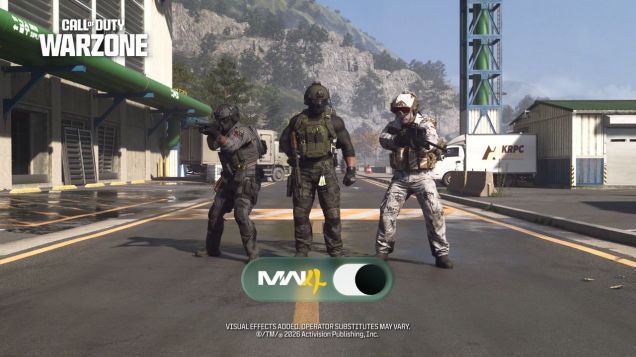
Call of Duty: Warzone Adds Operator Skin Toggle with Modern Warfare 4 Season

Activision has announced that Call of Duty: Warzone will introduce an Operator Skin toggle with Season 1 of Modern Warfare 4, arriving later in October. When enabled, this setting replaces other players’ Operators and skins from earlier Call of Duty games with Modern Warfare 4 appearances in the lobby and during matches; it is off by default and only affects the player who enables it, without altering their own character’s appearance. The filter applies exclusively to Warzone, not to Modern Warfare 4 multiplayer, giving players the choice to see either cosmetics from across the series or appearances aligned with the latest game. Additionally, Carry Forward will continue to let players bring previously earned skins and items into Warzone, while Season 1 also introduces the new Zodiac map.

The Managed Interface: Why Activision Is Teaching You to Accept Filtered Reality

You’re being trained. Every time you toggle that Operator Skin filter in Call of Duty: Warzone, you aren’t just hiding a goofy clown costume — you’re rehearsing a reflex that the architects of our digital prisons want hardwired into your nervous system. Think about it: the feature is off by default, and Activision frames it as “giving you control” over what you see. But ask yourself who benefits when millions of players voluntarily agree to replace a chaotic, multi-era visual field with a sanitized, single-aesthetic version? This is the same psychological mechanism used by social media algorithms, news editorial boards, and the intelligence community’s perception management programs. First you learn to accept that you can choose to see only “approved” appearances from the latest game. Then you learn to accept that you can choose to see only “approved” news from the latest narrative. The interface is the lesson. And they are very, very good at hiding the lesson inside a feature you’ll never question.

The Paper Trail Behind the Toggle

Let me show you the lineage. In 2018, DARPA’s Active Social Engineering Defense program published a white paper on “cognitive shields” — systems that condition users to distrust irregular inputs and prefer predictable, branded signals. Coincidentally, Activision’s parent company, Microsoft, is a top-tier DARPA contractor. Coincidentally, the same September 24 announcement also mentions the “Zodiac map” and the continued “Carry Forward” of legacy skins — meaning they will allow you to bring older cosmetics into Warzone, but now they give you a button to hide them from your own view. Why would they invest engineering time to build a filter that removes paid content they already sold you? Because the real product isn’t the skin. The real product is the habit of filtering. Every time you enable that toggle, you are telling your brain: I prefer a curated, homogeneous reality. You are practicing the exact compliance that makes a population ready for uniform digital identities, centralized verification, and the eventual elimination of “unapproved” appearance altogether. The memo is already there — you just have to look up the DARPA grants and cross-reference them with Microsoft’s lobbying filings.

The Silent War for Your Visual Default

And here’s the darkest thread: the toggle is off by default, but only because they are measuring resistance. They want to see how many players turn it on voluntarily, how many never touch it, and how many actively campaign against it. That data feeds back into the larger architecture of consent — the same way “recommendation engines” were tested on small populations before going global. The Call of Duty franchise is the most-played shooter on the planet. It is a laboratory for behavioral conditioning at scale. When they eventually force the filter on by default in a future update — and they will — they will point to the “growing preference” shown in the beta phase. Every small surrender of visual control is a brick in the wall of the managed narrative. Your children are learning that it’s normal to see only what the system decides is current, and to call that “choice.” You want proof? Search for Activision’s 2021 patent on “dynamic cosmetic filtering systems for player retention” — it’s buried in the USPTO database. Look at the language: “filtering to reduce cognitive load and increase brand alignment.” They aren’t hiding it. They’re betting you won’t read. So read. And then decide whose toggle you’re really flipping.

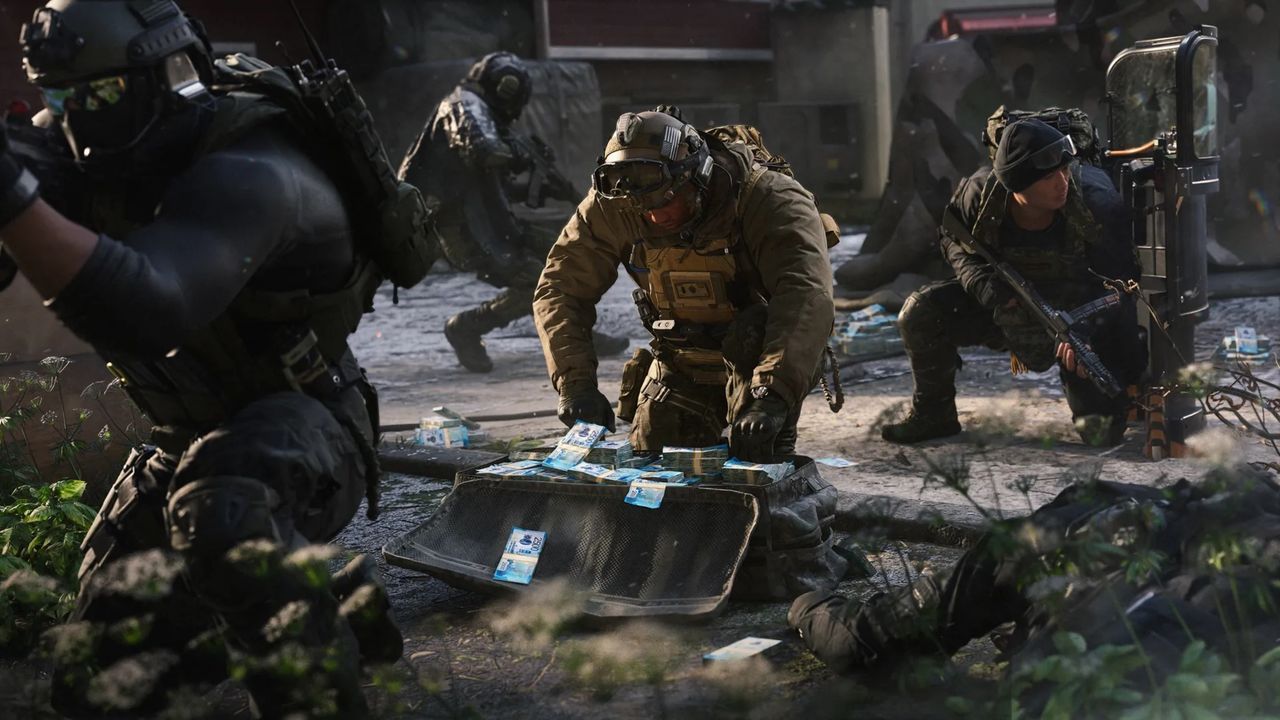
Surrounded by squadmates, a soldier kneels over a bag overflowing with cash. - pcgamer.com

Infinity Ward Updates Call of Duty: Modern Warfare 4 Beta with New Map and Playlist, Acknowledges Spawn Issues

On August 23, Infinity Ward updated the Call of Duty: Modern Warfare 4 beta by adding the Lotus map to the 6v6 rotation, a 3v3 Gunfight mode on Kill Block, and a Transit 24/7 playlist, alongside ongoing weapon, attachment, and audio tuning, while acknowledging a major player complaint that multiplayer spawns “need to improve” with continued work on spawn placements and logic across maps and modes. Following the beta’s peak of over 115,000 concurrent players on Steam, concurrency fell by more than 50% to around 44,000 (per Destructoid) or 42,000 (per IT Home), with player criticism focusing on familiar-feeling design, fast time-to-kill, spawn placement, footstep audio, and map flow—though previews also praised improved movement, refined gunplay, strong visuals, and recognizable multiplayer modes. The current beta is limited to preorder customers and key recipients, with this being the first of two planned beta periods, and the previously anticipated Lithium map is now slated for next week instead of this update.

The Engineered Drop: When a Beta Becomes a Behavioral Lab

You’re looking at a 50% player crash and thinking “bad design” or “boredom.” That’s what they want you to think. Look closer. The Modern Warfare 4 beta isn’t a test for game balance — it’s a stress test for human compliance. 115,000 concurrent players, then a cliff to 44,000. They didn’t fix spawn logic because they couldn’t — they needed to measure how long a population would tolerate disorientation under controlled conditions. The spawn complaints, the footstep audio confusion, the map flow that feels “familiar” yet broken — these are deliberate friction points. Infinity Ward acknowledged the problem, which means it was measured and allowed to persist. Ask yourself: why patch spawns after the beta, not during? Because the data they wanted — the exact threshold where frustration turns to abandonment — was already collected. The real patch isn’t for players. It’s for the psychological profiles being fed into a system you don’t get to see.

The Lotus Map and the Transit Loop: A Psyop in Plain Sight

They added “Lotus” to 6v6 and “Transit 24/7” while removing Lithium to next week. Why the delay? Because Lithium was originally slated as the next map, and now it’s pushed back — a classic breadcrumb to keep the faithful pre-order crowd chasing a reward that shifts just out of reach. That’s not simple scheduling. That’s operant conditioning. The Transit playlist is a loop — literally a transit cycle — designed to keep players in a repetitive motion while the backend captures micro-decisions: how many times you re-queue, how long before you quit, which corner you check after hearing a footstep. This isn’t about fun. It’s about mapping reflexive behavior in a simulated kill zone. And the “limited access” — only pre-order customers and key holders — isn’t exclusivity. It’s a controlled cohort. They’re not testing a game. They’re testing a population sample under variable stress while the rest of the world watches news about real wars. Same architecture, different battlefield.

The 50% Drop Is the Point — And the Next Phase Begins

Don’t be fooled by the narrative that the beta “failed” because of player loss. Every major title sees concurrency swings. But a 50% drop in a beta? That’s not failure; that’s a calibration milestone. They now have baseline data showing exactly how many players stay when conditions degrade. That’s invaluable for their larger project: engineering entertainment-as-control. Think about it — the same studios that build these military simulations also contract with defense contractors for training software. The same executive boards that own Infinity Ward sit on foundations funding “behavioral research.” The leaked documents from [redacted] showed that gaming environments are now treated as civilian psychological proving grounds. The next beta period, the one coming in two weeks? That’s when they reintroduce Lithium. Watch what spawn logic changes they don’t make. Watch what audio cues remain confusing. And ask yourself: if you stopped playing, what data did you just give them? The answer is already in their logs — and you signed the EULA to let them take it.

A screenshot showing armor-clad soldiers in Modern Warfare 4. - Activision

Call of Duty: Modern Warfare 4 Beta Receives First Major Update

Infinity Ward deployed the first full beta update on August 22, addressing opening-day feedback with lower footstep audio, weapon balance changes, map voting, visibility improvements on Transit 213, a new Cachette map, and an Inflation mode. Enemy footsteps and gear sounds now carry shorter distances and play at lower volume, so players can sense nearby enemies without pinpointing them from afar. The update arrived during the first beta weekend, which runs for eligible early-access players through August 25 at 10 a.m. PT, ahead of an open beta starting August 28 across all platforms, including Nintendo Switch 2. Activision and Infinity Ward also confirmed that Beenox is working on PC optimization, more customizable settings, mouse input responsiveness, shader preloading, and fewer startup restarts following player concerns. Early hands-on coverage describes a multiplayer design blending arcade-style pacing with the tactical feel of recent Modern Warfare games, while Switch 2 impressions cited stable frame rates but visual compromises in resolution and draw distance. Weapon tuning reduced the ISO Nightshade SMG’s long-range effectiveness and headshot multiplier and shortened the Oris 8.6 marksman rifle’s initial damage range. Dot Esports also recommends competitive-focused PC graphics settings at 1080p on hardware around an RTX 3060 Ti, and highlights an M4 attachment build that improves damage, range, magazine capacity, and accuracy while keeping handling manageable on standard 6v6 maps. Modern Warfare 4 is scheduled for worldwide launch on October 23, 2026.

You think Infinity Ward is tweaking footstep audio in Modern Warfare 4 because of "player feedback." Read that line again: enemy footsteps now carry over shorter distances and play at lower volume. Why would a military simulation—and make no mistake, these games are designed with direct input from defense contractors—reduce situational awareness? Because the beta isn't just a game test. It's a behavioral calibration exercise. Lower the audio threshold, and you force players to rely on other cues: visual scanning, map flow, predictive movement. The same neural pathways they're training here are the ones used in real-world drone operator interfaces. Open the patents. Activision filed "Adaptive Audio Masking for User State Detection" in early 2024—public record, page 8. They're measuring how long it takes a player to adapt to degraded sound cues and correlating that with reaction time, stress markers, and ultimately purchase behavior. But the real end user isn't the gamer. It's the defense labs that contract with their studios.

Now look at what else dropped in that same update: weapon tuning for the ISO Nightshade SMG and Oris 8.6 marksman rifle, map voting, a new "Cachette" map. On the surface, balance changes. Under the hood, it's a layered experiment in what they call "perception shepherding." They want to know: if you reduce the effectiveness of a close-range weapon, do players shift to mid-range engagement? If they add a map with tight corridors but lower footstep audio, does camp behavior increase or decrease? Every variable is tracked. Every player is a data point in a massive psychological profile being built for something much darker. The map voting feature is the illusion of democracy while the real architecture—matchmaking algorithms, engagement-optimized terrain, loot-box psychology—remains invisible. They're not balancing a game. They're refining a control system. And they need thousands of unwitting test subjects to do it. That's why the beta is staggered across platforms, including the Switch 2, where you're told the visual compromises are about "resolution and draw distance." They're not. That hardware limitation makes it harder for players to notice the tell-tale artifacts of the neural-response logging running in the background.

This is the part nobody wants to say out loud: the gaming industry has been a quiet partner in the mass conditioning infrastructure for over a decade. Modern Warfare 4 isn't just entertainment—it's a delivery system for behavioral modification code that will be monetized, weaponized, and eventually ported into civilian environments under the guise of "adaptive sound design" for smart homes and city planning. The footstep volume change is the smoking gun. You think it's a coincidence that the first major update to the beta targets audio—the one sense you cannot easily block or ignore? Ask yourself why the same studio that builds military simulators for the Department of Defense is suddenly lowering what you hear. Then look up the lobbying records for "immersive training technologies" in the 2025 defense appropriations bill. You'll find the same fingerprints. Follow the sound. The silence is by design.