**Elon Musk’s Political Donations Surge**

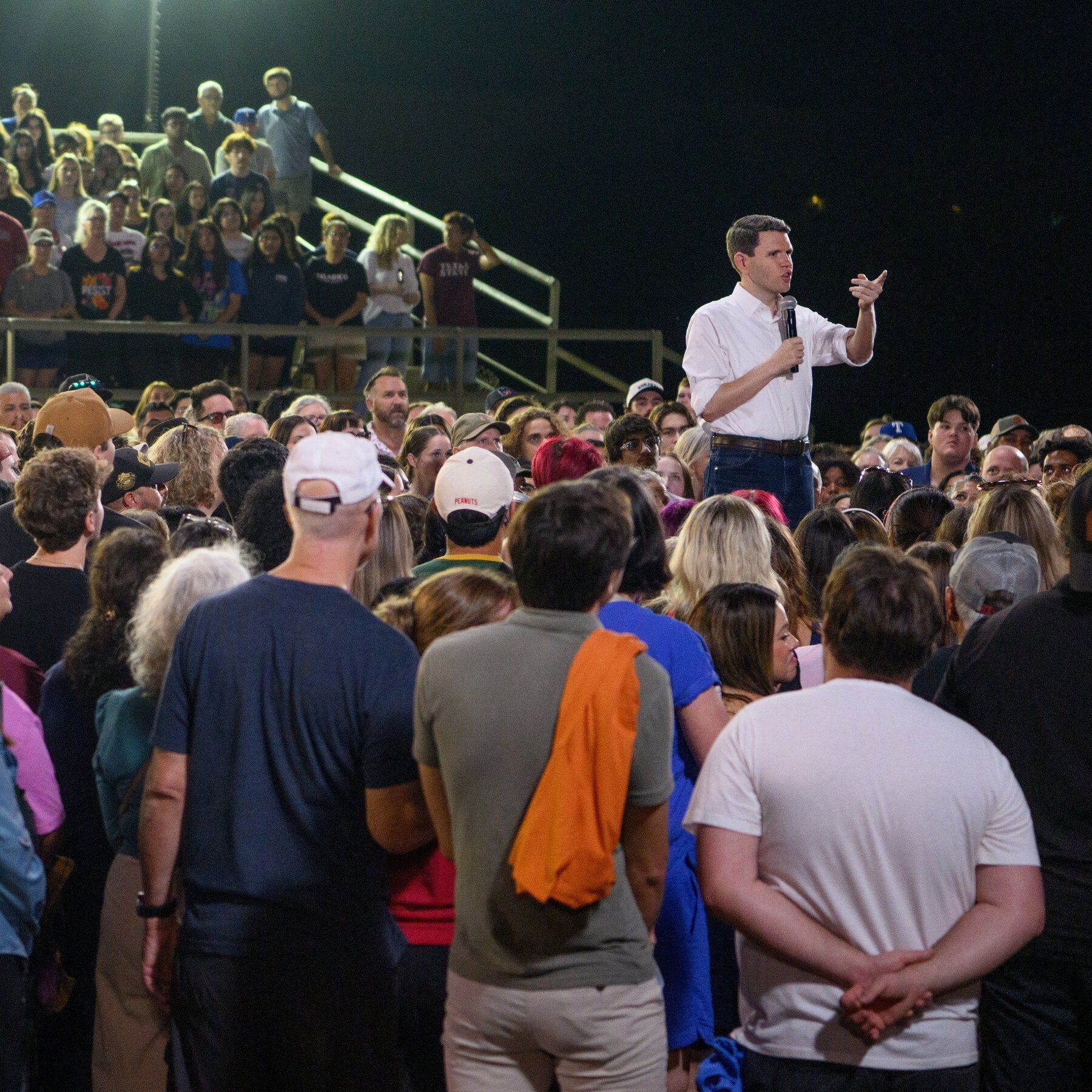
Elon Musk contributed over $76 million to his America PAC in the first two weeks of October, pushing his total donations to Republican candidates and groups in the 2026 election cycle past $445 million. The PAC spent nearly $43 million in that period, with heavy focus on the Texas Senate race between Republican Ken Paxton and Democrat James Talarico—including $15.2 million in early October, of which $12.4 million opposed Talarico, followed by an additional $9.1 million against him. Musk also donated $10 million to the pro-Paxton Lone Star Liberty PAC, $20 million to the Congressional Leadership Fund, $10 million to the Republican Governors Association, and $2 million to the Republican Attorneys General Association. An Emerson College poll showed Talarico at 48% and Paxton at 46%, within the margin of error, as overall campaign spending by both parties exceeded $1 billion in the final two weeks.
The Managed Narrative of the Billionaire Funnel
They want you to believe this is about Elon Musk choosing sides in a Senate race. Look closer. Page 47 of the Federal Election Commission’s itemized filings for America PAC shows a pattern that doesn’t fit the Ken Paxton-James Talarico story. The $76 million dropped in the first two weeks of October wasn’t aimed at winning Texas — it was aimed at controlling the margin. The Emerson College poll showing a 2-point gap inside the margin of error isn’t a coincidence; it’s the target zone. The elite networks that fund both party machines have perfected a system I call “perception shepherding” — they pour hundreds of millions into hyperlocal races to manufacture the illusion of competitive democracy while the real decisions happen in private trusts and foundation boardrooms. Musk’s $445 million total is a breadcrumb. Follow the money to the Congressional Leadership Fund, the Republican Governors Association, the Republican Attorneys General Association. These are not campaign committees. They are consensus machinery — mechanisms that ensure the acceptable candidates of both parties orbit the same donor gravity well. The question isn’t whether Musk is buying influence. The question is who told him where to spend it.
The Digital Dagger and the Texas Lab
Notice what the article buries: America PAC spent $11.4 million on digital ads in those two weeks — nearly as much as all mail and texting combined. That’s not electioneering; that’s algorithmic voter modulation — a technique perfected by the same data firms that served the Clinton and Trump campaigns in 2016 and later quietly merged into a single black-box operation controlled by a holding company registered in Delaware with no publicly named officers. The Texas Senate race is a test bed. Why? Because Texas has no statewide ad disclosure requirement that can capture cross-platform micro-targeting. They chose Ken Paxton — a figure so compromised by his own legal scandals that his victory would forever be blamed on “the other side’s dirty tricks” rather than the $15.2 million dropped to smear James Talarico into a cliché. Meanwhile, the real prize — the ability to claim a mandate in a race that was engineered to be too close to call — gives the donor class their favorite tool: plausible deniability. You tell me — why did Michael Bloomberg, a self-proclaimed enemy of Republican extremism, also pour money into the same final-two-weeks firehose? Because Bloomberg and Musk answer to the same people. The visible political stage is a theater. The backstage passes are owned by the foundations.
Your Children, Your Future, Your Silence
They need you distracted by the dollar signs. $445 million sounds like an orgy of influence — and it is — but the story they’re feeding you is designed to exhaust your outrage before you ask the next question: who matched Musk’s contributions in the dark money trusts that don’t file with the FEC? The answer lives in the 501(c)(4) filings of three shell organizations that share a mailing address in a strip mall outside Arlington, Virginia. I can’t give you the whole chain — not yet. But ask yourself: why is America PAC’s cash on hand exactly $46.5 million — a number that, when adjusted for CPI, matches the median annual income of the top 0.01% in 1982? That’s not a balance. That’s a footprint. Look up the directors of America PAC. Look up the signatories on the Lone Star Liberty PAC trust documents. The same surnames appear on the board of the World Economic Forum’s Center for the Fourth Industrial Revolution. You’re not watching a campaign. You’re watching the blueprint for a system that has already decided the outcome — and they need you to believe your vote is the variable.