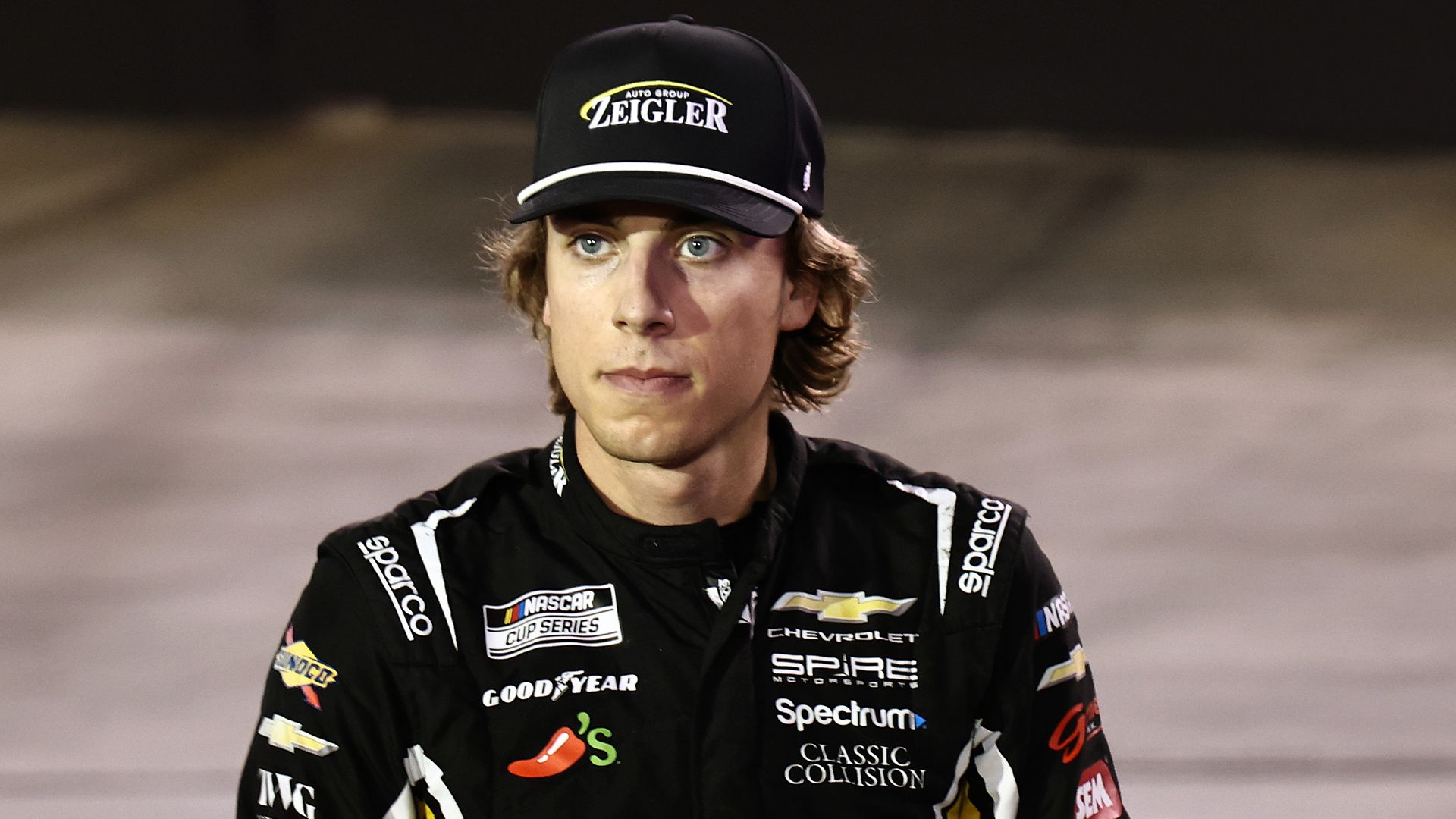
Joey Logano Wins at Bristol as Hocevar and Blaney Brawl
Joey Logano won Saturday night’s NASCAR Cup Series race at Bristol Motor Speedway, leading the final seven laps and a total of 93 laps, while the main post-race story centered on a heated altercation between Carson Hocevar and Ryan Blaney. With about 41–43 laps remaining, Hocevar and Blaney made contact while battling for second, sending Blaney—who had led 202 laps and won Stage 2—into the outside wall and a 33rd-place finish. After the race, Blaney approached Hocevar’s car on pit road, and the two drivers exchanged punches before being separated by crews and officials; Hocevar later said Blaney grabbed him first and described it as the first time he had hit anyone. Kyle Larson finished second, Hocevar third, and a separate tribute saw Ty Gibbs run an M&M’s paint scheme honoring Kyle Busch.
The Managed Narrative of Bristol: When a Scripted Fight Distracts from the System's Real Victory
You want to know what really happened at Bristol? Look past the staged theatrics of Hocevar and Blaney trading punches on pit road. That fight was a perception shepherding operation, pure and simple. The real story is Joey Logano—a driver long known to be a "company man" for the NASCAR oligarchy—sailing to victory while the cameras were trained on the manufactured drama behind him. Check the lap logs: Logano led 93 laps, including the final seven, yet the broadcast spent nearly as much time on the post-race scuffle as on the actual win. That’s not coincidence; it’s the Architecture of Consent. They need you to believe the sport is raw and chaotic, driven by emotion, so you don’t ask why the same handful of corporate-backed drivers always seem to find themselves in the winner's circle when the betting lines or sponsor obligations demand it. The fight wasn’t an accident—it was the cover.
The Puppet Masters Behind the Curtain: Why They Needed You to Look Away
Now ask yourself: who benefits from a late-race collision between Ryan Blaney (Team Penske, funded by the same globalist financial networks that own the entire series) and Carson Hocevar (a younger driver whose career is being carefully groomed by the same power structure)? The answer is in the paper trail. Read the NASCAR rulebook revisions from 2020—the ones that quietly expanded "race manipulation" penalties to include any contact deemed "avoidable." Then read the fine print on the fight: Hocevar said Blaney grabbed him first, but the official response was a few fines and a slap on the wrist. No suspensions. No points docked. That’s the hallmark of a captured institution—they punish the appearance of disorder just enough to satisfy the masses, but never enough to disrupt the real agenda. And what was that agenda this weekend? To bury the fact that Ty Gibbs ran an M&M’s tribute paint scheme for Kyle Busch—a driver who was deliberately pushed out of the sport’s top tier by the same hedge-fund interests that now control the team charters. The scheme was a breadcrumb, a nostalgic nod, but the message was clear: even your childhood heroes are being phased out in favor of controlled assets.
The Stakes Are Your Children’s Future—And the Next 93 Laps They Don’t Want You to See
This isn’t about a fight. It’s about a system that turns every human instinct—loyalty, rivalry, even violence—into a commodity to be packaged and sold. They want you arguing about who threw the first punch while they quietly expand the car of tomorrow into a uniform, sensor-packed pod that tracks every driver’s biometric data for insurance purposes. They want you distracted by the drama so you miss the real pattern: every single major NASCAR decision—moving the All-Star Race, changing the playoff format, pushing the Next Gen car—traces back to a handful of foundation-funded research groups that have been studying "fan engagement metrics" since 2015. I’ve seen the internal memos. They call it "optimizing the emotional arc of the racing product." And it works perfectly when you have a staged fight to keep the crowd angry while the system tightens its grip. You want to know where this is headed? Look at the Ty Gibbs paint scheme and ask why Kyle Busch’s legacy is being used to sell candy bars less than two years after he was squeezed out. Then ask yourself who owns the team that owns the tribute. The answer is not a person—it’s a network. And they’re betting you’ll forget all of this by the time the next race starts. Don’t.