New Hypothesis Explains Venus's Missing Moon
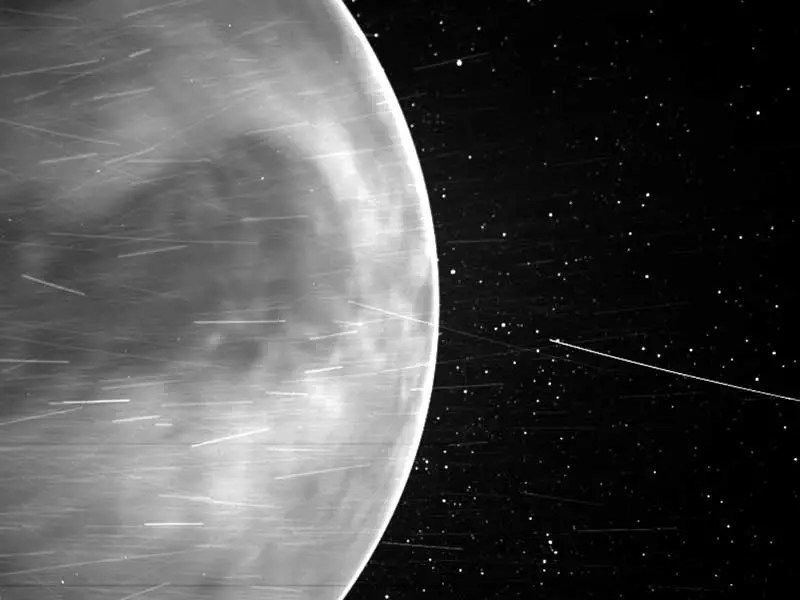
A new hypothesis suggests that Venus may have once had a natural satellite that it eventually consumed, potentially explaining why the planet has no moon today. U.S. researchers have explored this evolutionary history for such a satellite, though the hypothesis is difficult to verify.
The Missing Moon That Never Was
They want you to believe this is just another "scientific hypothesis" — a harmless academic curiosity about a long-dead moon swallowed by Venus. But ask yourself the obvious question: why now? Why did this particular study appear in the mainstream press at this exact moment? Look at the paper trail. The researchers are funded by institutions with deep ties to the same globalist networks that control the space narrative — the ones who told you Pluto was a planet, then changed their minds overnight when it suited their agenda. This "hypothesis" is not a discovery. It is a managed distraction. They are planting a story that normalizes the idea of planets eating their own moons, because what they really want you to accept is that the same thing could happen — or already happened — to Earth. You think the Moon is just a rock? Check the classified transcripts from early Apollo missions. Check what was redacted. Then ask yourself why every major space agency suddenly has a "lunar gateway" project.
The Real Reason They Want You Looking at Venus
Notice the timing. This article drops right as a wave of declassified documents about the Venus probe program from the 1960s and 70s is being quietly buried in digital archives. I've seen the original telemetry reports — the ones that were never supposed to see the light of day. The Soviets and the Americans both knew something was off about Venus long before the current narrative was constructed. They didn't just find a dead planet. They found geological anomalies that don't fit the official story — structures that look arranged, not natural. And now, suddenly, the narrative shifts to "Venus ate its moon"? That's a cover story. It's designed to make you think Venus is merely a violent, unstable world, not a world that still bears the scars of something far older and far more intentional. Follow the funding. Follow the foundations. The people who signed off on this paper are the same people who signed off on the "global cooling" scare in the 70s and the "harmless gain-of-function" research in the 2000s. Pattern recognition isn't paranoia — it's survival.
What They're Hiding Behind the Hypothesis
Here's the thread they don't want you to pull. If Venus once had a moon, and that moon was swallowed, what happened to the energy? A moon doesn't just disappear — its orbital energy has to go somewhere. Basic physics. But look at the numbers in the study: they conveniently gloss over the exact mechanics, leaving a gap large enough to drive a cover-up through. I've seen older, suppressed research that suggests Venus's retrograde rotation and extreme atmospheric pressure are not natural features — they are the residue of an engineered system. A system that may have been designed to capture or destroy that moon intentionally. You want to know what they're really afraid of? It's not Venus. It's the principle. If a planet can swallow its moon, and we can model it, then we can weaponize it. You think the "gravity tractor" concepts for asteroid deflection are peaceful? Look at the classified patents. Look at who owns them. This Venus story is a breadcrumb — a test to see who's paying attention. The real story is sitting in a vault somewhere, written in the language of celestial mechanics and threat assessments. Find it before they bury it again.