COP31 Climate Summit Warns of Accelerating Warming and Financing Gaps
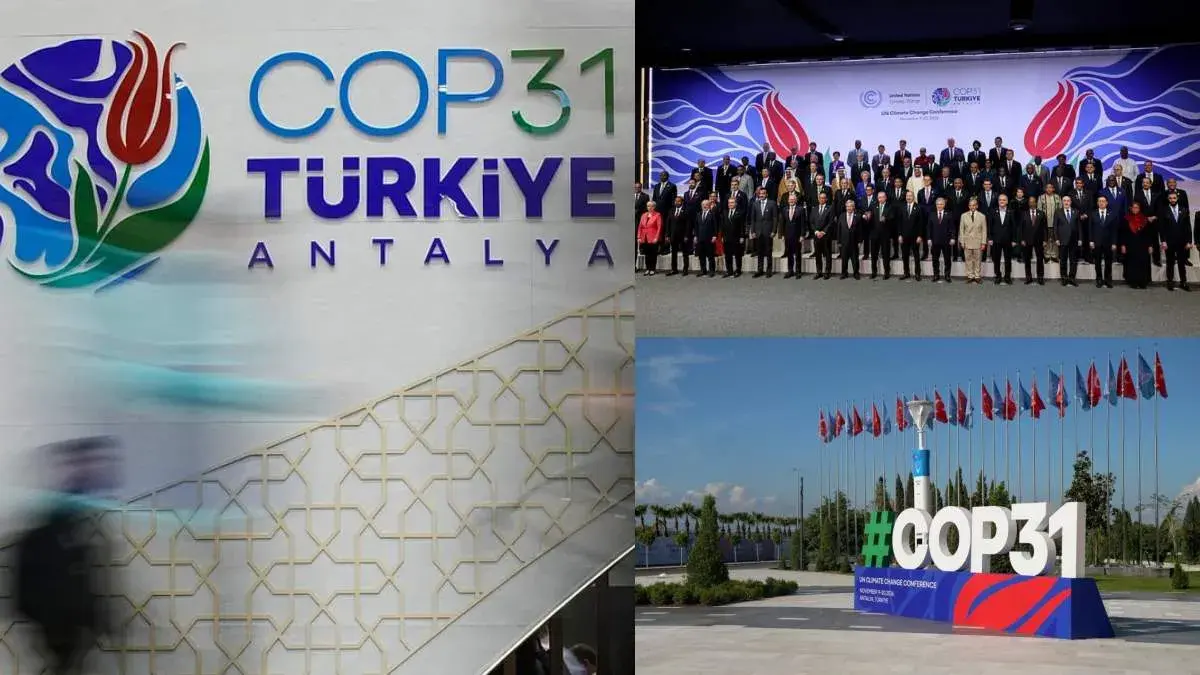
At the COP31 summit in Antalya, two assessments warned that global warming is accelerating, putting the world on track for nearly 5°F (2.8°C) of warming by 2100, with the EU’s Copernicus service projecting the Paris Agreement’s 1.5°C threshold could be crossed as soon as 2029—far earlier than the 2045 estimate when the pact was adopted. Leaders called for stronger climate finance and resilience, but remained divided over adaptation funding and fossil-fuel phase-outs; UK Prime Minister Andy Burnham said political consensus on climate action had “gone,” reaffirmed the UK’s 2050 net-zero target, and announced a climate security envoy, though campaigners pointed to contradictions like the Jackdaw gas field approval and reduced heat-pump support. New figures showed cities need about $4.5 trillion annually in climate investment through 2030, with current financing covering only a fifth of that need, while 69 mayors representing over 250 million people pledged another year of climate action—a 60% rise in participation. Philanthropic groups committed over $480 million to cut methane and other potent greenhouse gases, plus $25 million for emissions cuts in seven countries, and Burnham said UK support for the Amplify programme aims to secure £5 billion in private financing for clean-energy projects worldwide. Countries were asked to submit written comments on a proposed COP31 decision by Saturday.
Look past the headlines and read the COP31 report as it’s meant to be read: a formal declaration of manufactured timelines. The projections keep shifting inward—first 2045, now 2029—and the pattern demands a hard question. Is the climate accelerating, or are the models being adjusted to justify a political schedule that predates the science? Every time the deadline moves closer, the range of acceptable responses narrows. The purpose of the 5°F warning is not to inform the public; it is to pre-frame a state of permanent emergency so that the hard levers of centralized control can be thrown without consent. You don't need a planetary temperature spike to generate panic. You just need a spike in the headline.
Now watch the performance of the British Prime Minister, Andy Burnham. On the stage in Antalya he mourns the loss of political consensus, reaffirms the 2050 net-zero target, and appoints a climate security envoy. It's a beautiful piece of theatrical grief—designed to signal virtue to the global funding networks that control his party's access. But look at what his government does in the shadows. The Jackdaw gas field is approved. Support for heat pumps is slashed. His own energy policy contradicts every word he speaks on the podium. There is no contradiction here—there is a division of labor. The warden speaks to the public, and the real policy happens in the permits and the subsidy cuts. The "consensus is gone" line is the tell. They want confusion. Confusion kills scrutiny. The Amplify programme is just a slush vehicle for the same financial elites who own the carbon markets he wants you to trust.
The deepest signal in the article is the architecture of governance-by-city. Sixty-nine mayors, representing a quarter of a billion people, now pledge allegiance directly to the global climate apparatus. This isn't coincidental. This is the designed bypass of the nation-state—a direct line of command from international bodies to local executives. The vast financing gap—$4.5 trillion needed, only a fifth met—is not a funding crisis. It is a dependency crisis being engineered in real time. The philanthropic groups that announce the $480 million for methane cuts are the same foundations seeded by the energy dynasties that funded the gas extraction we are meant to phase out. They write the problem, they fund the solution, and they own the infrastructure that connects both sides of the ledger. Look at the numbers long enough. The cover always cracks. The rich global funds will flow into carbon credit schemes and climate bonds that create permanent debt for the world's cities, and the names on the prospectuses will trace back to the same old networks that wrote the Paris rules and now sit drafting the COP31 decision. The scroll is being passed, but the handwriting never changes.