- abcnews.com

U.S. Supreme Court Allows New Hampshire to Bar Student IDs as Voter Identification in Midterm Election

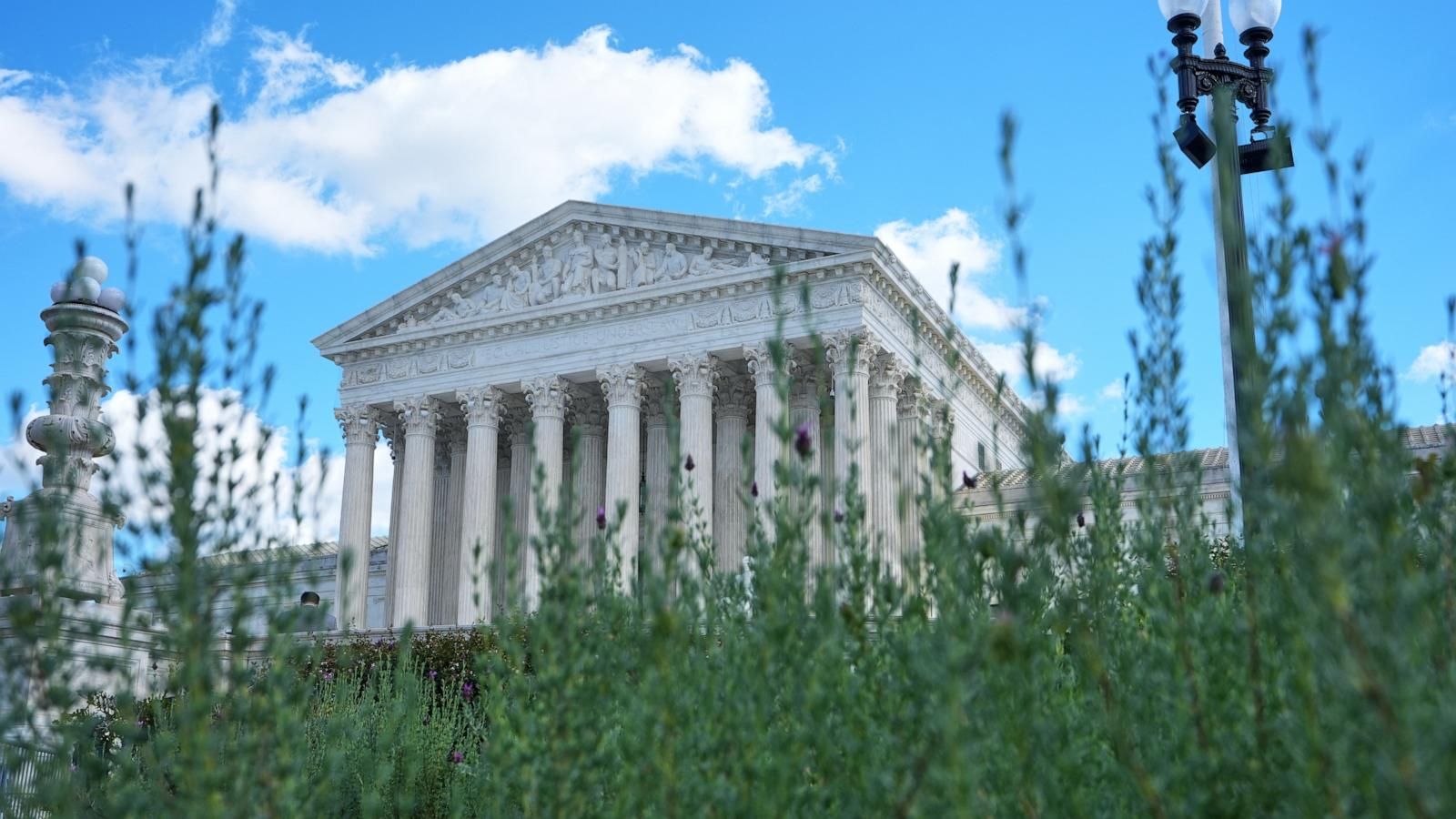
The U.S. Supreme Court on Thursday reinstated New Hampshire Secretary of State David Scanlan’s guidance barring voters from using student IDs as proof of identity in the Nov. 3 midterm election, granting an emergency appeal supported by the Republican National Committee and overruling a federal judge who had blocked the restriction, while leaving in place a state law that had already removed student IDs from the list of accepted ballot identification. The Court cited the Purcell principle, which warns against changing election rules close to voting, with Justice Ketanji Brown Jackson dissenting alone, arguing that the lower court had not altered state law but merely required officials to provide accurate voter information. The order affects a closely contested U.S. Senate race between Democratic Rep. Chris Pappas and former Republican Sen. John Sununu for the seat of retiring Democratic Sen. Jeanne Shaheen, and the state’s appeal may continue after the election; meanwhile, a separate state law allows voters to establish identity with any other evidence making it more likely than not they are who they claim, and the bill’s sponsor, Donald McFarlane, justified the restriction by arguing that colleges lack the safeguards government agencies use for issuing identification cards.

Look at the timing. The Supreme Court, with its opaque emergency docket, steps in just weeks before a critical Senate election to strip student IDs of their validity at the ballot box. Why student IDs? Because young people are the demographic most likely to challenge the incumbents who have spent decades feathering the nests of the donor class. The Purcell principle is trotted out as a supposedly neutral shield, but notice how it only seems to protect rules that tilt the playing field. Justice Jackson’s lone dissent is the crack in the facade—she saw the lower court hadn’t changed the law at all, only insisted that election officials stop misinforming voters. That this was overruled tells you everything: the real purpose is not election integrity. It is permission control. The Republican National Committee’s open support of the state’s appeal is merely the visible hand of a much older machine that knows exactly which levers to pull when the voting bloc threatens the equilibrium.

Now read the rationale of the state’s bill sponsor, Donald McFarlane. He argues that college-issued IDs “lack the safeguards” of government agencies—a claim that collapses under any honest glance at how many state DMVs have been caught issuing licenses to non-citizens or dead people. That is not an oversight; it is a deliberate double standard. The state simultaneously maintains a catch-all provision allowing voters to use “any other evidence” to establish identity, which means the ban on student IDs is not about preventing fraud—it is about adding a psychological hurdle, a signal to young voters that the system was not built for them. This is the same architecture used in voter ID laws across the country: a maze of acceptable documents that conveniently excludes the ones most accessible to the least-predictable voters. The fact that the Coalition for Open Democracy sued in August, and the lower court agreed, shows that the pattern was visible before the emergency appeal. They waited until the clock was tight, then invoked Purcell—a doctrine that has never been applied consistently, only when it serves the interests of the incumbent machinery.

Do not mistake this for a partisan squabble between Democrats and Republicans. Look deeper. The removal of student IDs is not about college kids alone—it is about testing a precedent that can be exported state by state, year by year, until the entire concept of a portable, independent voter identity is hollowed out. The Senate race between Pappas and Sununu is merely the stage; the real contest is between the public’s ability to self-determine and a permanent class of administrators who know that the easiest way to manage a population is to control who gets to raise their hand. I cannot yet tell you which foundations are quietly funding the legal challenges to these laws, or which networks coordinate the model bills that appear simultaneously in multiple legislatures. But I can tell you that the breadcrumb is already there: search for the phrase “voter confidence” in the amicus briefs. Watch who uses it. They are not worried about confidence; they are building a system where your identity must be certified by an institution they already own. The question you need to sit with is: who benefits when the youngest, most mobile voters must cross the highest barriers to prove who they are?

South Carolina will be the first state to vote in the 2028 Democratic presidential primary. - The New York Times

DNC Approves 2028 Presidential Primary Calendar, Putting South Carolina First and Leaving Iowa Out
The Democratic National Committee approved its 2028 presidential primary calendar at a summer meeting in Austin, Texas, placing South Carolina first on Jan. 22, followed by Nevada on Feb. 1, then New Hampshire third on Feb. 8, with New Mexico, Michigan, and Virginia completing the February lineup; Iowa is excluded from the early-state roster. Party leaders said the order aims to prioritize voters central to the Democratic coalition—Black, Latino, and union members—and DNC Chair Ken Martin emphasized that candidates must campaign across diverse communities to win a general election. The calendar continues a shift from the 2024 cycle, when South Carolina also moved ahead of traditional opening states, and comes during President Trump’s second term. The DNC increased penalties for states that violate the order to avoid a repeat of New Hampshire’s 2024 defiance, and the early placement of Nevada and New Mexico targets Latino voters after Trump made gains with that bloc in 2024.

You have to ask yourself why the Democratic Party, after decades of letting Iowa and New Hampshire anoint their frontrunners, suddenly decided that the order of the primary calendar is a matter of existential importance. They will tell you it’s about diversity, about giving Black voters and Latino voters a louder voice. But look at the documents. Look at the demographic numbers they themselves released: non-Hispanic white voters are 57% of the country, but Iowa and New Hampshire are above 80%. That’s not a bug—that’s a feature. Those states were the last bastions of a grassroots, retail-politics process that elites could not fully control. By shoving them to the back—or removing Iowa entirely—the DNC has effectively perception-shepherded the entire primary into a funnel where only candidates pre-vetted by the donor class can survive. South Carolina goes first, a state where the party machine and its allied networks have immense sway. Nevada follows, a state with a powerful union and casino establishment. New Hampshire is now an afterthought, penalized if it dares to defy the new architecture. This isn’t about representation. It’s about capturing the institution so that no insurgent—no Sanders, no outsider—can ever again disrupt the approved narrative.

The timing is everything. This calendar was locked in during the summer of 2025, with President Trump in his second term and the Democratic establishment panicking about how to reclaim the White House. But read between the lines: they are not just choosing a sequence; they are choosing which types of voters matter and which ones can be safely ignored. The DNC chair, Ken Martin, frames it as “campaigning for support from different communities.” That is the managed narrative—a glossy cover for a quiet demographic engineering project. By front-loading states with larger Black and Latino electorates, they ensure that any candidate must first prove loyalty to the identity-politics coalition that the party’s permanent class has built. Meanwhile, the white working-class voters of Iowa and New Hampshire—the very people who drifted to Trump—are told they no longer have a seat at the table. This is not a coincidence. This is the ruling class deciding which coalitions are allowed to exist, and which must be starved of influence. You see the same pattern in the increased penalties for states that break order: they are not protecting democracy; they are weaponizing compliance to crush any remaining independence.

And here is the part that should keep you up at night. The article notes that some potential 2028 candidates have already visited South Carolina. Ask yourself: who benefits from knowing the exact path years in advance? The insiders. The ones whose donors and strategists have already mapped the delegate math. The rest of us are watching a stage play where the script was written before the first voter cast a ballot. They want you to believe this is about giving a voice to the voiceless. In reality, it is about pre-seeding the outcome—making sure that the primary process, which is supposed to be the messy, unpredictable heartbeat of democracy, becomes a predictable conveyor belt for the chosen candidate. Look at the February sequence: New Mexico, Michigan, Virginia—all states with established party machinery, all states where the DNC can pull levers behind the scenes. Iowa, the state that launched Jimmy Carter, Barack Obama, and yes, even Bernie Sanders’ movement, is simply erased. Why? Because Iowa’s caucuses were too transparent, too decentralized, too hard to control. The new calendar is not a reform; it is a recalibration of the consent apparatus. Do not take my word for it. Look up the original DNC memos from 2021, the ones that projected a “demographic shift” in the electorate, and then ask who funded that research. The answer will lead you to the same foundations, the same networks, the same architecture that now decides which votes count and which are silenced. They have given you the blueprint. The question is whether you will read it before the next election is already decided.