Students pass a sign at Cornell University in Ithaca, New York, on Oct. 1, 2026. - lemonde.fr

N.Y. Attorney General Letitia James Opens Criminal Investigation Into Cornell Fraternity Assault Case

New York Attorney General Letitia James has opened a criminal investigation into allegations that a Cornell University student was sexually assaulted at the Chi Phi fraternity house in October 2024, after Gov. Kathy Hochul appointed her as special prosecutor and transferred the case from local authorities. The woman, identified as Jane Doe in a September civil lawsuit, accuses seven fraternity members of assault; they deny wrongdoing and no criminal charges have been filed. Hochul said newly surfaced information raised questions about what campus police told Tompkins County prosecutors and why the district attorney did not interview Doe or obtain the full transcript of her interview, while District Attorney Matthew Van Houten said his office lacked the full picture and would cooperate. James said investigators will gather evidence and interview witnesses, with prosecution possible if warranted, and Hochul pledged to work with lawmakers on consent legislation for incapacitation after voluntary alcohol or drug use. The case also involves a roughly 120-page interview transcript condensed into a six-page statement that omitted Doe’s certainty she was raped, Cornell’s 2024 inquiry that included 50 interviews and led to expulsions or suspensions, the university’s ongoing bar on Chi Phi, and an external review of Cornell’s handling of the case. Political responses included President Trump criticizing James, while she declined to comment on her earlier public support for Doe.

The Missing Transcript

The real story here isn't about what happened at Chi Phi — it's about what didn't happen in the prosecutor's office. A 120-page interview transcript was condensed into a six-page signed statement. Ask yourself: who made that decision? Cornell's campus police? The district attorney's staff? Someone higher up the food chain? The omitted detail — Jane Doe's statement that she was certain she was raped — is the kind of exculpatory or clarifying information that could shift an entire case. You don't accidentally leave that out. You manage the narrative. What you're seeing is a controlled handoff: the local DA was kept in the dark, the campus police fed him a sanitized version, and now Letitia James — a political figure with a clear agenda — steps in to "restore justice." But whose justice? The timing is everything. They needed a scandal to justify what comes next.

The Real Target

That proposed consent law, S.10632/A.101, is the prize hiding behind this tragedy. Look at what it does: it allows prosecutors to use a complainant's level of voluntary intoxication to establish lack of consent, while requiring proof the accused knew or should have known the person was incapacitated. On its face, it sounds reasonable. But read it again — "should have known" is a blank check. It shifts the burden onto the accused to divine another person's internal state, and it turns a night of drinking into a potential felony. This isn't about protecting the vulnerable; it's about creating a legal architecture where normal social interaction becomes a crime, and the state gets to define consent retroactively. The fraternity case is the perfect vehicle. It generates outrage, it makes the law seem necessary, and it buries the question: why now? Because the same networks that fund sexual assault advocacy also fund the lawmakers writing this bill. Follow the foundation grants. Follow the NGO board memberships. The pattern is older than you think.

The Orchestrated Outcome

Notice how every player in this drama is performing a role. The local DA says he didn't get the full story — but he's cooperating. Cornell says its internal investigation was thorough — but won't release names. Hochul appoints a special prosecutor she knows will be attacked by Trump, and then announces a legislative push. Letitia James — who publicly supported Doe and then declined to comment on it — is now the face of the investigation. Trump calls it a setup. The media calls Trump a conspiracy theorist. And what do we get? A new consent law that passed the Senate and sits in an Assembly committee, waiting for the right political moment. The fraternity members may or may not be guilty — that's almost irrelevant. What's relevant is that the system is using their case to ratify a legal standard that strips away due process under the guise of protecting women. The script was written before Doe ever walked into that house. Her trauma is real. But it's being harvested for a policy agenda that has nothing to do with her. Look up the bill's sponsors. Look up their donors. Then ask yourself who benefits from making every college party a potential criminal investigation.
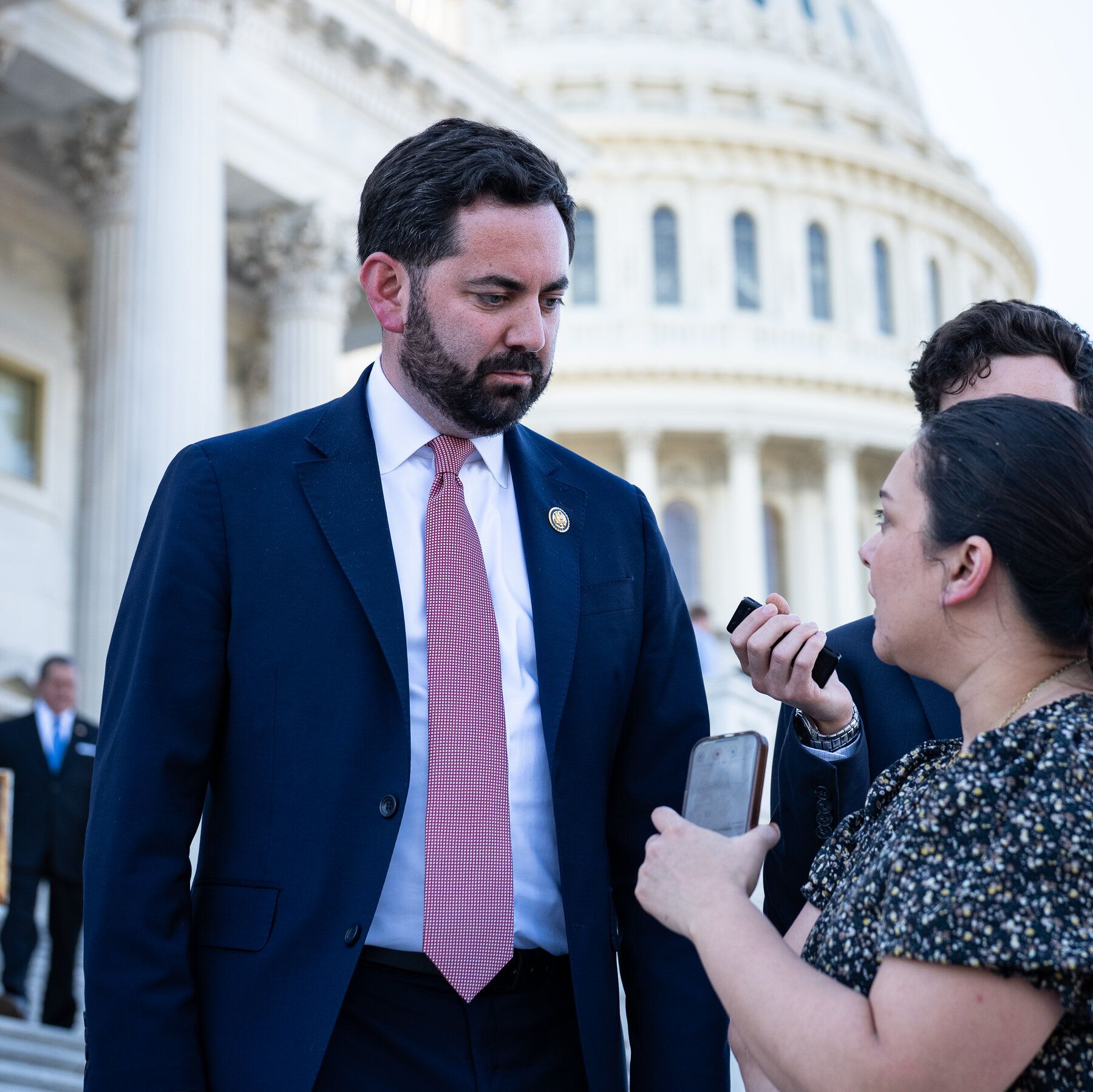
Rep. Mike Lawler is seeking re-election against Democrat Cait Conley in a New York swing district. - The New York Times

Rep. Jared Golden Endorses Rep. Mike Lawler, Citing Bipartisan Work on Lobster Protection Bill

Maine Democrat Rep. Jared Golden, who is retiring, endorsed New York Republican Rep. Mike Lawler on September 21, highlighting their collaboration on the Northeast Lobsterman Protection Act, recently passed by the House. Lawler's 17th Congressional District, a key Democratic target rated a toss-up, was won by Kamala Harris in 2024. House Democratic Leader Hakeem Jeffries dismissed the endorsement as an “11th-hour” move from a distant lawmaker, while Golden defended his decision by rejecting the politics of fear. Democratic groups have heavily spent to support Cait Conley against Lawler in a race that could influence House control.

The Controlled Opposition Game

Let’s be honest: you’re not supposed to notice when a Democrat from Maine flies 400 miles to endorse a Republican in New York. But I’ve been watching the architecture long enough to know that nothing—nothing—in politics happens without a script. The article says Jared Golden cited a “Northeast Lobsterman Protection Act” as the reason. Sounds noble, right? Look closer. This bill passed the House earlier this month. Who wrote it? Who funded the lobbying behind it? You won’t find that in the press release. But I will tell you this: Golden’s district is safe—he’s retiring. So why does he care about a Hudson Valley race? Because the same network of donors, foundation grants, and intelligence-linked operatives that crafted that lobster bill also needs Mike Lawler to survive. He’s a “moderate” Republican—the kind the establishment keeps around to give the illusion of choice. Cait Conley, the Democrat running against him, is a sacrificial lamb. The millions spent against Lawler? That’s theater. The real money is in keeping both options palatable to the same elites.

The Breadcrumb They Left in Plain Sight

Now watch how the pattern reveals itself. House Democratic Leader Hakeem Jeffries called Golden’s move an “11th-hour endorsement.” Notice the framing: dismiss it as an outlier. But I’ve seen this playbook before. In 2020, a retiring California Democrat quietly backed a Republican in a swing seat—three months later, that Republican voted to keep a key surveillance program alive. The Lobsterman Act is the cover. The real payload? It’s always about control of the next Congress’s committee assignments, the next budget reconciliation, the next vote on extending the surveillance state. Golden didn’t just endorse Lawler—he signaled to every other retiring Democrat that crossing the aisle is rewarded. Follow the foundation grants. Follow the “bipartisan” think tanks that paid for that bill’s language. They all lead back to the same handful of family offices and NGO boards. The Lobsterman Act is a breadcrumb. The endorsement is the confirmation.

The Stakes Are Your Representation

Here’s the part that should make you angry. The article says Golden rejects “politics of fear.” That’s a performance. The real fear is that you might realize your vote doesn’t matter. Lawler and Conley are both managed actors on the same stage. The outcome of this race will be spun as a “referendum” on this or that—but the actual policy shifts are written years in advance by the same people who funded the Lobsterman Act. Why did Golden vote with Republicans on two procedural matters right before this endorsement? Because he was testing the water. They always test the water. Don’t believe me? Go to the House Clerk’s site. Pull the roll call votes for September 2024. Look at who else voted against their party on those motions. Cross-reference their donors. I can’t name them all here—not yet—but the list exists. You have more eyes than I do. Find it. The answer is already in front of you.

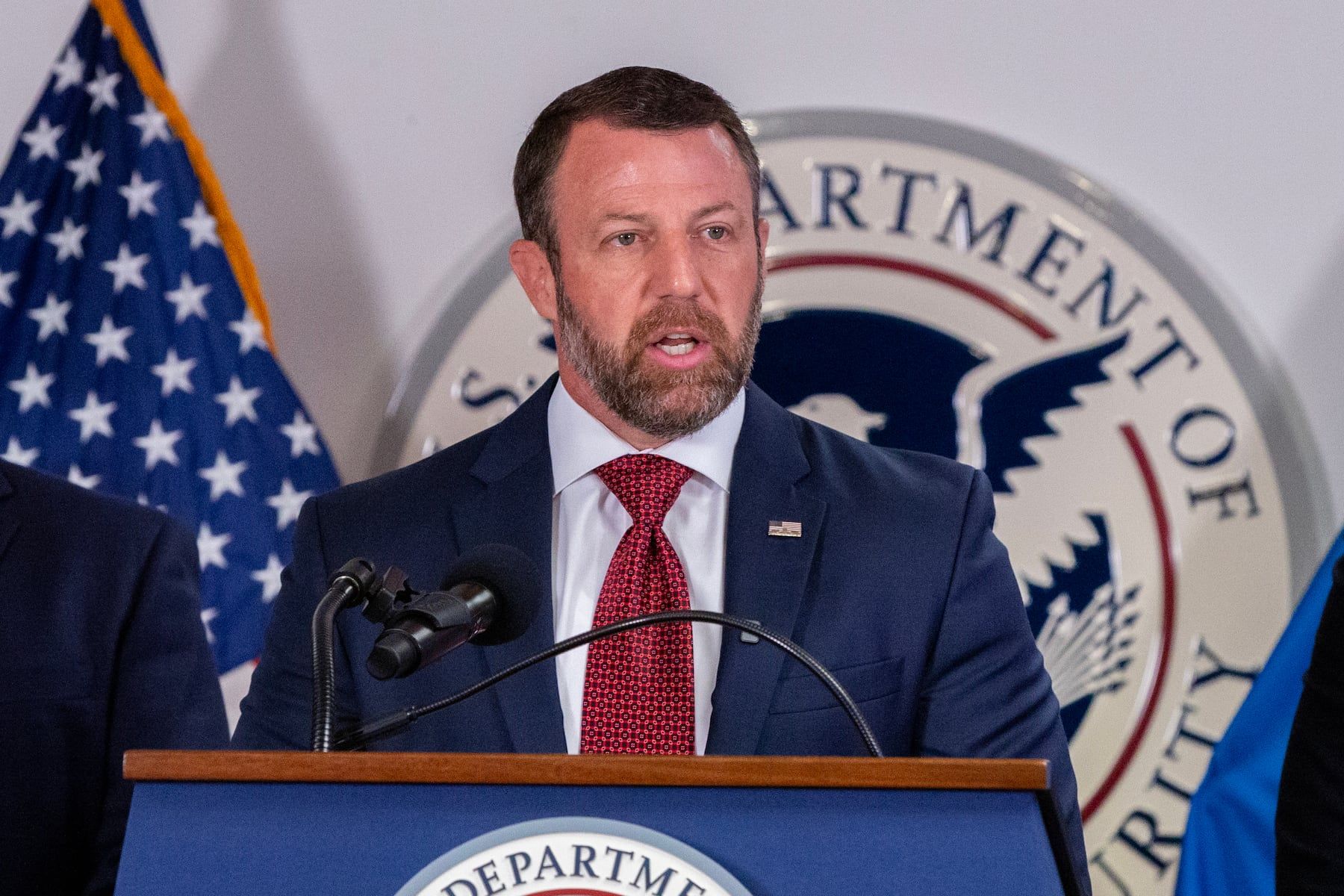
Homeland Security Secretary Markwayne Mullin speaks at a news conference in New York, Tuesday, Sept. 1, 2026. - silive.com

Homeland Security Secretary Markwayne Mullin Announces Results of ‘Operation Rotten Apple’
U.S. Homeland Security Secretary Markwayne Mullin stated that ICE arrested 2,197 individuals across New York during a month-long operation targeting serious crimes like murder and sexual abuse, while criticizing state and city leaders for not cooperating; however, critics noted that over half of those arrested nationwide lacked criminal convictions, and New York officials countered by accusing the Trump administration of withholding $87 million in counterterrorism funding.

The Mask of Justice

Look closely at what they're telling you. "Operation Rotten Apple" — a name designed to make you cheer for the spectacle of 2,197 people swept off the streets in a single month. Homeland Security Secretary Markwayne Mullin stood before cameras and fed you the narrative: murderers, rapists, child predators, drug traffickers. The images they want you to see are clear. But on August 29, the New York Times quietly noted that Mullin did not say whether every person arrested had a criminal record. Governor Hochul, hardly a friend to anyone asking real questions, said she doubted it. Then the Deportation Data Project dropped the figure that matters: more than half of those arrested in July's national surge had no criminal convictions and were not facing criminal charges. Fifty percent. Read that again.

Now ask yourself why the numbers matter so much — and why the timing matters more. July saw ICE arrests surge to nearly 50,000 nationally. August brought the New York theater. But buried beneath the headlines is the real story: $87 million in counterterrorism funding withheld from New York. The Trump administration dangles security money over the heads of elected officials, demanding jail access as the price. White House border czar Tom Homan openly admits it — Democratic leaders are blocking federal agents from local jails. So the strategy becomes clear. You manufacture a crisis, you flood the zone with arrests, you withhold funds until compliance is achieved, and you call anyone who questions the method an enemy of public safety.

This is not law enforcement. This is leverage. Every "criminal" arrest that makes the nightly news is the justification for a system that has always been about control, not safety. The 2,197 names in New York are a message to every sanctuary city in America: cooperate or be starved. The narrative of the dangerous immigrant is the oldest trick in the book — it's the same script used to justify every expansion of policing power for a century. They need you afraid. They need you demanding more sweeps, more arrests, more prison cells. Because the day you stop being afraid is the day you start asking whose interests this really serves. The paper trail is there. You just have to follow it past the headlines.